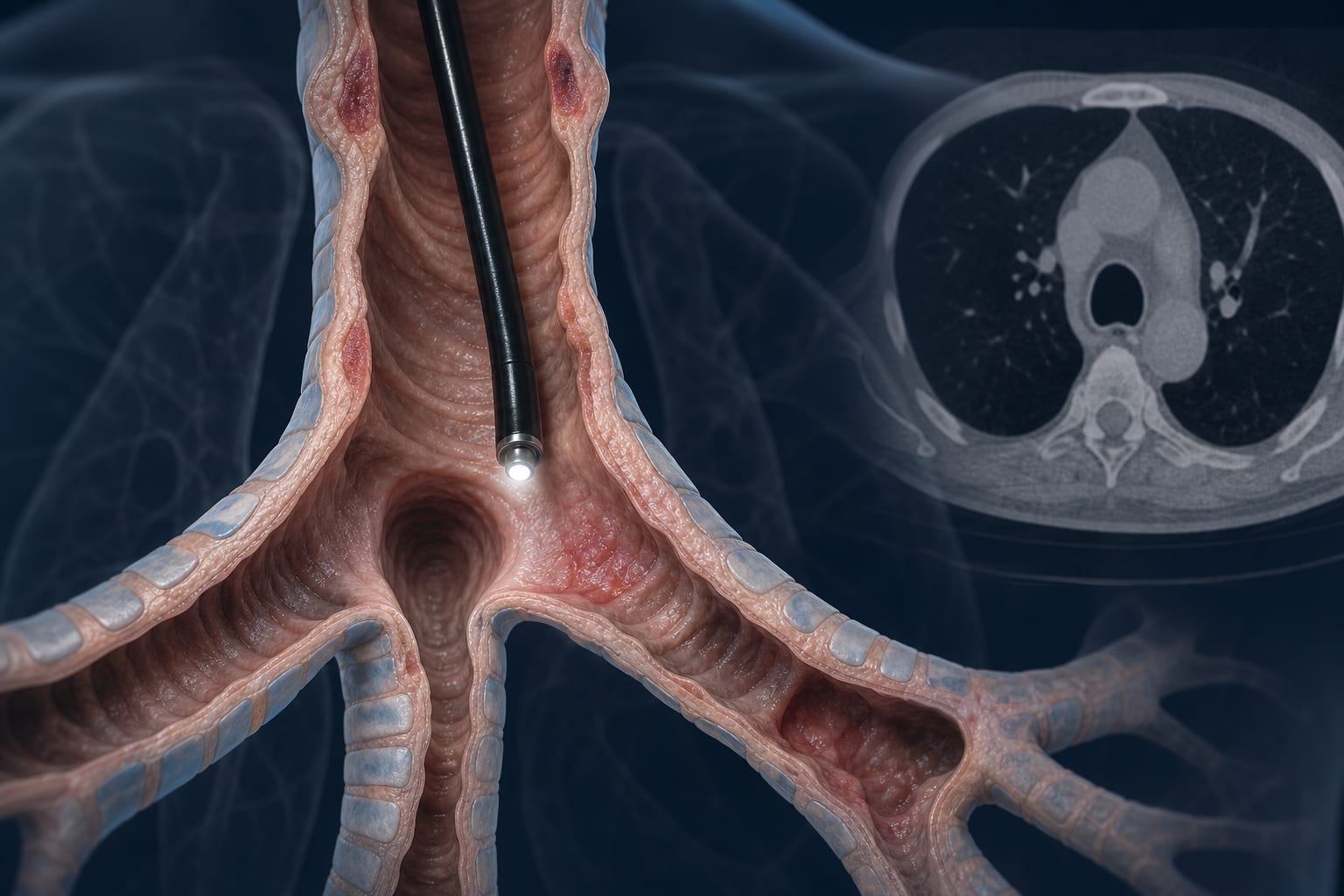
To provide a systematic review of the clinical characteristics, diagnostic techniques, and diversified treatment approaches for airway involvement in relapsing polychondritis (RP).
Key Findings:
Airway involvement occurs in approximately 50% of RP patients and is a significant cause of mortality, as stated in the source.
Imaging techniques like CT and bronchoscopy have high diagnostic value for airway lesions, according to the source.
Traditional treatments include glucocorticoids and immunosuppressants, but some patients show poor responses, as noted in the source.
Biologics may offer effective treatment options for refractory RP cases, as mentioned in the source.
Interventional treatments such as airway dilation and stent placement are important but carry risks, as discussed in the source.
Interpretation:
Limitations:
The rarity of RP can lead to misdiagnosis and treatment delays, as indicated in the source.
Endoscopic examinations carry operational risks, especially in patients with impaired lung function, as noted in the source.
Turns out biology tracks more than we thought — from a spit test that reads your all-nighter to a surgical outcome that still shows up in household chores two decades later. Plus: habits aren't built gradually. They snap.