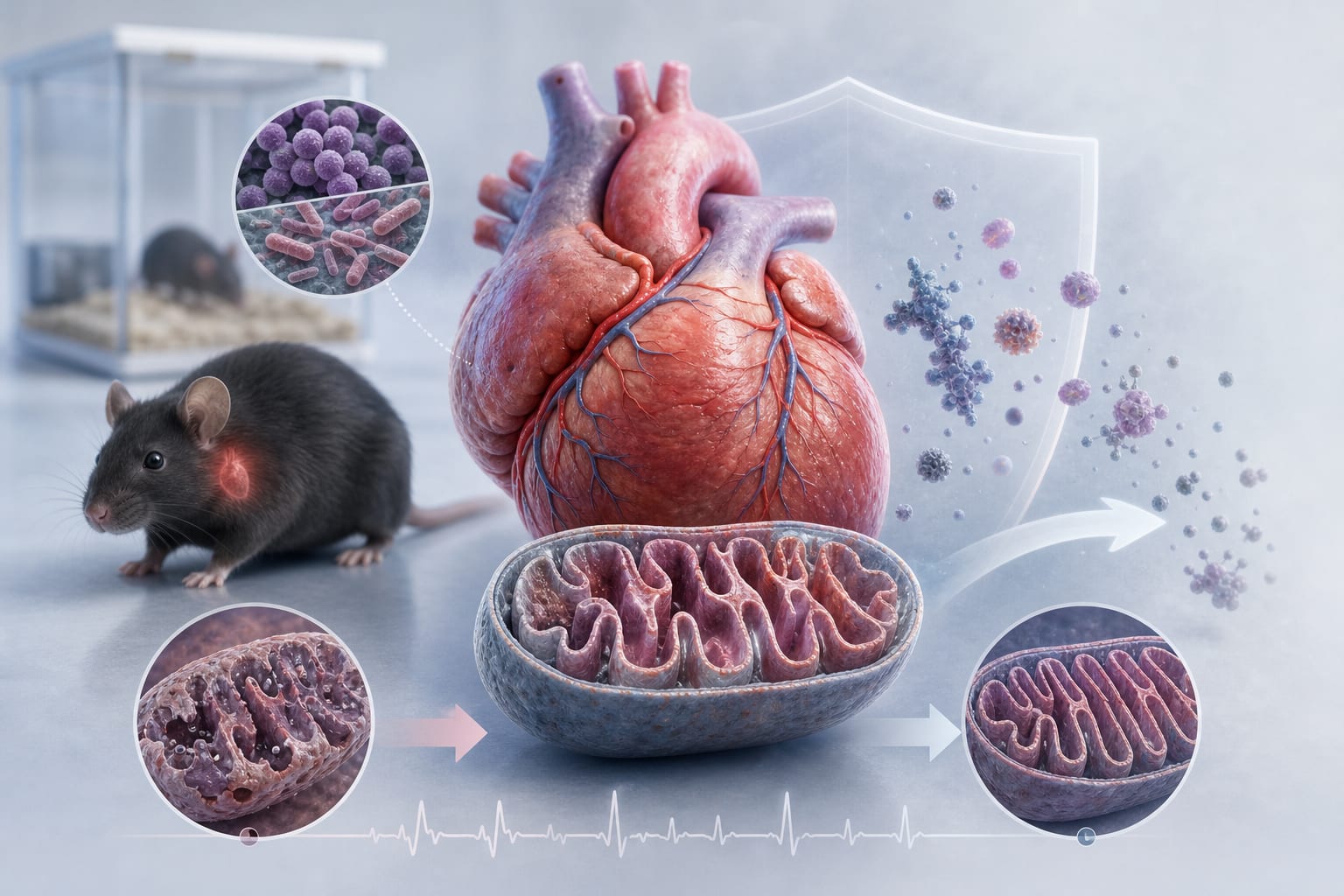
Xiangdan Injection Mitigates Cardiac Injury in Experimental Sepsis through Inflammatory Suppression and Mitochondrial Protection
-
By
-
Xu, Jingyu
-
March 23, 2026
-
Objective:
To investigate the cardioprotective effects of Xiangdan injection in experimental sepsis induced by Gram-positive and Gram-negative bacteria.
Key Findings:
- Untreated sepsis resulted in 60% survival in the Gram-positive model and 70% in the Gram-negative model.
- Xiangdan injection improved survival to 100% at 5.0 mL/kg in both models.
- Serum inflammatory cytokines IL-6, TNF-α, IL-1β, and HMGB1 were significantly reduced by Xiangdan injection at the highest dose.
- Cardiac injury biomarkers BNP, CK-MB, and cTnI were significantly decreased following Xiangdan treatment.
- Mitochondrial ultrastructural damage was markedly reduced, with Flameng scores improving significantly.
Interpretation:
Xiangdan injection effectively mitigates sepsis-induced myocardial injury by modulating inflammation, reducing cardiac damage, and preserving mitochondrial integrity.
Limitations:
- Study conducted in a mouse model, which may not fully replicate human sepsis.
- Further research is needed to explore long-term effects and clinical applicability.
Conclusion:
Xiangdan injection demonstrates significant cardioprotective effects in sepsis through systemic inflammation suppression and mitochondrial protection.