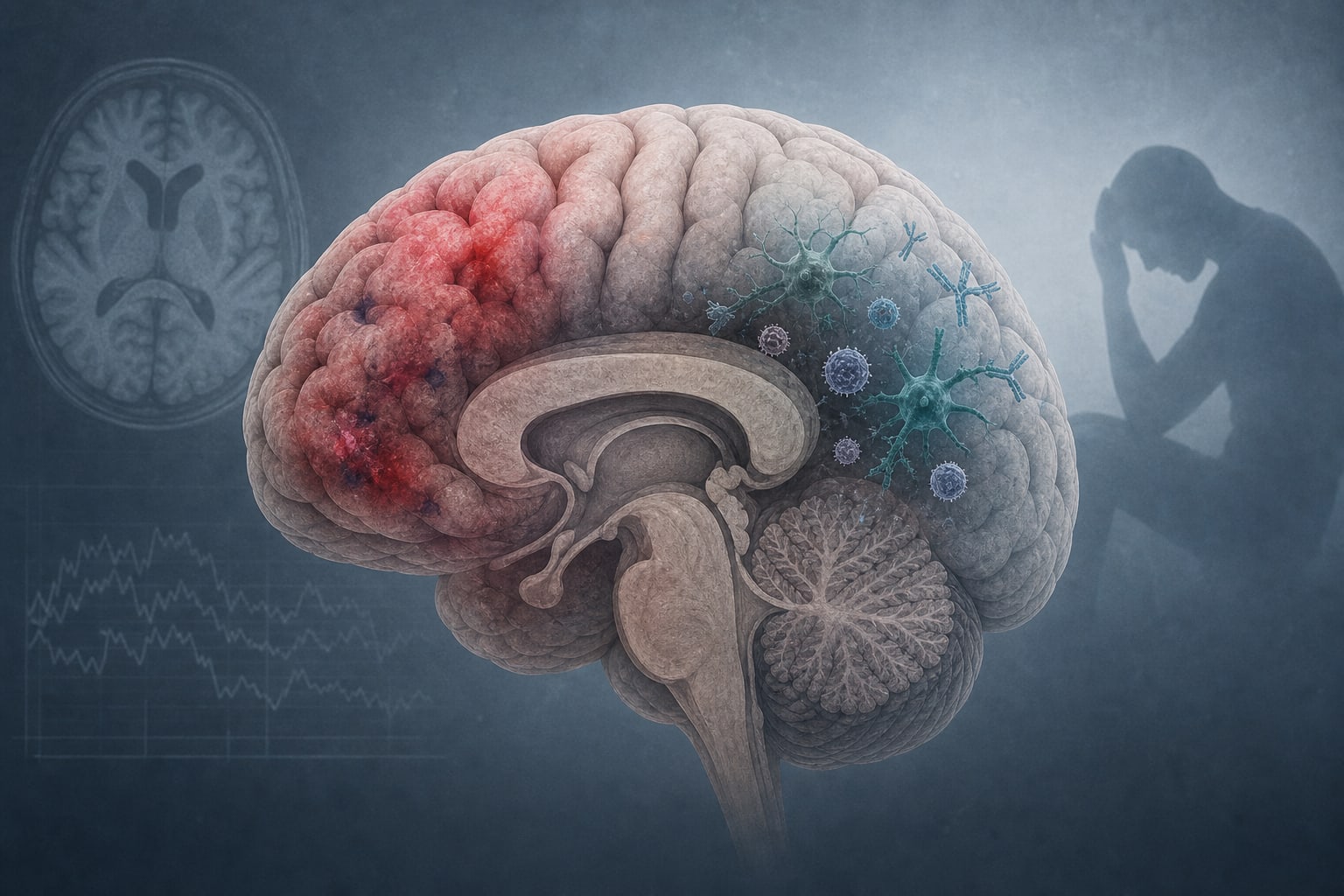
To investigate the characteristics, causes, and prognosis of patients with neurological disorders presenting with psychiatric symptoms as the initial manifestation.
Approach:
Key Findings:
76 patients met inclusion criteria from 16,473 screened admissions.
Most patients (92.1%) presented with acute-onset non-specific behavioral disturbance.
31.6% had isolated psychiatric symptoms without neurological signs.
Leading etiologies included CNS infections (55.3%), primarily viral encephalitis (40.8%), cerebrovascular diseases (14.5%), and autoimmune encephalitis (13.2%).
Poor outcome occurred in 42.1% of patients.
Independent predictors of poor outcome included hyponatremia (OR 3.9), viral encephalitis (OR 3.1), and ICU admission (OR 4.8).
A risk score combining these factors effectively stratified patients with poor outcome rates from 7.1% to 100%.
Interpretation:
PSIP indicates underlying neurological disorders, particularly viral and autoimmune encephalitis, with hyponatremia on admission as a significant prognostic factor.
Limitations:
Findings derived from a single tertiary center.
Need for validation in broader populations to confirm the results.
Conclusion:
Early comprehensive evaluation is essential to improve outcomes in patients with PSIP.
Acidic gum beat sugar-free at cranking out nitric oxide from beetroot juice — exactly backward from what test-tube studies predicted. Also this week: a sleep gene that ignores amyloid, and jackfruit sap moonlighting as a bone-building drug delivery system.