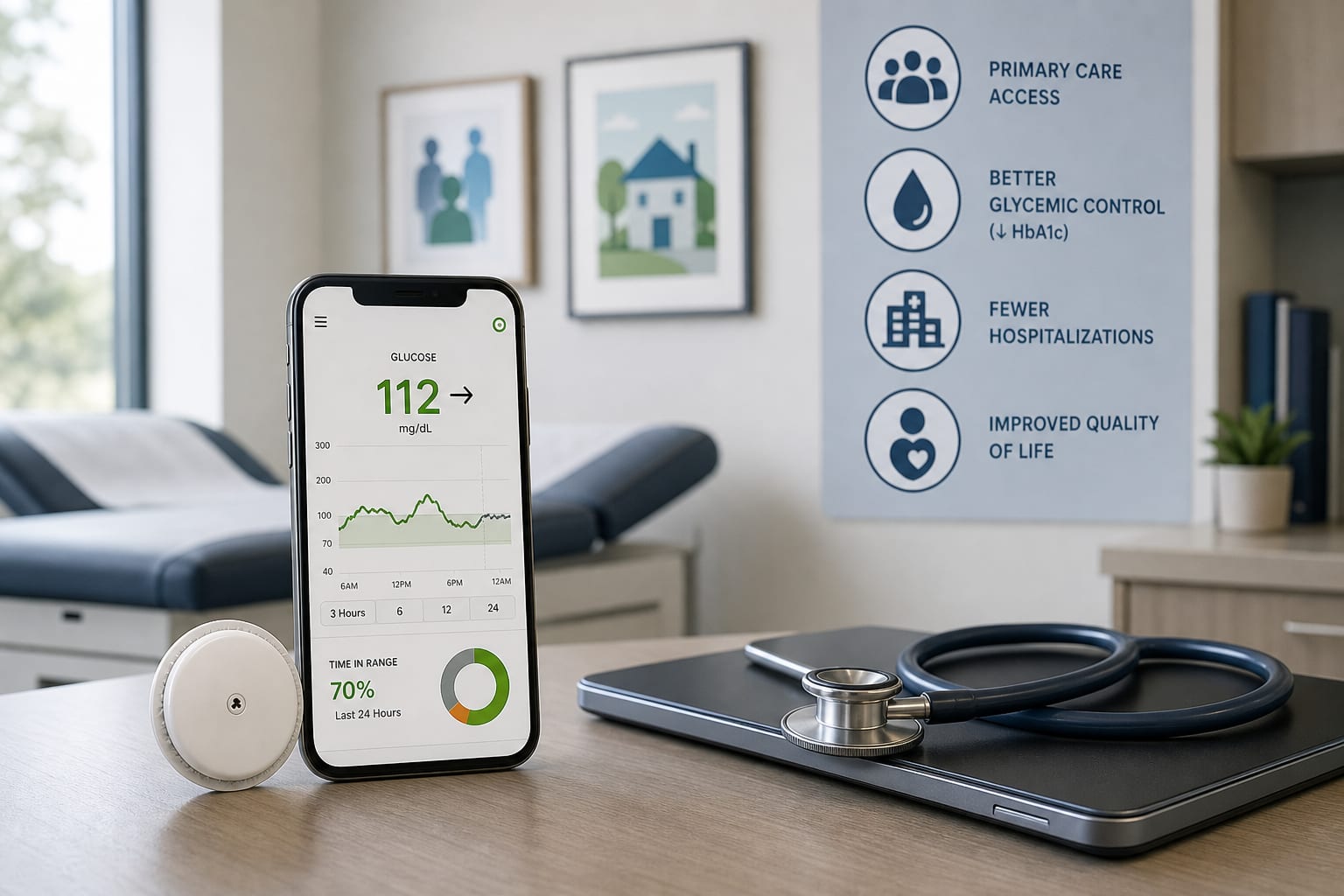
To examine whether continuous glucose monitoring (CGM) initiated in primary care settings is associated with improvements in HbA1c levels and reductions in hospitalizations or emergency department (ED) visits, particularly in underrepresented populations.
Approach:
Patient Selection: Included adults with diabetes diagnosed by a healthcare professional who received insulin and had at least one clinical encounter with a primary care clinician. Excluded those uninsured or previously prescribed CGM.
Key Findings:
CGM use is associated with reduced HbA1c levels in both type 1 and type 2 diabetes.
Adoption of CGM in primary care settings remains limited despite its proven benefits.
The study focuses on a patient population with historically low CGM uptake.
Interpretation:
Understanding the clinical benefits of CGM when initiated in primary care is essential for justifying broader implementation beyond specialty settings.
Limitations:
The study is retrospective and may not account for all confounding variables.
Results may not be generalizable to populations outside the studied demographic.
Conclusion:
The study aims to provide evidence for the clinical impact of CGM initiated in primary care, particularly in underrepresented populations.