Predicting response to immune checkpoint inhibitor plus chemotherapy in EGFR-mutant lung adenocarcinoma following first-generation TKI resistance: a multicenter deep learning study - Summary - MDSpire
Advertisement
Predicting response to immune checkpoint inhibitor plus chemotherapy in EGFR-mutant lung adenocarcinoma following first-generation TKI resistance: a multicenter deep learning study
To develop and validate a deep learning model that predicts treatment response to immune checkpoint inhibitors (ICIs) combined with chemotherapy in patients with EGFR-mutant lung adenocarcinoma after resistance to first-generation TKIs.
Approach:
Study Design: A multicenter retrospective study involving 490 patients with complete CT imaging and outcome labels, divided into training and validation cohorts.
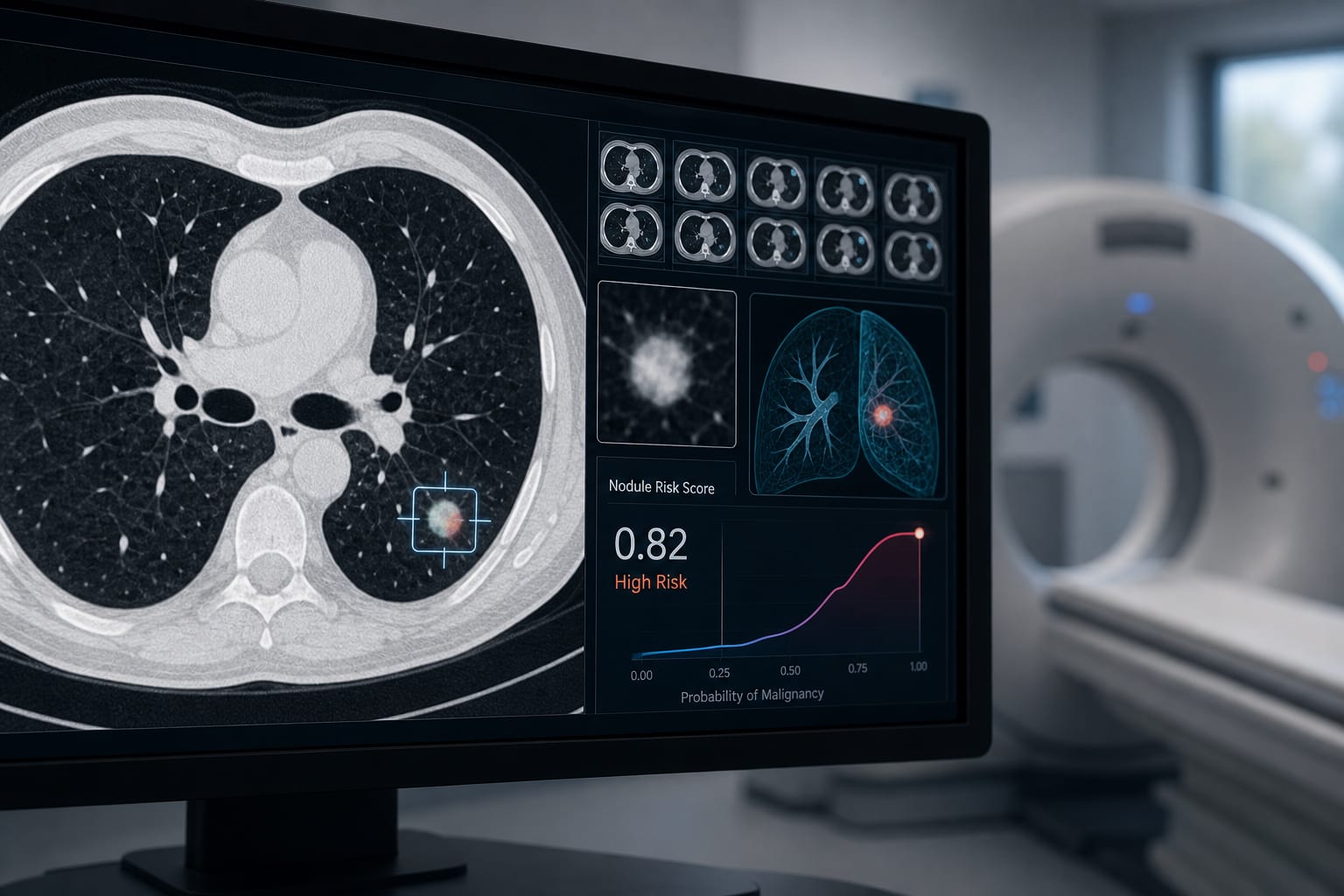
Model Development: A 2.5D axial deep learning model was developed to predict treatment response based on CT images acquired after EGFR-TKI resistance.
Performance Evaluation: Model performance was assessed using AUC, decision curve analysis, and progression-free survival (PFS) stratification analyses.
Key Findings:
The 2.5D axial model achieved AUCs of 0.885, 0.819, and 0.863 in the training cohort, validation cohort 1, and validation cohort 2, respectively.
The study highlights the potential of a CT-based deep learning model for predicting treatment response after EGFR-TKI resistance, but further validation is required.
Interpretation:
The findings indicate that the deep learning model can predict treatment response to ICIs in EGFR-mutant lung adenocarcinoma patients post-TKI resistance.
Limitations:
The study is retrospective and may be subject to selection bias, including biases related to the exclusion criteria.
Prospective validation of the model is necessary before clinical implementation.
Conclusion:
The study presents a deep learning approach for predicting treatment response in a challenging patient population, emphasizing the need for further validation.