To evaluate the effect of artificial intelligence (AI) assistance on the diagnostic performance of human readers for detecting challenging acute ischemic stroke (AIS) lesions on diffusion-weighted MRI.
Key Findings:
AI achieved a sensitivity of 96.0% and identified 79.6% of false-negative stroke cases.
AI-assisted reading improved AUC from 0.85 to 0.93 (p < 0.01).
Pooled sensitivity increased from 74.6% to 90.6% (p < 0.01).
Lesion segmentation accuracy (DSC) improved from 0.523 to 0.742 (p < 0.01).
Specificity slightly decreased from 88.8% to 84.0% (p = 0.05).
Interpretation:
AI assistance significantly enhances diagnostic performance and lesion segmentation accuracy in detecting small and hyperacute AIS lesions on DWI.
Limitations:
Single-center study may limit generalizability.
Retrospective design could introduce selection bias.
Conclusion:
AI assistance markedly improves the detection and segmentation of complex AIS lesions, enhancing reader confidence.
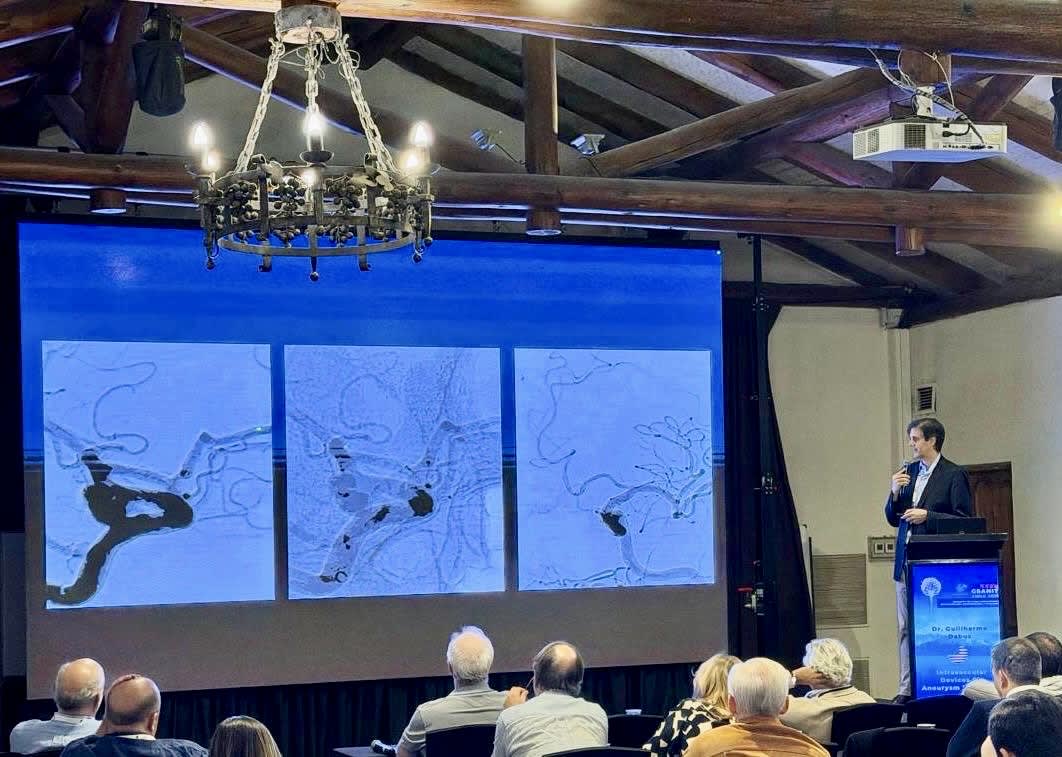
Guilherme Dabus, M.D., co-director of interventional neuroradiology at Baptist Health Miami Neuroscience Institute, served as a guest professor and invited speaker at the GSANIT (Grupo Sudamericano de Neurorradiología Intervencionista y Terapeutica) in Santa Cruz, Chile,