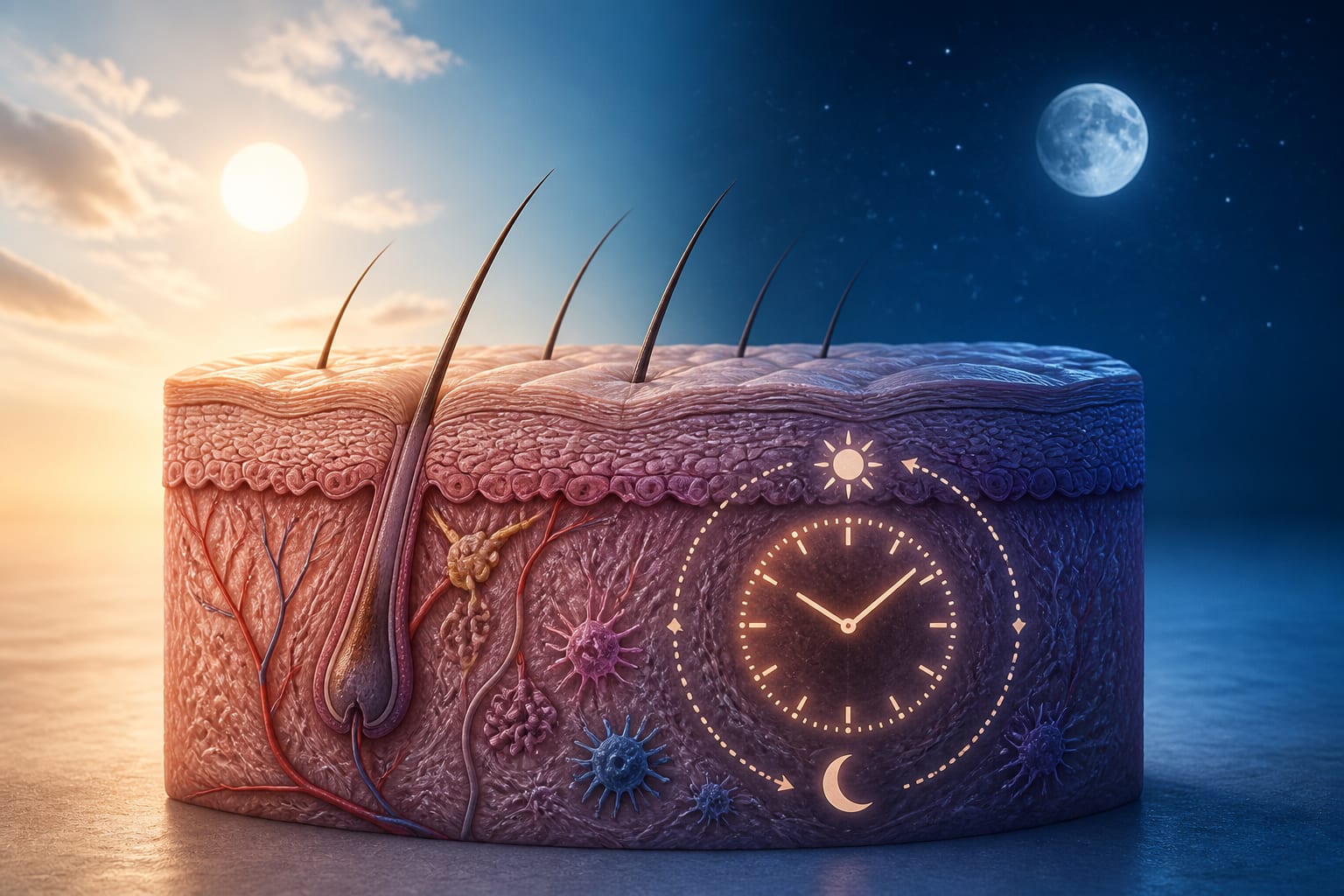
To integrate current knowledge of the molecular architecture underlying the cutaneous circadian clock and assess the connection between circadian regulation or disruption with skin physiology and dermatological diseases.
Approach:
Review Methodology: A narrative review using a targeted PubMed/MEDLINE search with terms related to circadian rhythms and dermatology, focusing on human clinical evidence and translational proposals.
Key Findings:
Circadian rhythms significantly influence skin physiology, including epidermal turnover, immune responses, and DNA repair.
Disruption of circadian rhythms can exacerbate major dermatological disorders such as melanoma, atopic dermatitis, and psoriasis.
Chronodermatology is emerging as a precision-medicine framework; however, clinical benefits from timing treatments have not yet been established.
Advancements in chronopharmacology and chrono-optimized drug delivery systems could lead to personalized dermatological interventions.
Interpretation:
The skin exhibits temporal rhythms controlled by the circadian clock, which operates autonomously in various skin cell types and is influenced by external factors like light and temperature.
Limitations:
The review is narrative and not systematic, lacking formal meta-analysis and risk-of-bias assessment.
Evidence gaps exist that need resolution before time-based therapeutic strategies can be clinically implemented.
Conclusion:
Integrating circadian biology into dermatological practice requires personalized evaluation of skin clock function and validation of chrono-therapeutic strategies through clinical trials.
Poorer dermatology-related quality of life was associated with greater mental health issues, while habitual probiotic intake showed no measurable relationship with these outcomes.