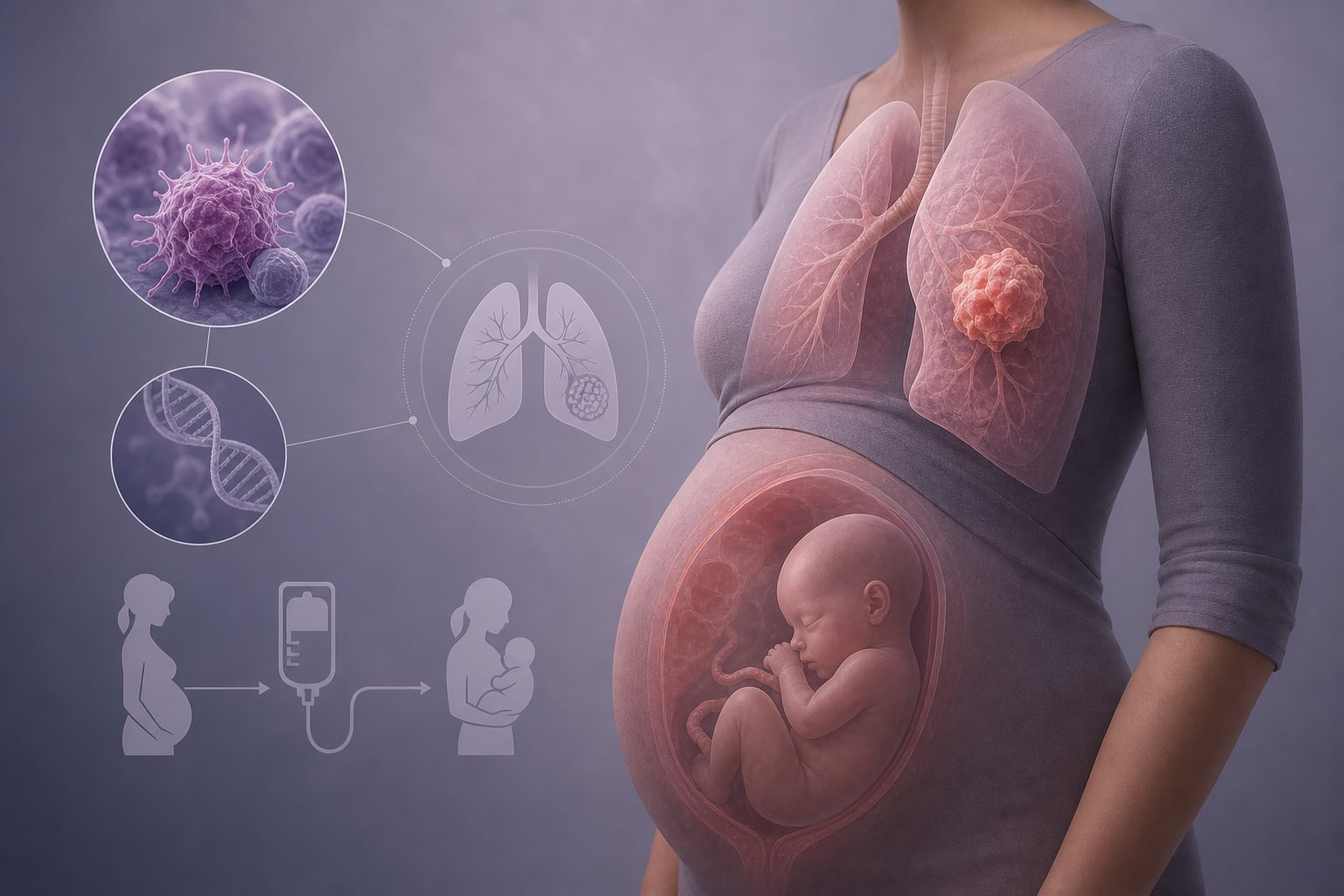
To characterize clinical features, treatment patterns, and maternal–fetal outcomes among reported cases of primary lung cancer diagnosed during pregnancy, emphasizing its rarity.
Key Findings:
Mean maternal age at diagnosis was 32.9 years, with 65% presenting at stage III–IV.
Tobacco use was reported in 33% of cases, significantly associated with advanced disease stage.
58.9% of tumors with molecular testing had actionable driver alterations, mainly ALK rearrangements and EGFR mutations.
Chemotherapy during pregnancy was given in 22.8% of cases, primarily platinum-based, starting at a mean gestational age of 21.8 weeks.
71.9% of pregnancies resulted in live births, with 46.9% being term deliveries, while 17.7% ended in termination and 1.0% in fetal demise.
Interpretation:
Lung cancer during pregnancy is often diagnosed at advanced stages, highlighting the need for multidisciplinary management and routine molecular profiling, particularly in treatment decision-making.
Limitations:
Small sample size and heterogeneity of reporting.
Lack of long-term follow-up data, impacting generalizability.
Conclusion:
Early diagnosis and coordinated care are critical for improving outcomes in pregnant patients with lung cancer. International registries and consensus guidelines are needed to guide treatment decisions and improve maternal and fetal outcomes.