Technical challenges and outcomes of stereotactic biopsies in the posterior fossa: Experience with ZD-inomed and leksell vantage frames - Summary - MDSpire
Advertisement
Technical challenges and outcomes of stereotactic biopsies in the posterior fossa: Experience with ZD-inomed and leksell vantage frames
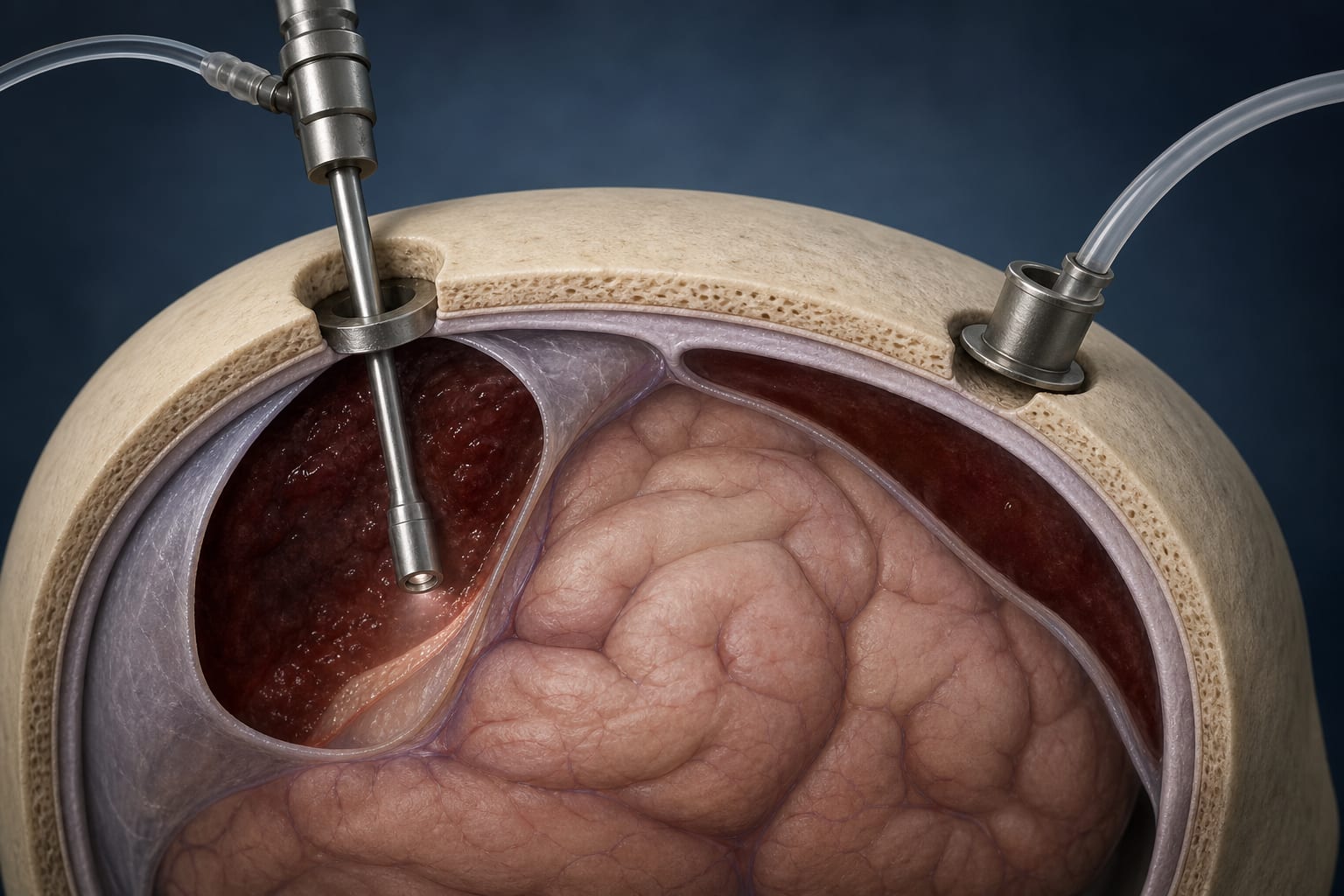
To share experiences and provide technical guidance on stereotactic biopsies of the posterior fossa using ZD-Inomed and Leksell Vantage frames, emphasizing the importance of technical considerations.
Key Findings:
26 stereotactic biopsies performed; 9 with ZD Inomed frame and 17 with Leksell Vantage frame, highlighting the distribution of lesions and their implications for treatment.
Average age of patients was 60.6 years; lesions primarily located in the cerebellum (18) and brainstem (7), indicating the commonality of these locations in clinical practice.
Average surgery duration was shorter with Leksell Vantage frame (32.6 min) compared to ZD Inomed frame (44.8 min, p-value 0.05), suggesting efficiency in surgical planning.
Histopathological results included 13 primary brain neoplasms, 6 lymphomas, and 4 infections, which are critical for guiding further treatment.
Interpretation:
The study highlights the technical challenges of performing stereotactic biopsies in the posterior fossa and provides insights into the effectiveness of different frame systems, which is crucial for improving patient outcomes.
Limitations:
Small sample size with only 25 patients included in the analysis, which may limit the generalizability of the findings.
Potential bias due to retrospective study design, necessitating caution in interpreting results.
Limited ability to perform re-biopsies due to anatomical sensitivity, which could impact treatment options.
Conclusion:
Stereotactic biopsies in the posterior fossa can be successfully performed with careful technical considerations, and both frame systems have unique advantages that can inform clinical practice.