To identify adverse events related to endothelial dysfunction and predict vascular complications among pediatric recipients of allo-HSCT prior to day 100 post transplant, emphasizing the importance of these predictions for clinical outcomes.
Key Findings:
Vascular complications such as CLS, TMA, and VOD are prevalent among pediatric allo-HSCT recipients, highlighting the need for proactive management.
Clinical manifestations of endothelial damage vary and can complicate early detection, necessitating tailored monitoring strategies.
The study cohort reflects the overall characteristics of the allo-HSCT population at the hospital, supporting the relevance of the findings.
Interpretation:
The findings highlight the need for vigilant monitoring and early intervention for vascular complications in pediatric allo-HSCT patients to improve outcomes, particularly in light of the identified complications.
Limitations:
Retrospective design may introduce bias in data collection and reporting, potentially affecting the reliability of the findings.
Exclusion of grade 1 conditions could overlook less severe but clinically relevant complications, limiting the comprehensiveness of the study.
Conclusion:
Early identification and management of vascular complications post allo-HSCT are crucial for improving patient outcomes.
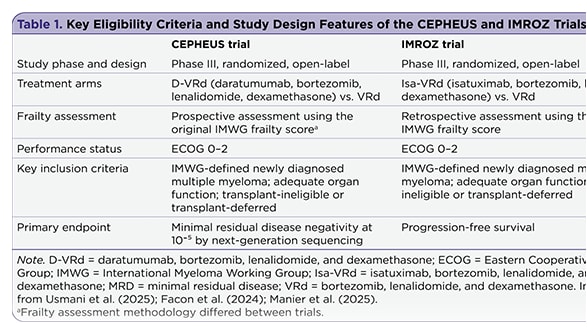
The management of newly diagnosed transplant-ineligible multiple myeloma remains challenging, in part due to the complexity of treatment decisions for frail patients. Recent subgroup analyses provide insight into whether quadruplet therapy may offer advantages over triplet therapy in this population.