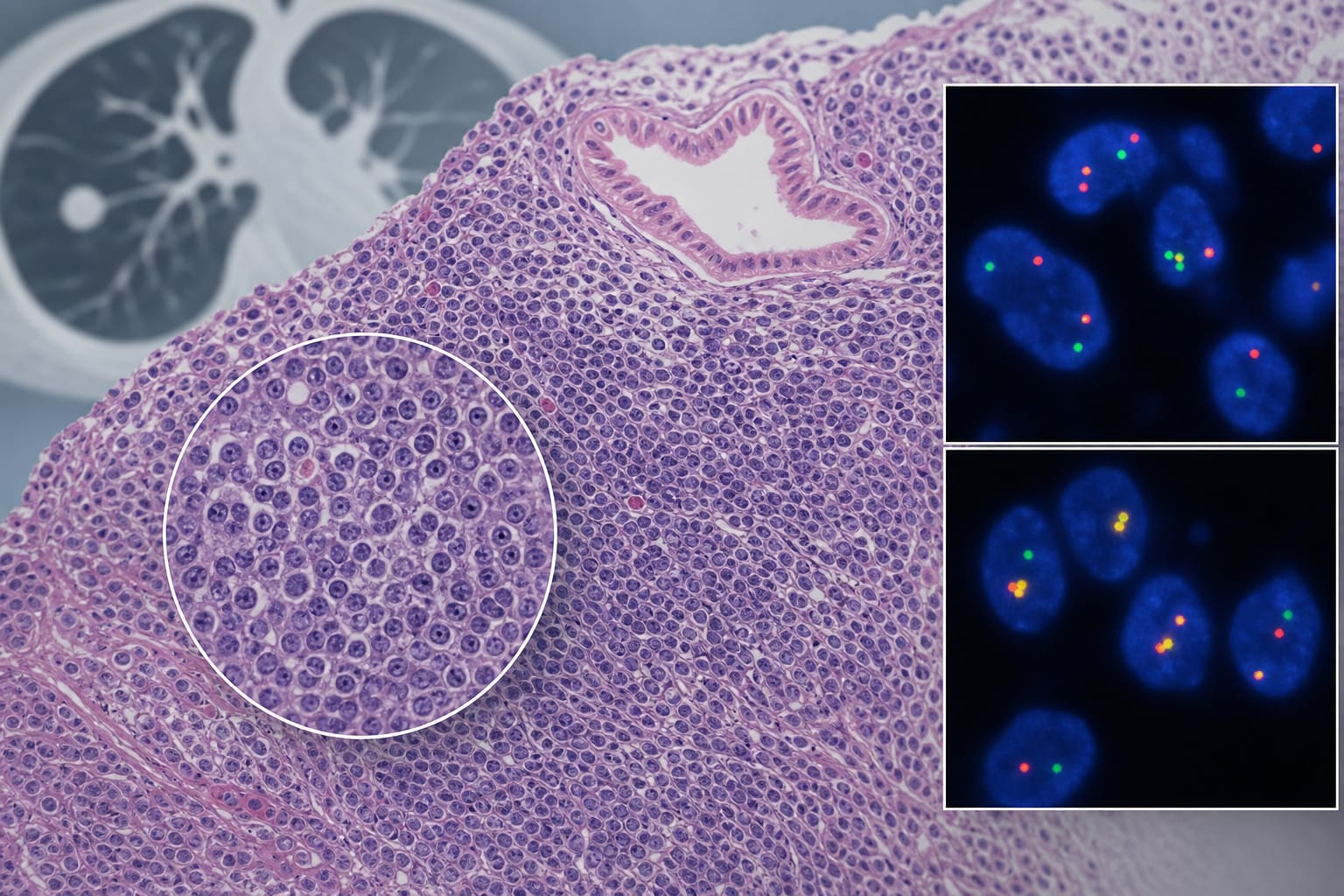
To investigate the association between a germline DICER1 variant and congenital pulmonary airway malformation type IV (CPAM IV) in a pediatric patient.
Approach:
Case Presentation: A 6-year-10-month-old girl diagnosed with CPAM IV underwent whole-exome sequencing (WES) which identified a heterozygous splicing variant in the DICER1 gene, confirmed as germline. The patient had a medical history notable for tonsillectomy performed 2 years earlier for adenoid hypertrophy.
Genetic Analysis: Sanger sequencing confirmed the germline variant (c.4206 + 1G > T) inherited from her father. A somatic DICER1 mutation (c.5438A > G p.E1813G) was also detected.
Follow-Up: At 22 months post-operation, the patient remained clinically stable with no evidence of malignant progression.
Key Findings:
The identified DICER1 variant was classified as likely pathogenic according to ACMG/AMP guidelines.
The presence of both germline and somatic mutations supports a two-hit tumorigenesis model.
Imaging and pathological findings suggest that CPAM IV may represent an early stage within the pleuropulmonary blastoma spectrum.
Interpretation:
The findings indicate a potential link between DICER1 mutations and CPAM IV, suggesting that CPAM IV may not be a stable benign condition but part of a tumor predisposition syndrome.
Limitations:
The study is based on a single case, limiting generalizability and the ability to draw broader conclusions about DICER1 mutations in CPAM IV.
Conclusion:
DICER1 genetic testing may be beneficial for pediatric patients diagnosed with CPAM IV to inform management and surveillance strategies.