Comparing manual vs. automated machine learning and deep learning models for predicting one-year mortality in elderly hip fracture patients - Summary - MDSpire
Advertisement
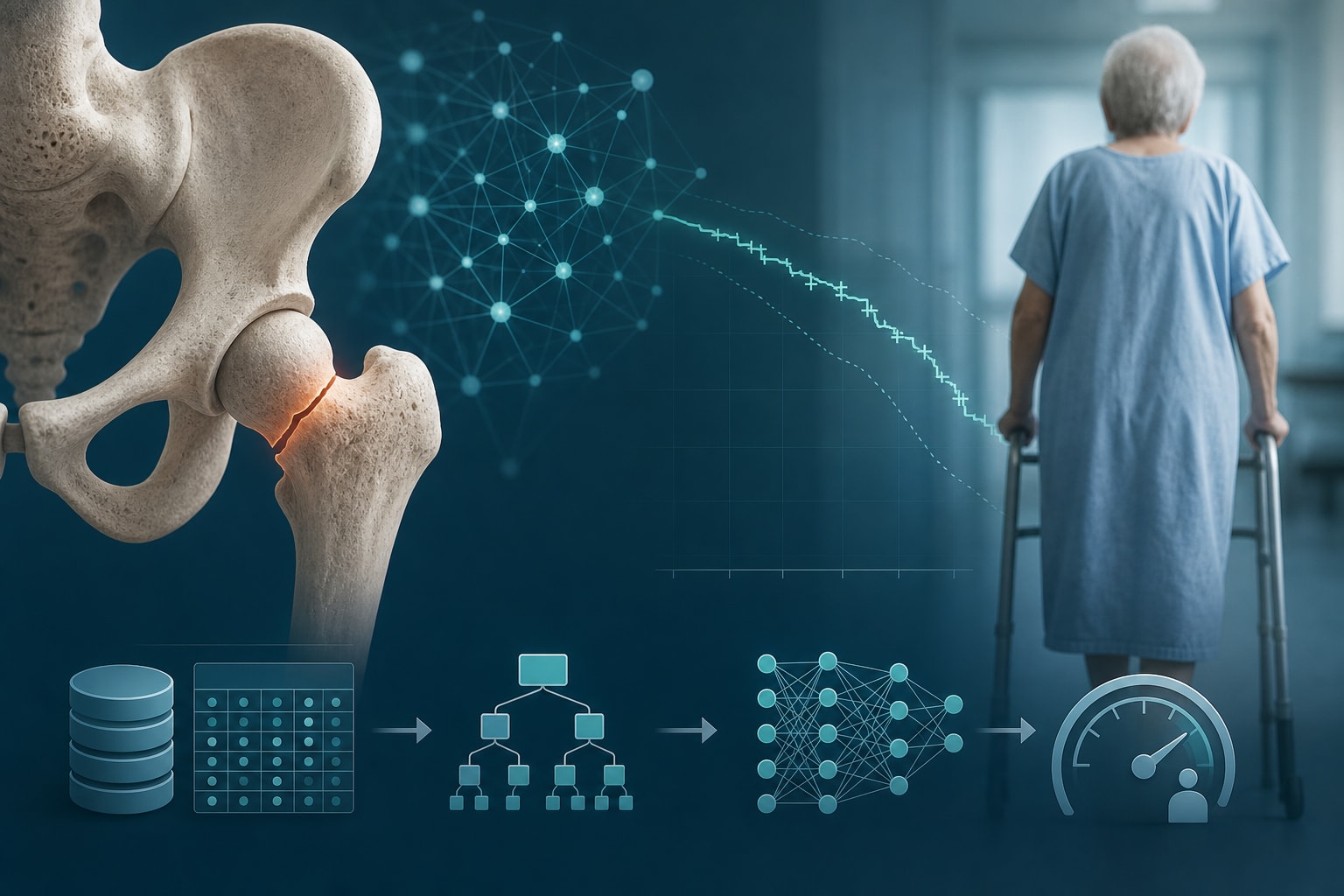
Comparing manual vs. automated machine learning and deep learning models for predicting one-year mortality in elderly hip fracture patients
To evaluate various machine learning (ML) and deep learning (DL) algorithms for predicting one-year mortality among elderly hip fracture patients, and to investigate the effectiveness of an automated ML platform in enhancing model development and evaluation.
Automated ML model via LLM and TPOT frameworks demonstrated comparable performance (AUC = 0.844) with higher recall but lower precision, suggesting a trade-off in model characteristics.
Key predictors of one-year mortality included baseline serum albumin and urea levels, patient age, intraoperative hypothermia, and number of chronic diseases.
Interpretation:
ML-based models, particularly the XGB algorithm, significantly enhance predictive accuracy for one-year mortality among elderly hip fracture patients, while automated ML frameworks offer a practical alternative for clinicians with limited technical expertise.
Limitations:
Retrospective design may introduce biases that could affect the reliability of the findings.
Single-center study limits generalizability, suggesting the need for multi-center validation.
Conclusion:
The study highlights the potential of ML and automated ML approaches in improving mortality risk prediction for elderly hip fracture patients.
UCI Health surgeons are among the earliest adopters in Orange County to use carbon fiber implants for complex spine reconstruction following tumor removal.