Most Salivary Gland Neoplasms Found to Be Benign in Single-Center Study - Summary - MDSpire
Advertisement
Most Salivary Gland Neoplasms Found to Be Benign in Single-Center Study
Analysis of 50 cases shows moderate diagnostic agreement between FNAC and histopathology and identifies pleomorphic adenoma as the most common neoplasm.
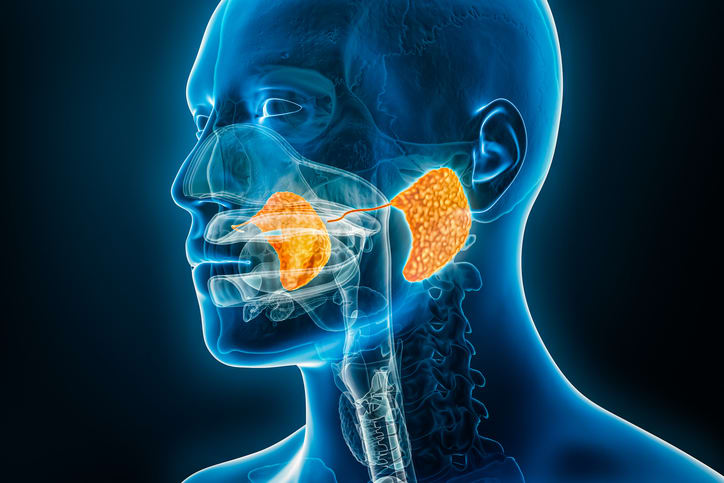
To assess demographic patterns, histopathology, clinical features, anatomic distribution, and short-term outcomes of salivary gland neoplasms.
Approach:
Key Findings:
76% of neoplasms were benign, with pleomorphic adenoma being the most common.
Malignant neoplasms accounted for 24%, primarily mucoepidermoid and adenoid cystic carcinoma.
FNAC showed 100% sensitivity for benign tumors but only 41.7% specificity for malignancy.
Patients ranged in age from 1 to 80 years, with a median age of 45.
Interpretation:
Swelling was the predominant clinical feature, with FNAC being a useful diagnostic tool despite its limitations in specificity, particularly in excluding malignancy.
Limitations:
Small sample size of 50 patients.
Single-center study design.
Short follow-up period of three months, which may affect the assessment of long-term outcomes.
Conclusion:
Surgical excision remains the primary treatment for salivary gland neoplasms, with FNAC serving as a minimally invasive diagnostic tool.