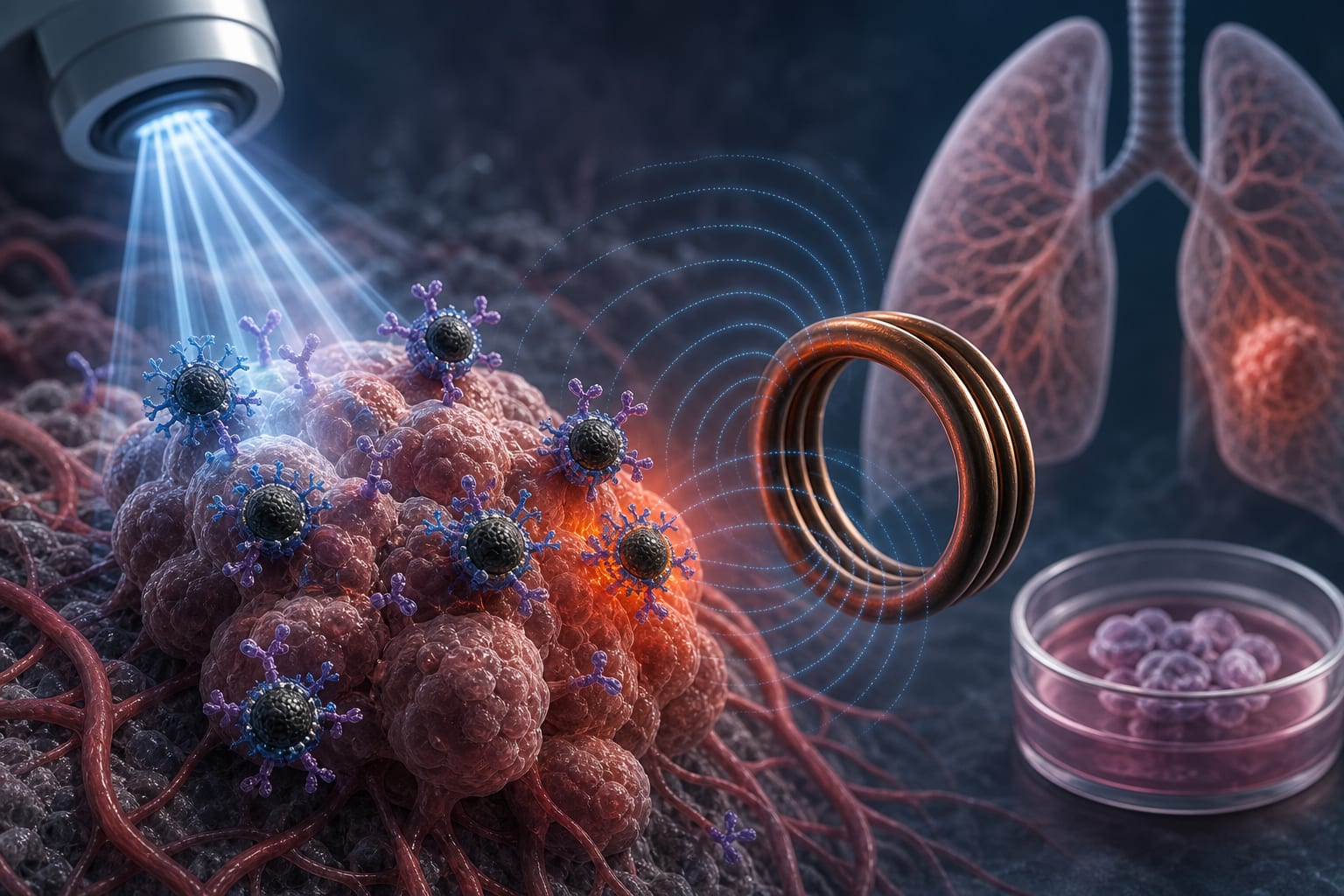
To evaluate a novel strategy combining X-ray irradiation, magnetic fluid hyperthermia, and engineered magnetic nanoparticles to enhance treatment efficacy in lung cancer, addressing the limitations of current therapies.
Key Findings:
Fe@C−PEI−IgG−GOX nanoparticles significantly reduced lung cancer cell viability in vitro, indicating their potential as a targeted treatment.
The enzymatic activity of GOX generated hydrogen peroxide, inducing DNA damage and suppressing colony formation, highlighting the mechanism of action.
In vivo, the combination of radiotherapy and magnetic fluid hyperthermia with the GOX-containing nanoparticles improved therapeutic outcomes, suggesting a synergistic effect.
Interpretation:
The multimodal approach combining targeted magnetic nanoparticles with radiotherapy and hyperthermia shows promise for enhancing lung cancer treatment efficacy, potentially offering a new avenue for patient care.
Limitations:
The study did not mechanistically dissect the contributions or interactions among the individual treatment modalities, which is crucial for optimizing therapeutic strategies.
Conclusion:
The findings suggest that a GOX-based, targeted magnetic nanoplatform combined with radiotherapy and magnetic fluid hyperthermia could be an effective strategy for lung cancer treatment, warranting further preclinical optimization and mechanistic studies to fully understand the interactions involved.
by Agnieszka Stawarska, Magdalena Bamburowicz-Klimkowska, Artur Kasprzak, Monika Ruzycka-Ayoush, Michal Bystrzejewski, Maria Wojewodzka, Michal Wieteska, Ireneusz P. Grudzinski