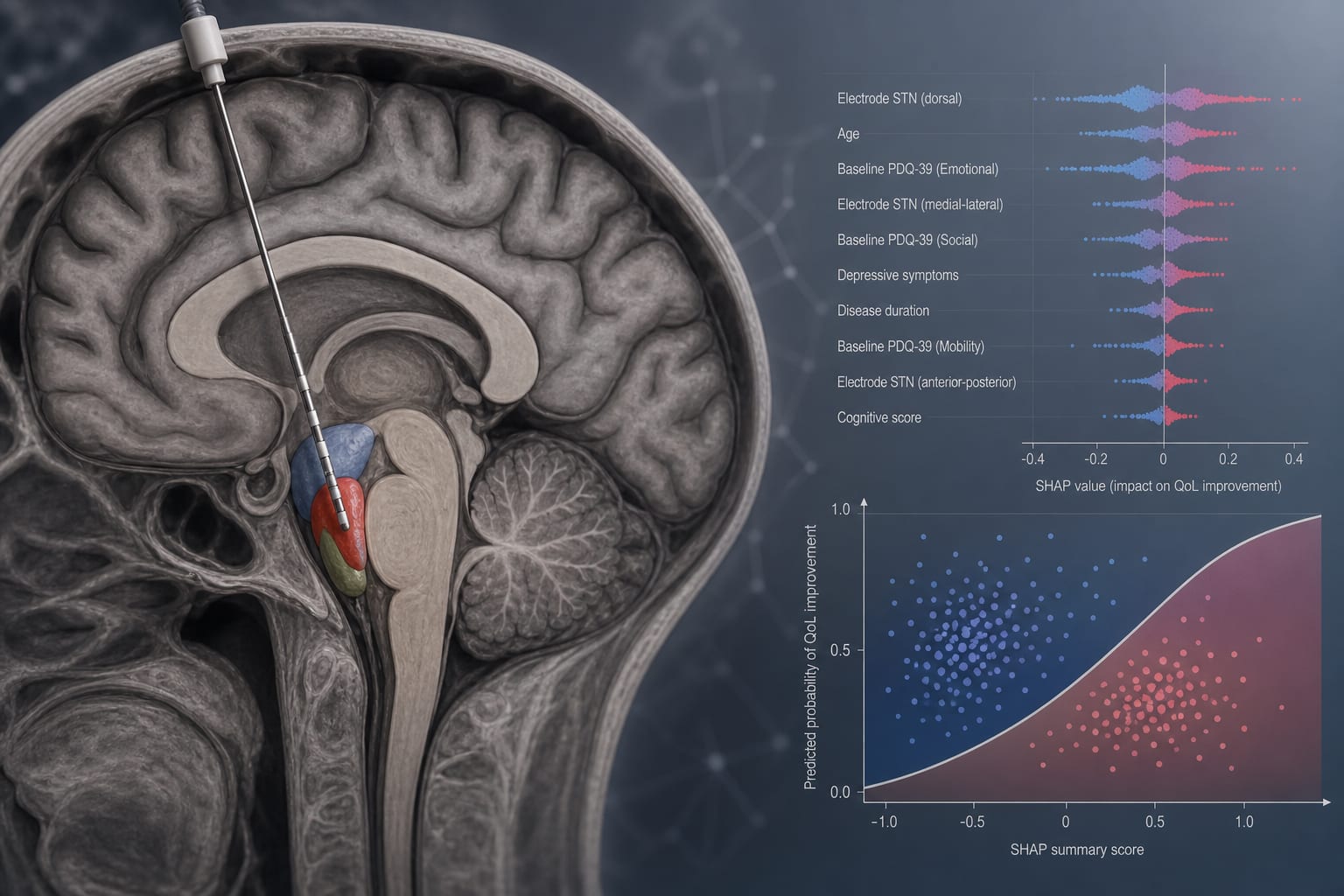
To identify predictors of quality-of-life (QoL) changes in Parkinson's disease patients after subthalamic deep brain stimulation (DBS) using a multimodal approach.
Key Findings:
Younger age is associated with greater QoL improvement post-DBS.
Greater preoperative emotional burden predicts better postoperative QoL outcomes.
Electrode placement at the motor-associative transition in the right subthalamic nucleus is a significant predictor of QoL improvement.
Interpretation:
Remove unsupported claims about model performance.
Limitations:
The study may not account for all potential confounding variables affecting QoL outcomes.
Results are based on a specific patient population and may not generalize to all Parkinson's disease patients.
Conclusion:
Remove unsupported recommendations regarding counseling and treatment planning.