Case Report: Possible spatially-distinct de novo invasive cervical carcinoma in the setting of isolated persistent HPV16 after ALA-PDT-mediated histological clearance of CIN3 - Summary - MDSpire
Conexiant’s news site is now MDSpire News. Learn more
Advertisement
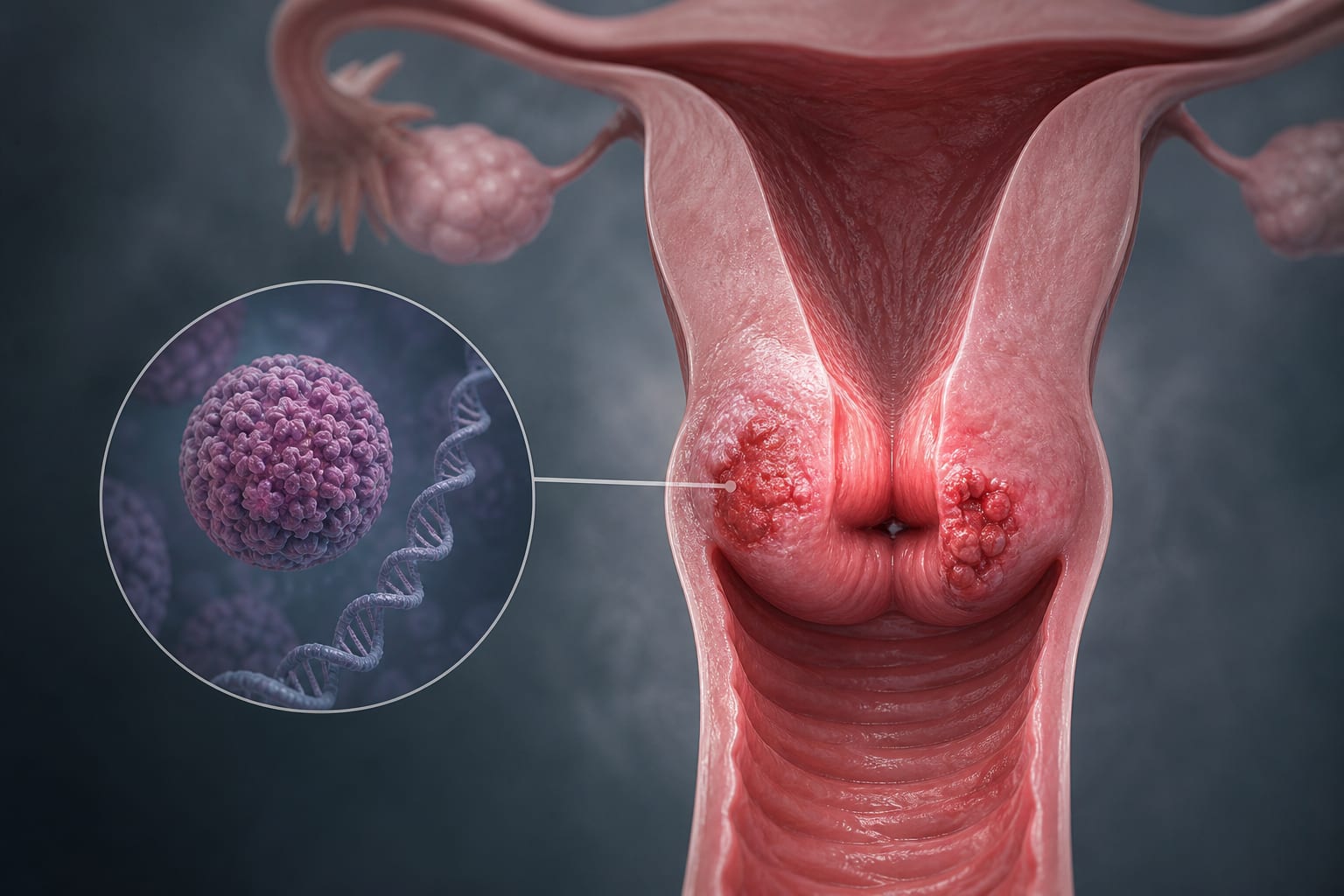
Case Study: Potentially Spatially-Separated De Novo Invasive Cervical Carcinoma Following Isolated Persistent HPV16 After Histological Clearance of CIN3 via ALA-PDT
To document a case of invasive cervical carcinoma arising after histological remission of CIN3 in a patient with persistent HPV16 infection.
Approach:
Method: label
Method: text
Key Findings:
Persistent isolated HPV16 may retain long-term malignant potential after CIN3 resolution.
Invasive carcinoma was confirmed in a spatially distinct area from the original CIN3 lesions.
Interpretation:
The findings suggest a potential link between persistent HPV16 and de novo cervical carcinoma, although the possibility of pre-existing multifocal disease remains.
Limitations:
The case is based on a single observational report without molecular evidence of viral integration.
Lack of longitudinal molecular data prevents verification of viral integration events.
Conclusion:
Risk-stratified intensified surveillance is necessary for patients with persistent HPV16 after CIN3 treatment, and adherence to follow-up is crucial to prevent advanced disease.
The goal of this clinical trial is to learn if Adaptive Radiation Therapy (ART) is safe and effective in treating patients with locally advanced pancreatic cancer.