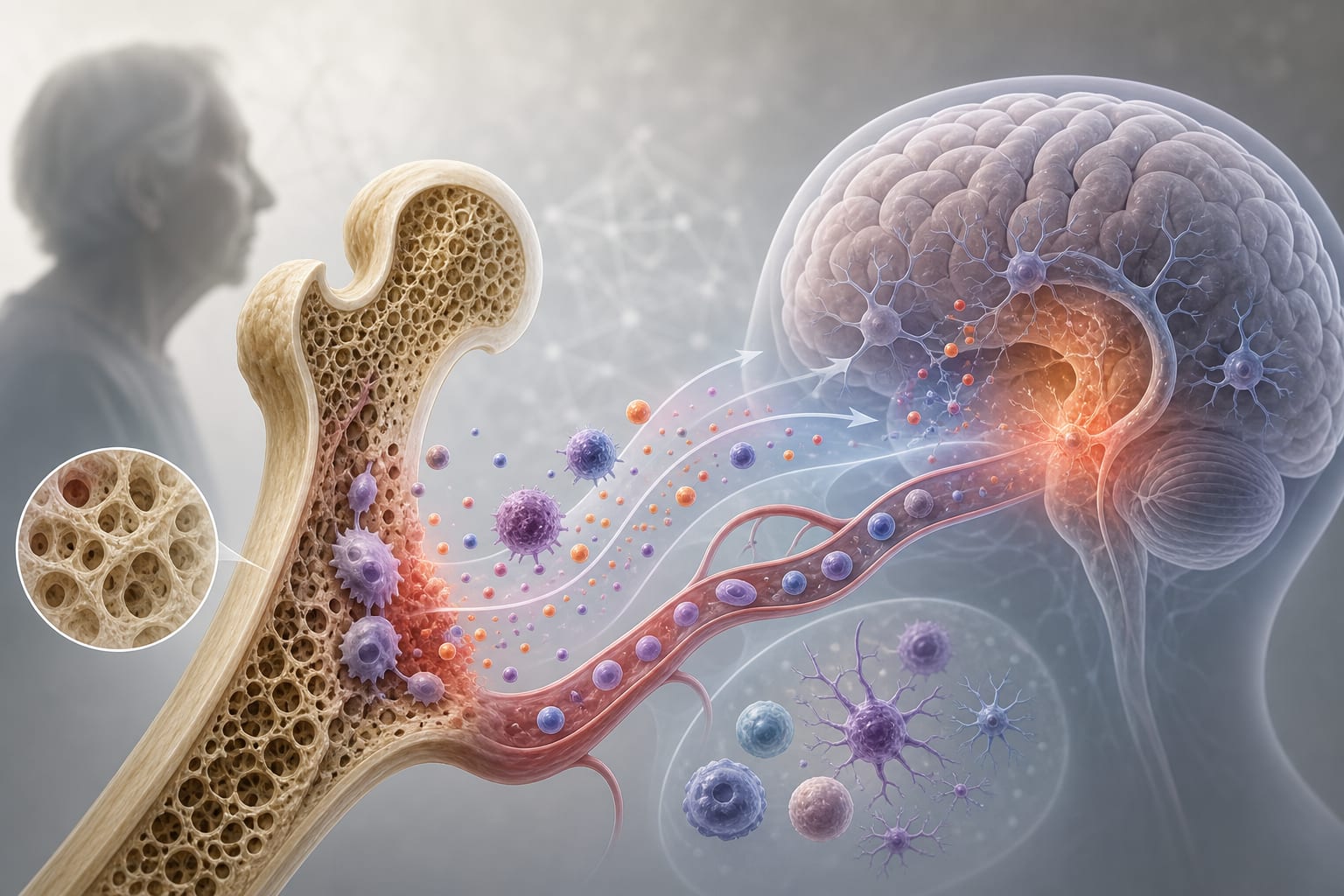
Osteoimmuno-brain axis: a bridge connecting osteoporosis and cognitive decline and its clinical significance in dementia and Alzheimer’s disease - Summary - MDSpire
To explore the connections between osteoporosis and cognitive dysfunction, particularly Alzheimer’s disease, through the osteoimmune-brain axis.
Approach:
Review of Evidence: Systematically synthesizes evidence from basic mechanisms to clinical studies regarding the osteoimmune-brain connection.
Key Questions Addressed: Investigates the causal nature of associations, human validation of bone-derived factors, and the operational dynamics of the osteoimmune-brain axis.
Key Findings:
Osteoporosis and Alzheimer's disease frequently co-occur, suggesting shared pathophysiological links.
The osteoimmune-brain axis mediates interactions between skeletal and cerebral pathology through systemic inflammation and cytokine release.
Bone-derived factors like osteocalcin, sclerostin, and lipocalin-2 influence brain function and may contribute to neuroinflammation.
Chronic low-grade systemic inflammation is a common feature of aging that affects both bone and brain health.
Hormonal dysregulation, particularly involving sex hormones like estrogen and FSH, links osteoporosis and cognitive decline.
Interpretation:
This review provides a theoretical foundation for understanding the connections between osteoporosis and neurodegenerative diseases.
Limitations:
The review does not establish direct causal relationships but rather explores associations.
Further research is needed to validate the human relevance of identified bone-derived factors.
Conclusion:
Understanding the osteoimmune-brain connection may inform future research on age-related conditions.