LAG3-centered multiplex immune profiling as a prognostic biomarker in hepatocellular carcinoma patients receiving Anti-PD-1 antibodies plus lenvatinib therapy - Summary - MDSpire
Advertisement
LAG3-centered multiplex immune profiling as a prognostic biomarker in hepatocellular carcinoma patients receiving Anti-PD-1 antibodies plus lenvatinib therapy
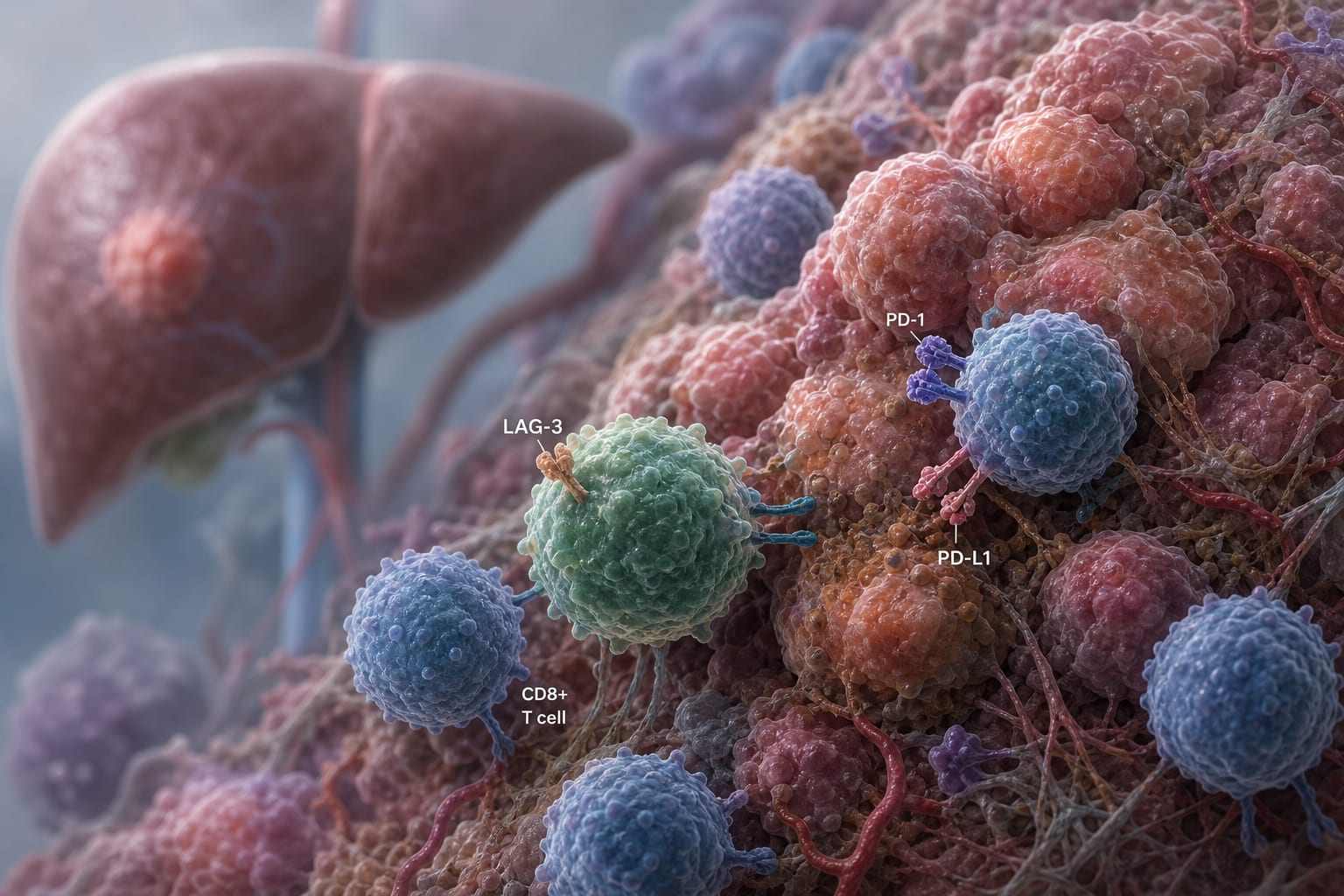
To investigate the characteristics and functional status of LAG-3, CD8, and PD-1 in the immune microenvironment of hepatocellular carcinoma (HCC) patients and evaluate their prognostic value for the efficacy of anti-PD-1 antibodies combined with Lenvatinib.
Approach:
Study Design: A retrospective study involving 77 HCC patients treated with Lenvatinib and anti-PD-1 antibodies from January 2018 to June 2023.
Response Assessment: Treatment responses were categorized as complete response (CR), partial response (PR), stable disease (SD), and progressive disease (PD).
Statistical Analysis: Multivariate Cox regression analysis was performed to identify independent prognostic factors for overall survival (OS) and progression-free survival (PFS).
Key Findings:
Age stratification (<60 years vs ≥60 years), cirrhosis status, and ECOG performance status were associated with treatment response.
High pan-immune-inflammation value (PIV) and low LAG-3+ cell counts were independent prognostic factors for overall survival (OS) with hazard ratios of 9.239 and 0.190, respectively.
Low albumin levels and high neutrophil-to-lymphocyte ratio (NLR) were independent prognostic factors for progression-free survival (PFS) with hazard ratios of 0.196 and 2.894, respectively.
Interpretation:
LAG-3 may serve as a prognostic factor for survival benefits in HCC patients receiving Lenvatinib plus anti-PD-1 antibodies.
Limitations:
Retrospective design may introduce selection bias.
Limited sample size may affect the generalizability of findings.
Conclusion:
LAG-3 is discussed as a potential prognostic factor for HCC patients treated with Lenvatinib and anti-PD-1 antibodies.