Sex-Related Differences in Conduit Strategy and Early Outcomes After Sternum-Sparing On-Pump Multivessel CABG via Left Anterior Thoracotomy - Summary - MDSpire
Advertisement
Sex-Related Differences in Conduit Strategy and Early Outcomes After Sternum-Sparing On-Pump Multivessel CABG via Left Anterior Thoracotomy
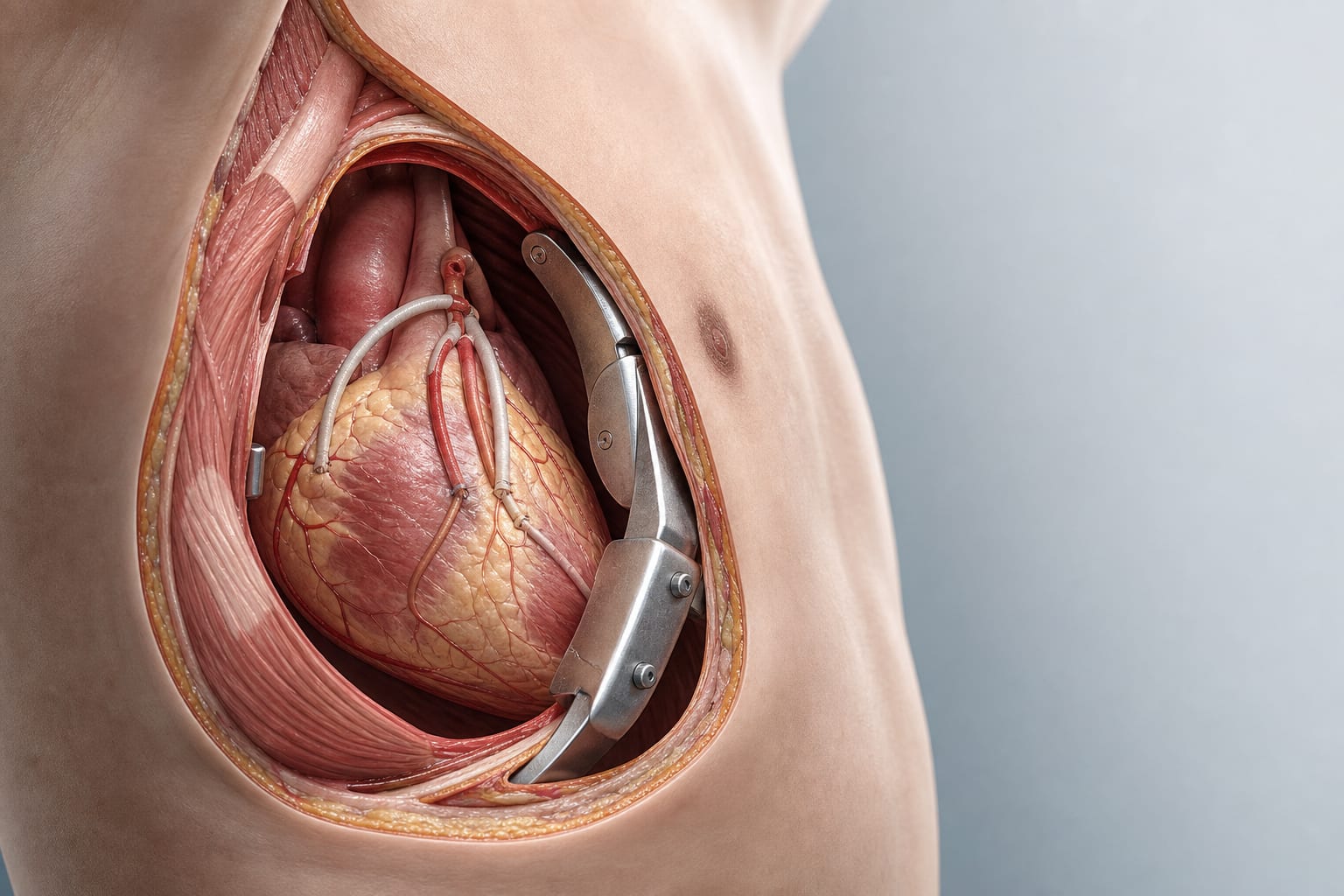
To evaluate sex-related differences in baseline characteristics, operative strategy, and in-hospital outcomes in patients undergoing minimally invasive multivessel CABG using total coronary revascularization via left anterior thoracotomy.
Key Findings:
Women were older (69.2 vs 66.7 years) and had a higher EuroSCORE II (3.85 vs 2.71).
Diabetes mellitus was more prevalent in women (44.2% vs 34.0%).
Total arterial grafting (35.8% vs 21.7%) and radial artery use (62.2% vs 35.5%) were more frequent in men.
Men received more distal anastomoses (3.17 vs 2.92).
In-hospital mortality, stroke, and MACCE rates were similar between sexes.
Interpretation:
Sternum-sparing multivessel CABG via left anterior thoracotomy resulted in similar early postoperative outcomes for men and women, despite differences in baseline characteristics and conduit selection.
Limitations:
Observational design limits causal inferences.
Low event rates may affect the robustness of findings.
Conclusion:
The study suggests that gender differences in baseline characteristics and conduit selection do not significantly impact early postoperative outcomes in sternum-sparing CABG.