To review groundbreaking diagnostic technology for the ocular surface and anterior segment in ophthalmology, emphasizing its significance in improving patient outcomes.
Key Findings:
AS-OCT can differentiate between intraepithelial and invasive ocular surface tumors, impacting biopsy decisions.
Epithelial mapping via AS-OCT aids in diagnosing keratoconus and tracking its progression, influencing treatment options.
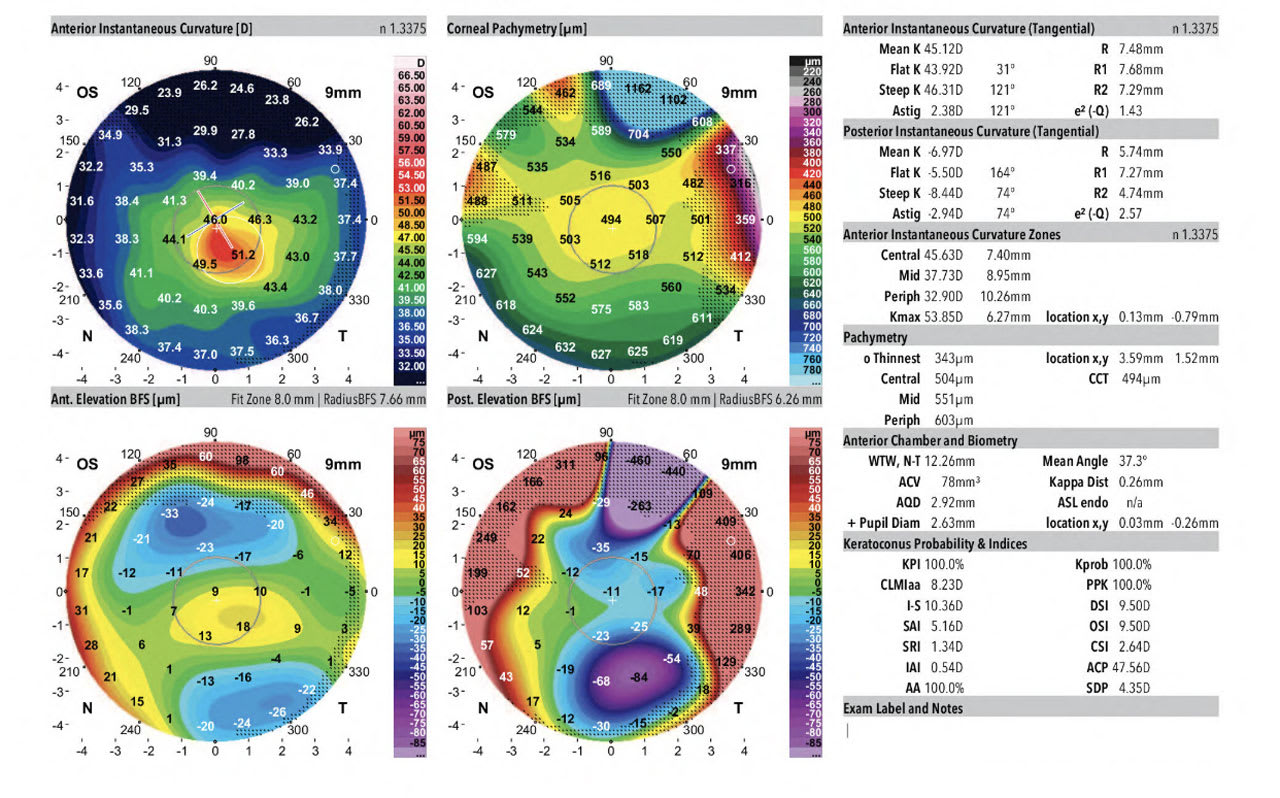
Corneal tomography devices like Pentacam and Galilei provide metrics to assess keratoconus risk, essential for refractive surgery planning.
Confocal microscopy offers high diagnostic sensitivity and specificity for Acanthamoeba and fungal keratitis, improving treatment outcomes.
Interpretation:
The advancements in diagnostic technology enhance clinicians' ability to identify and manage anterior segment diseases effectively, leading to improved patient outcomes and tailored treatment strategies.
Limitations:
The review focuses primarily on technology available in the United States, which may not reflect global advancements and practices.
The effectiveness of these technologies can vary based on clinician experience and equipment availability, potentially affecting diagnostic accuracy.
Conclusion:
Innovative diagnostic tools such as AS-OCT, corneal tomography, and confocal microscopy significantly improve the diagnosis and management of anterior segment diseases, ultimately enhancing patient care.