Radiomics-Based AI for the Diagnosis and Prognosis of Vessels Encapsulating Tumor Clusters in Hepatocellular Carcinoma: Systematic Review and Meta-Analysis - Summary - MDSpire
Advertisement
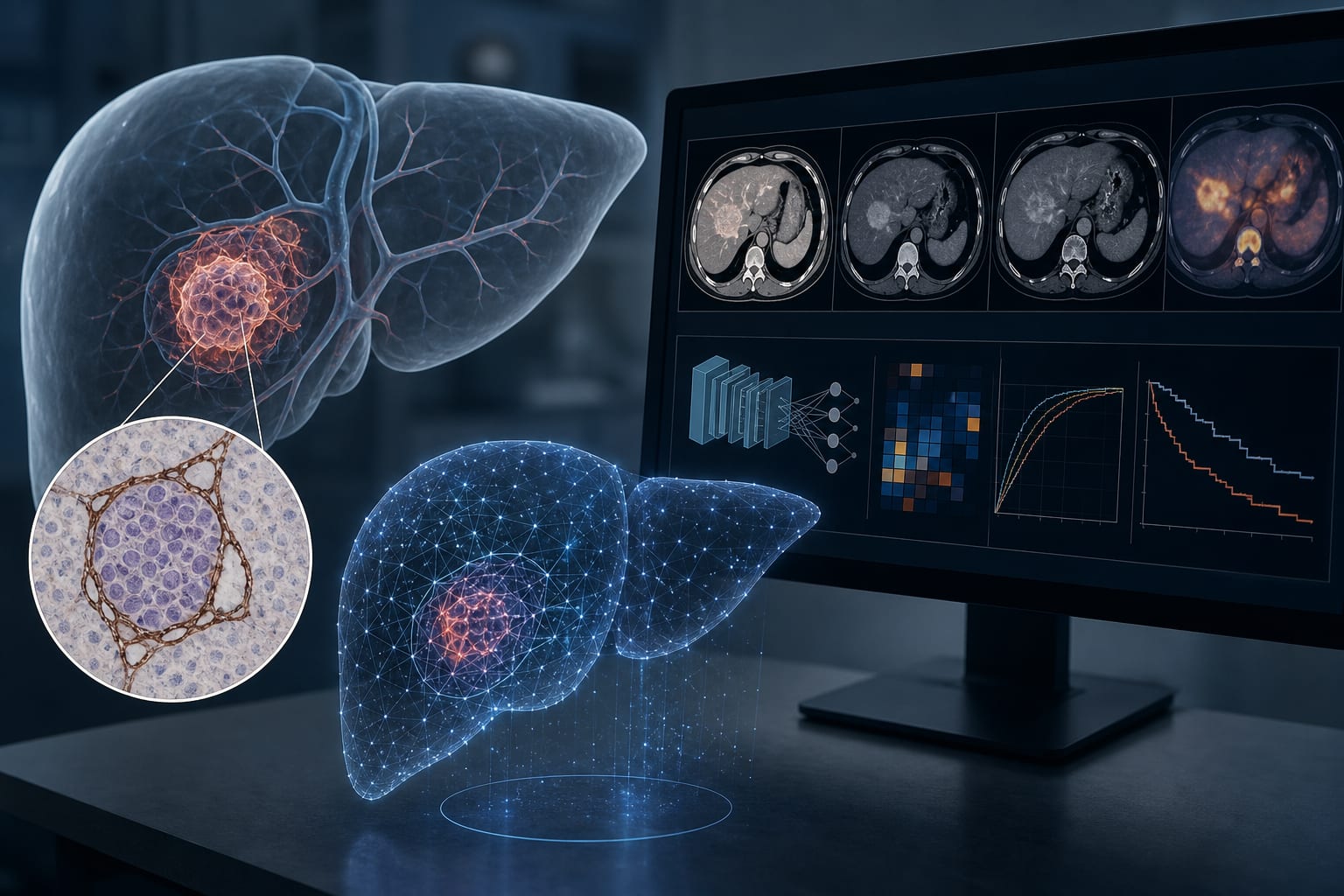
Radiomics-Based AI for the Diagnosis and Prognosis of Vessels Encapsulating Tumor Clusters in Hepatocellular Carcinoma: Systematic Review and Meta-Analysis
To synthesize existing evidence to evaluate the overall diagnostic accuracy and sources of heterogeneity in image-based AI models for predicting VETC status and its prognostic value in HCC.
Approach:
Systematic Review and Meta-Analysis: Adhered to PRISMA-DTA guidelines, CHARMS checklists, and was prospectively registered on PROSPERO.
Literature Search: Conducted across four major databases: PubMed, Embase, Web of Science, and Cochrane Library, with updates for reproducibility and a specified time frame.
Key Findings:
Vessels encapsulating tumor clusters (VETCs) are an independent poor prognostic factor in HCC.
AI technologies, particularly deep learning and radiomics, show potential for noninvasive prediction of VETC status.
Existing studies exhibit variability in model performance and lack methodological standardization.
Interpretation:
The review addresses gaps in existing literature by pooling diagnostic accuracy across multiple imaging modalities and integrating risk-of-bias appraisal.
Limitations:
Variability in model performance across studies impacts the reliability of findings.
Small sample sizes in existing research limit the generalizability of results.
Lack of methodological standardization in AI applications affects comparability.
Conclusion:
This review provides evidence for preoperative decision-making regarding VETC in HCC.
Dana-Farber Cancer Institute's Dr. Sara Tolaney presented a subgroup analysis of the ASCENT-04 study based on biomarkers. Across all subgroups, patients who received sacituzumab govitecan plus pembro as first-line therapy had longer progression-free survival compared to standard therapy.