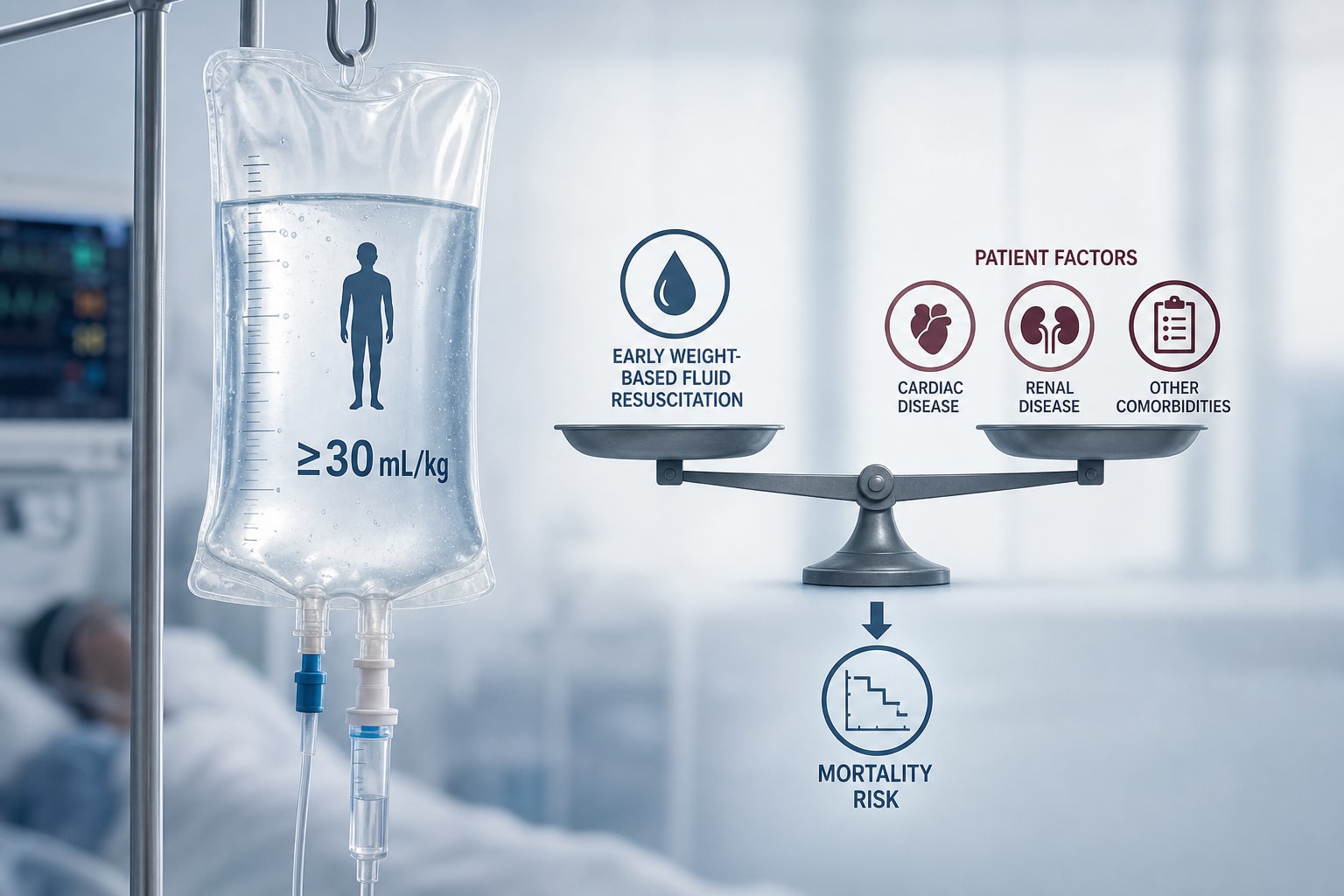
To evaluate the association between administration of 30 mL/kg or more of fluid within 6 hours of hospital arrival and 30-day mortality in patients with community-onset sepsis, considering comorbid conditions and weight-based fluid dosing.
Approach:
Key Findings:
Fluid resuscitation is a key component of sepsis management as per SSC guidelines.
Concerns exist regarding fluid administration in patients with severe comorbidities.
Patients with intermediate lactate elevation may benefit from fluid resuscitation.
Different approaches to weight-based fluid dosing can significantly affect fluid volume administered.
Interpretation:
The study evaluates fluid resuscitation practices in sepsis management, particularly for patients with comorbidities.
Limitations:
Limited power to evaluate individual severe comorbidities due to small patient numbers.
Variability in sepsis coding practices could introduce biases.
Conclusion:
The study provides insights into fluid resuscitation practices and their association with mortality in sepsis patients.
by Elizabeth S. Munroe, Emily Walzl, Sarah Seelye, Megan Cahill, Tawny Czilok, Jessica Jones, Michael T. Kenes, Patricia J. Posa, Stephanie Parks Taylor, Hallie C. Prescott