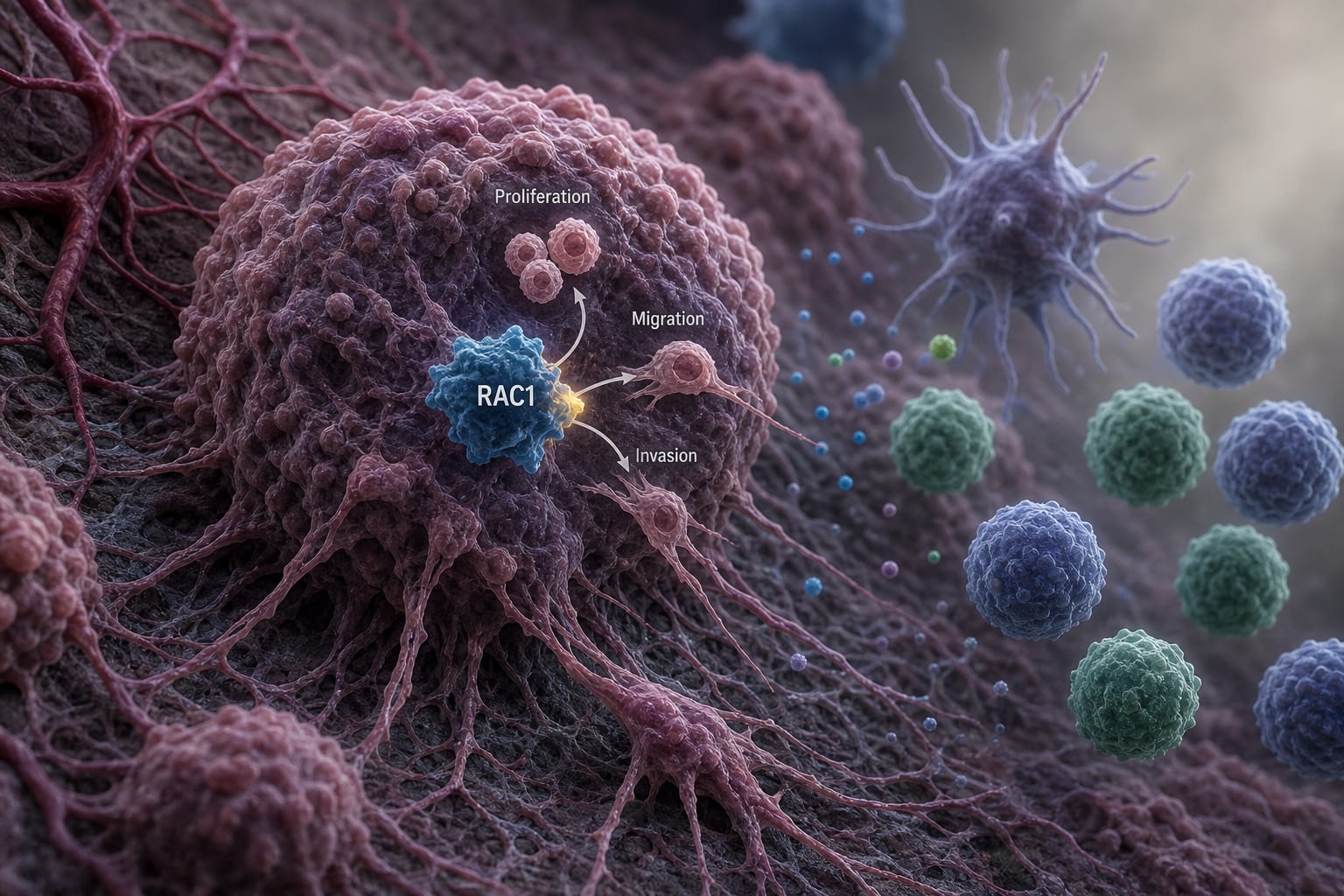
To evaluate RAC1 expression and its prognostic value in glioblastoma (GBM) and its influence on the immune microenvironment, particularly regarding immune cell interactions.
Approach:
Key Findings:
RAC1 was upregulated in most cancers, with the highest prognostic accuracy in GBM.
Lasso-Cox regression retained RAC1 across overall survival (OS), disease-specific survival (DSS), and progression-free interval (PFI) endpoints, with HR = 2.61 (P = 0.003).
RAC1-high cells exhibited activation of PI3K-AKT-mTOR and IFN-gamma pathways, with upregulated MHC-I but absent PD-L1, indicating potential resistance to immunotherapy.
Palbociclib inhibited GBM cell viability in a dose- and time-dependent manner.
Interpretation:
RAC1 serves as a prognostic biomarker in GBM, indicating IFN-responsive tumor subpopulations that may benefit from CDK4/6 inhibitor strategies, rather than traditional immunotherapy approaches.
Limitations:
The study primarily focuses on RAC1 without exploring other potential biomarkers.
The implications of RAC1 expression in other tumor types were not fully addressed.
Potential biases in data sources used may affect the generalizability of the findings.
Conclusion:
RAC1 is a significant prognostic marker in GBM and may guide therapeutic strategies involving CDK4/6 inhibitors.