Functional ultrasound assessment of cerebral blood flow and brain connectivity in a pilocarpine-induced acute epileptic seizures in mice - Summary - MDSpire
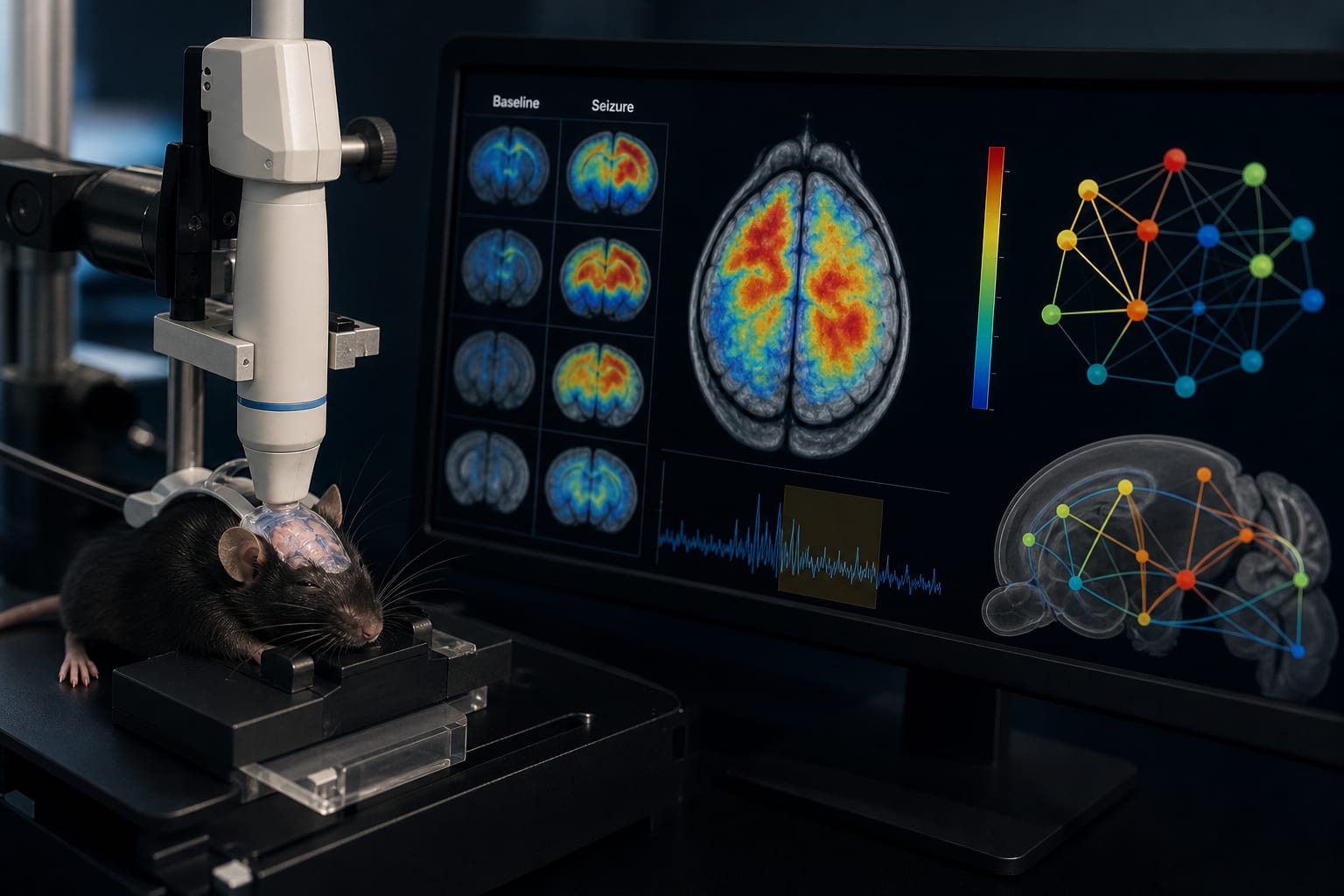
To detect changes in cerebral blood volume (CBV) and alterations in global brain functional network connectivity during the acute seizure state of temporal lobe epilepsy (TLE) in mice using functional ultrasound imaging (fUS), highlighting the significance of these changes for understanding TLE.
Approach:
Key Findings:
Most brain regions exhibited changes in relative CBV (rCBV), with all except the intermediodorsal nucleus of the thalamus and striatum showing an initial increase followed by a decrease, suggesting a complex response to seizures.
The reticular nucleus of the thalamus showed earlier rCBV changes compared to other nuclei, indicating its potential role in seizure dynamics.
Overall brain functional network connectivity underwent distinct modifications during the acute seizure state, which may have implications for understanding TLE.
Interpretation:
CBV exhibited heterogeneous changes across the brain, indicating complex dynamics during seizures, while functional connectivity alterations suggest remodeling of brain networks, which could inform future therapeutic strategies.
Limitations:
Study conducted only in mice, limiting generalizability to human conditions; further research is needed to validate findings in human subjects.
Potential stress factors in animal handling and experimental setup may affect results.
Conclusion:
The study demonstrates significant changes in CBV and functional connectivity during acute seizures in TLE, highlighting the role of cerebral hemodynamics in epilepsy and suggesting avenues for future research and treatment.