CTSG-expressing mast cells confer resistance to immunotherapy in colorectal cancer
-
By
-
Xuehui Jiang
-
Runsheng Hong
-
Zilin Liu
-
Chao Zhong
-
Yun Dai
-
July 1, 2026
-
Objective:
To characterize mast cell subsets in the colorectal cancer (CRC) tumor microenvironment and assess their association with immunotherapy response.
Approach:
- Single-cell RNA sequencing: Used to characterize mast cell subsets in the CRC tumor microenvironment.
- Bulk RNA sequencing: Applied to assess the association of mast cells with immunotherapy response.
- Murine orthotopic CRC model: Employed to explore how mast cells regulate anti-tumor immunity.
- Multi-omics approaches: Utilized to investigate the role of mast cells in the tumor microenvironment.
Key Findings:
- Tumor-infiltrating mast cells displayed altered transcriptional states in CRC.
- Mast cell deficiency significantly reduced tumor growth and increased immune cell infiltration.
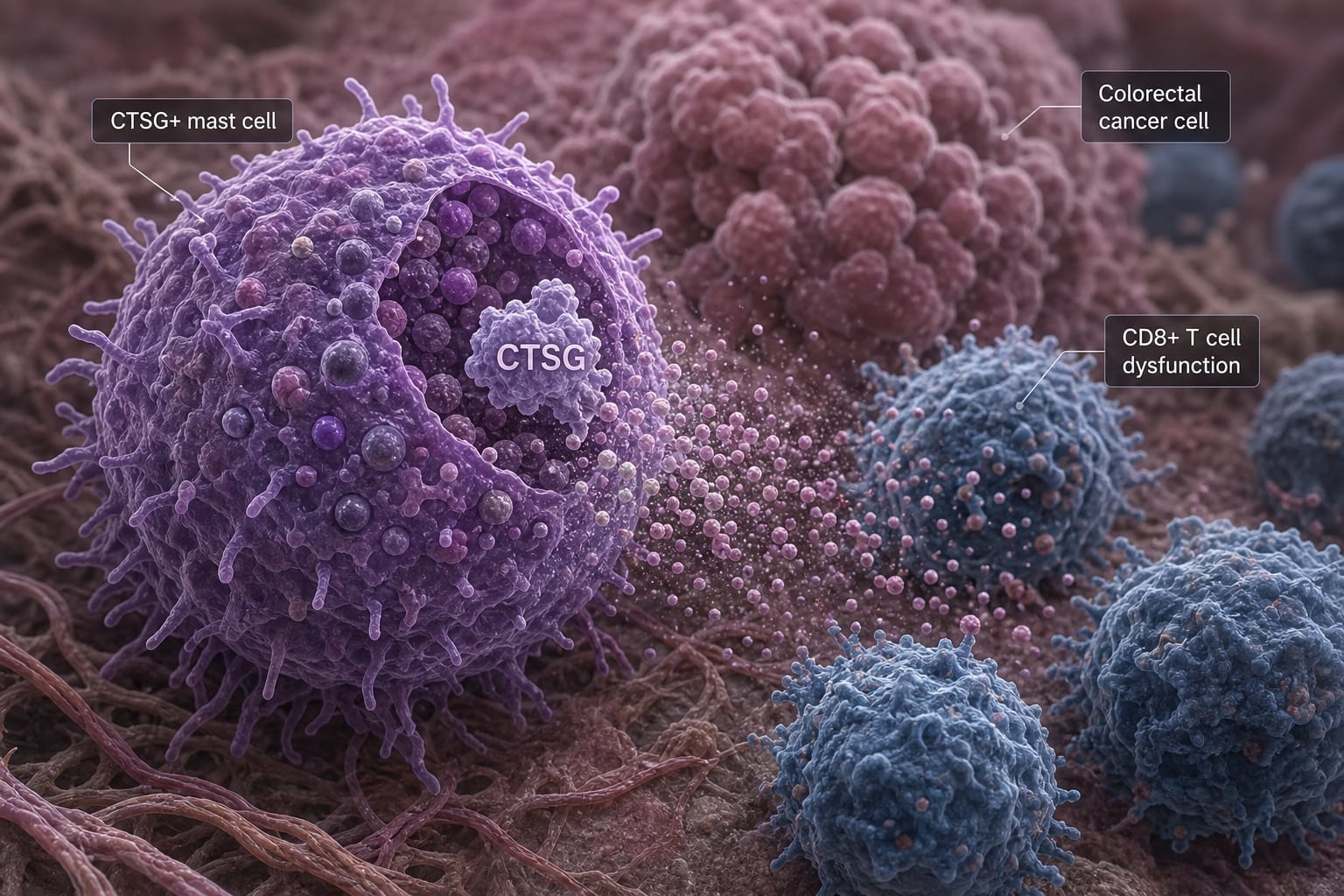
- A subset of mast cells expressing cathepsin G (CTSG) was associated with immunotherapy resistance and poor prognosis.
- CTSG contributed to tumor metabolic adaptation and limited immune recruitment.
- Interactions between mast cells and tumor cells were mediated via protease-activated receptor 2 (PAR2) signaling.
- Inhibition of CTSG improved CD8+ T cell recruitment and enhanced the efficacy of anti-PD-1.
Interpretation:
CTSG+ mast cells are linked to a metabolically active and immune-restricted microenvironment in CRC.
Limitations:
- The study primarily focused on murine models, which may not fully replicate human CRC.
- Further research is necessary to validate findings in larger human cohorts.
Conclusion:
CTSG+ mast cells represent a previously underappreciated component of the CRC tumor microenvironment that contributes to immunotherapy resistance.