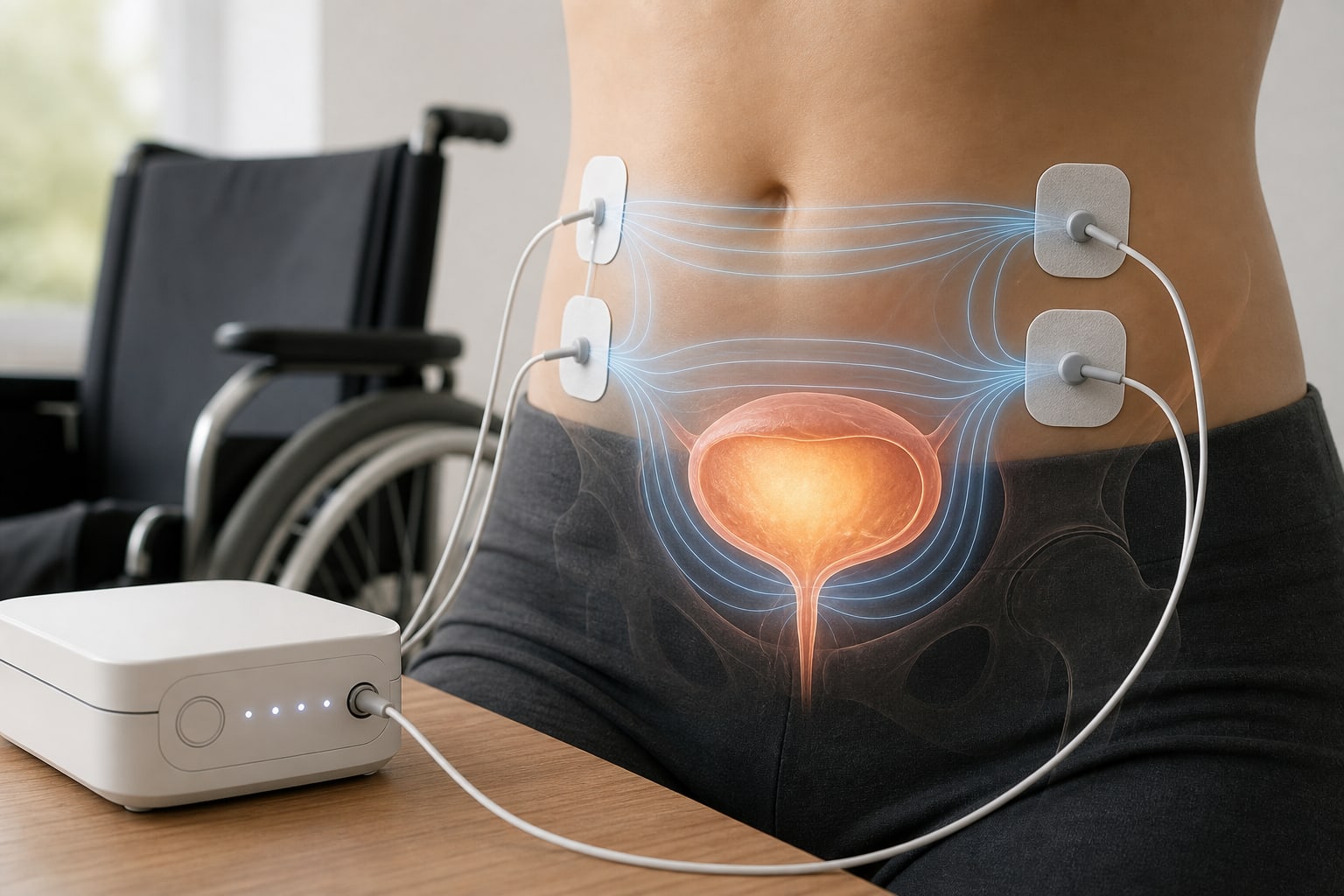
Investigation of bioimpedance as a method for wearable noninvasive bladder volume measurements in individuals with spinal cord injury or disease: protocol of a feasibility study - Summary - MDSpire
Advertisement
Investigation of bioimpedance as a method for wearable noninvasive bladder volume measurements in individuals with spinal cord injury or disease: protocol of a feasibility study
To evaluate the feasibility of a bioimpedance (BI) sensor for noninvasive bladder volume monitoring in individuals with spinal cord injury or disease (SCI/D) and neurogenic lower urinary tract dysfunction (NLUTD), potentially improving bladder management.
Approach:
Key Findings:
NLUTD affects 70-84% of individuals with SCI/D, leading to complications like urinary incontinence and recurrent UTIs, highlighting the need for effective monitoring.
Intermittent catheterization is the first-line management but is often impractical due to varying daily factors, underscoring the need for alternatives.
BI technology offers a noninvasive method for continuous bladder volume monitoring, which could transform bladder management.
Interpretation:
The study aims to validate the BI sensor's ability to measure bladder volume noninvasively and continuously, potentially improving bladder management for individuals with SCI/D by providing real-time data.
Limitations:
The study is observational and may not provide definitive clinical validation, which is a common limitation in feasibility studies.
The sample size of 60 participants may limit generalizability, necessitating further research with larger cohorts.
Conclusion:
The study will systematically investigate the feasibility and practical limitations of wearable bioimpedance measurements for bladder volume monitoring, which could significantly enhance patient care.