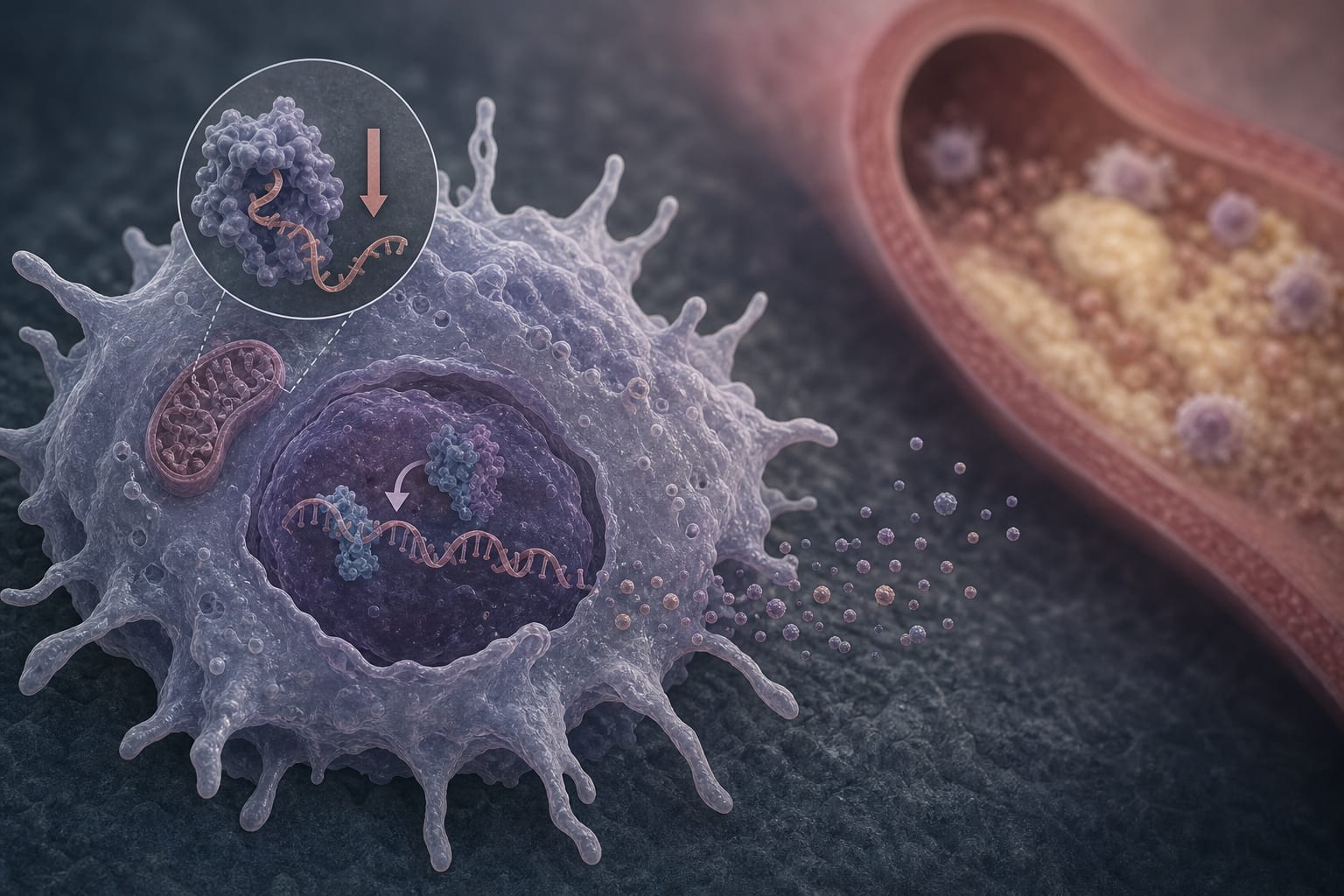
To investigate the changes associated with CARS2 suppression in THP-1 macrophages and its role in modulating inflammatory responses.
Key Findings:
CARS2 suppression led to an increased interferon-like response in THP-1 macrophages, indicating a shift in immune response.
NF-κB activation was modestly diminished in CARS2-suppressed cells, suggesting altered inflammatory signaling.
Reduced CARS2 levels did not significantly affect mitochondrial function or respiratory complex abundance, indicating a specific role in inflammation.
CARS2 suppression was associated with increased expression and secretion of inflammatory cytokines, highlighting its regulatory role.
Interpretation:
The results suggest an anti-inflammatory role for CARS2 in THP-1-derived macrophages, indicating its importance beyond mitochondrial functions and its potential as a therapeutic target.
Limitations:
The study primarily focuses on a single cell model (THP-1 macrophages), which may limit the generalizability of the findings; future studies should explore other cell types.
The mechanisms underlying the observed pro-inflammatory profile were not fully elucidated, warranting further investigation into the pathways involved.
Conclusion:
CARS2 suppression induces a pro-inflammatory profile in THP-1 macrophages without causing detectable mitochondrial dysfunction.