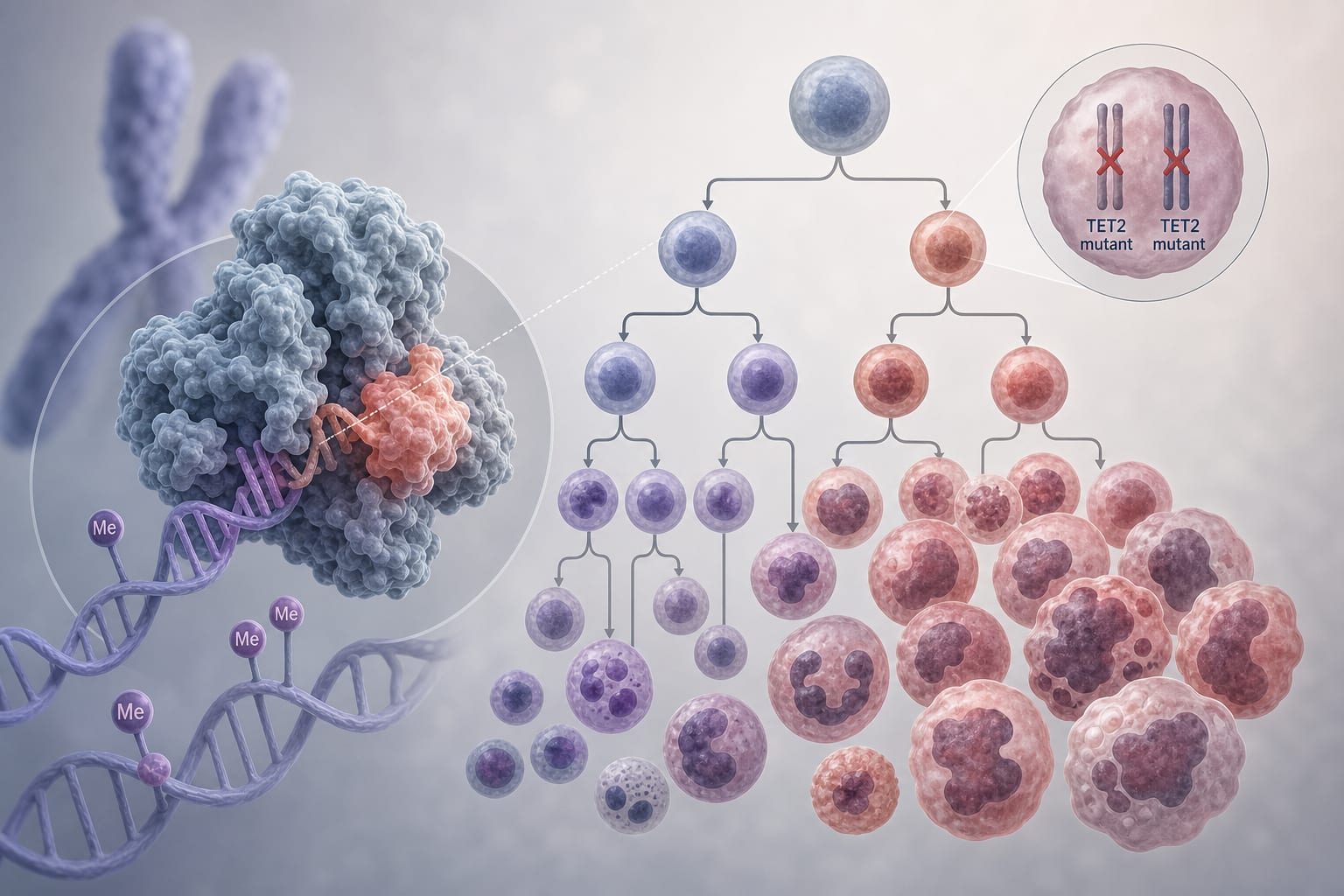
To investigate the clinical and prognostic relevance of TET2 clonal hierarchy and probable biallelic TET2 inactivation in myelodysplastic syndromes (MDS).
Key Findings:
TET2 mutations were the third most common in the institutional cohort, with a prevalence that increased with age.
Ancestral TET2 mutations were associated with younger age, higher monocyte counts, and lower IPSS-M risks.
Secondary TET2 mutations were enriched for higher-risk WHO 2022 criteria subtypes and had a higher average number of co-mutations.
Secondary TET2 mutations were associated with shorter overall survival compared to ancestral TET2 mutations.
TET2 clonal hierarchy retained prognostic significance when analyzed with IPSS-R.
Interpretation:
Limitations:
The study's findings are based on specific cohorts and may not be generalizable to all MDS patients.
The analysis of overall survival may be influenced by treatment variations among patients.