Cancer-related microangiopathic hemolytic anemia (CR-MAHA) in a metastatic breast cancer patient with a germ-line ATM single nucleotide variant and an ESR1 fusion variant: insights from a case report on early diagnosis and improved outcomes - Summary - MDSpire
Advertisement
Cancer-related microangiopathic hemolytic anemia (CR-MAHA) in a metastatic breast cancer patient with a germ-line ATM single nucleotide variant and an ESR1 fusion variant: insights from a case report on early diagnosis and improved outcomes
To present a case of cancer-related microangiopathic hemolytic anemia (CR-MAHA) in a patient with metastatic breast cancer, emphasizing the role of genomic variants in treatment outcomes.
Approach:
Case Presentation: A 39-year-old woman with a family history of breast and lung cancer presented with back pain and fatigue, leading to the diagnosis of CR-MAHA after a thorough diagnostic workup.
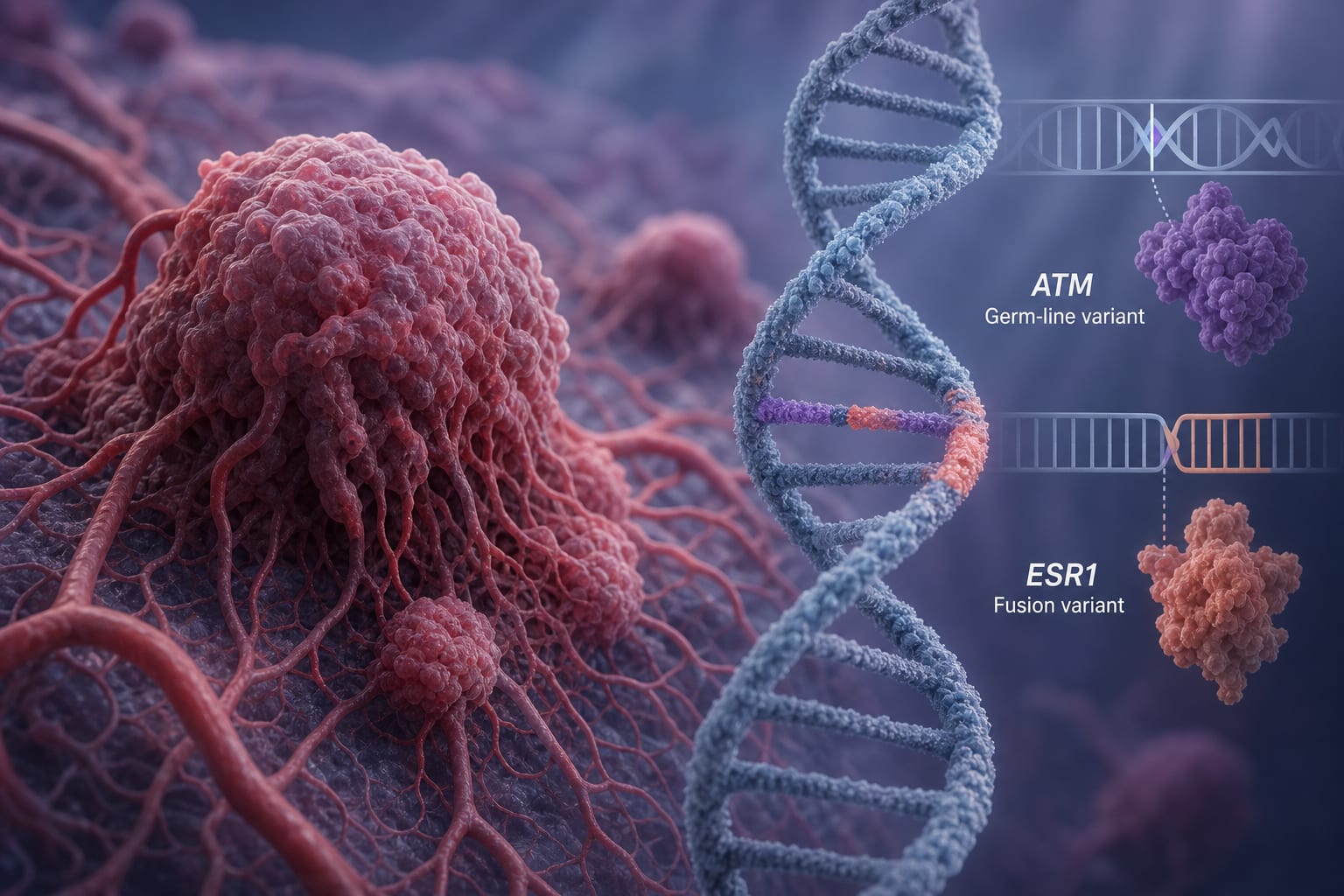
Genomic Testing: Genomic analysis revealed a germ-line ATM mutation and an ESR1 fusion variant, which may have implications for treatment.
Treatment: The patient was treated with doxorubicin and cyclophosphamide, resulting in an excellent clinical response and resolution of hemolytic anemia.
Key Findings:
CR-MAHA is a rare paraneoplastic syndrome with poor prognosis if not recognized early.
The patient exhibited significant hemolytic anemia and thrombocytopenia.
Genomic testing identified a pathogenic ATM mutation and an ESR1 fusion variant, which may influence treatment response.
Interpretation:
The case highlights the importance of early diagnosis and treatment of CR-MAHA in cancer patients.
Limitations:
The study is based on a single case report, limiting generalizability.
Further research is needed to understand the molecular mechanisms underlying CR-MAHA and to validate findings in larger cohorts.
Conclusion:
This case emphasizes the need for clinical vigilance and genomic investigation in patients with CR-MAHA.
by Fengting Yan, Aimee Wu, Yufei Wang, Tanya Wahl, Zirui Wang, Cesar Gutierrez, Josiah Wagner, Alexa Dowdell, Alexandra Bartlett, Christopher Carney, Daniel Landis, Brian Piening, Henry Kaplan