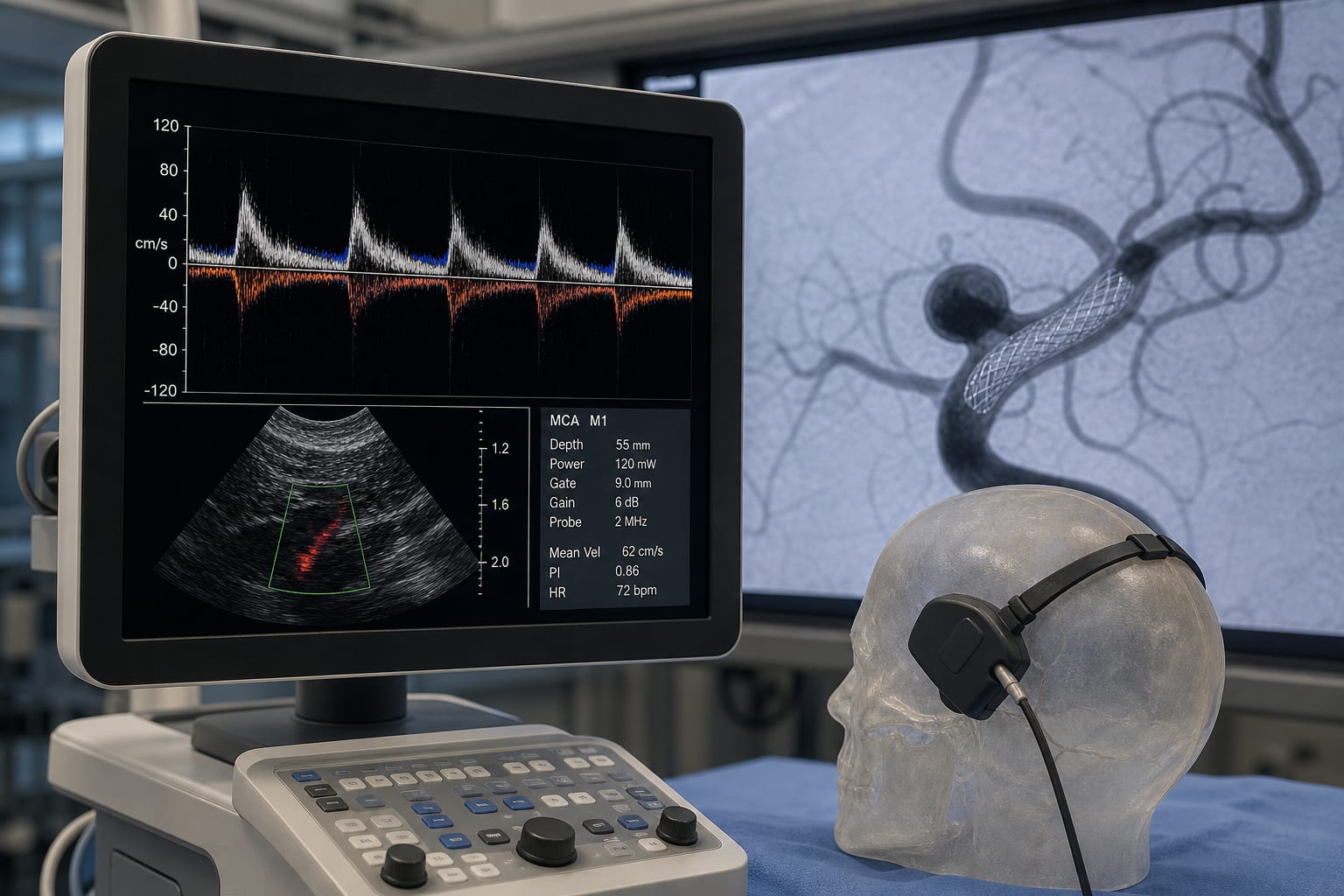
Pilot feasibility study of intraprocedural transcranial Doppler monitoring to assess Heal coating thrombogenicity in flow diversion - Summary - MDSpire
Advertisement
Pilot feasibility study of intraprocedural transcranial Doppler monitoring to assess Heal coating thrombogenicity in flow diversion
To compare the thromboembolic potential of the Derivo2 FD and its coated version (Derivo 2heal FD) using transcranial Doppler ultrasonography.
Approach:
Monitoring Method: Continuous TCD monitoring for emboli detection was conducted from the onset of the procedure until 30 minutes post FD deployment, allowing for real-time assessment of thromboembolic events.
Key Findings:
The bare Derivo2 FD group had more solid emboli detected within 30 minutes after deployment (p = 0.035).
Excluding one patient treated with aspirin only, the significance of emboli detection was marginal (p = 0.051).
No differences were found in patient characteristics, DWI hits, or antiplatelet therapy responses between groups.
Interpretation:
Limitations:
Variations in antiplatelet regimens between groups limited direct comparison.
The study was conducted at a single center and involved a small sample size.
Conclusion:
Further randomized studies are needed to evaluate the efficacy of the D2H coating, as DWI findings were not reliable for determining FD thrombogenicity.