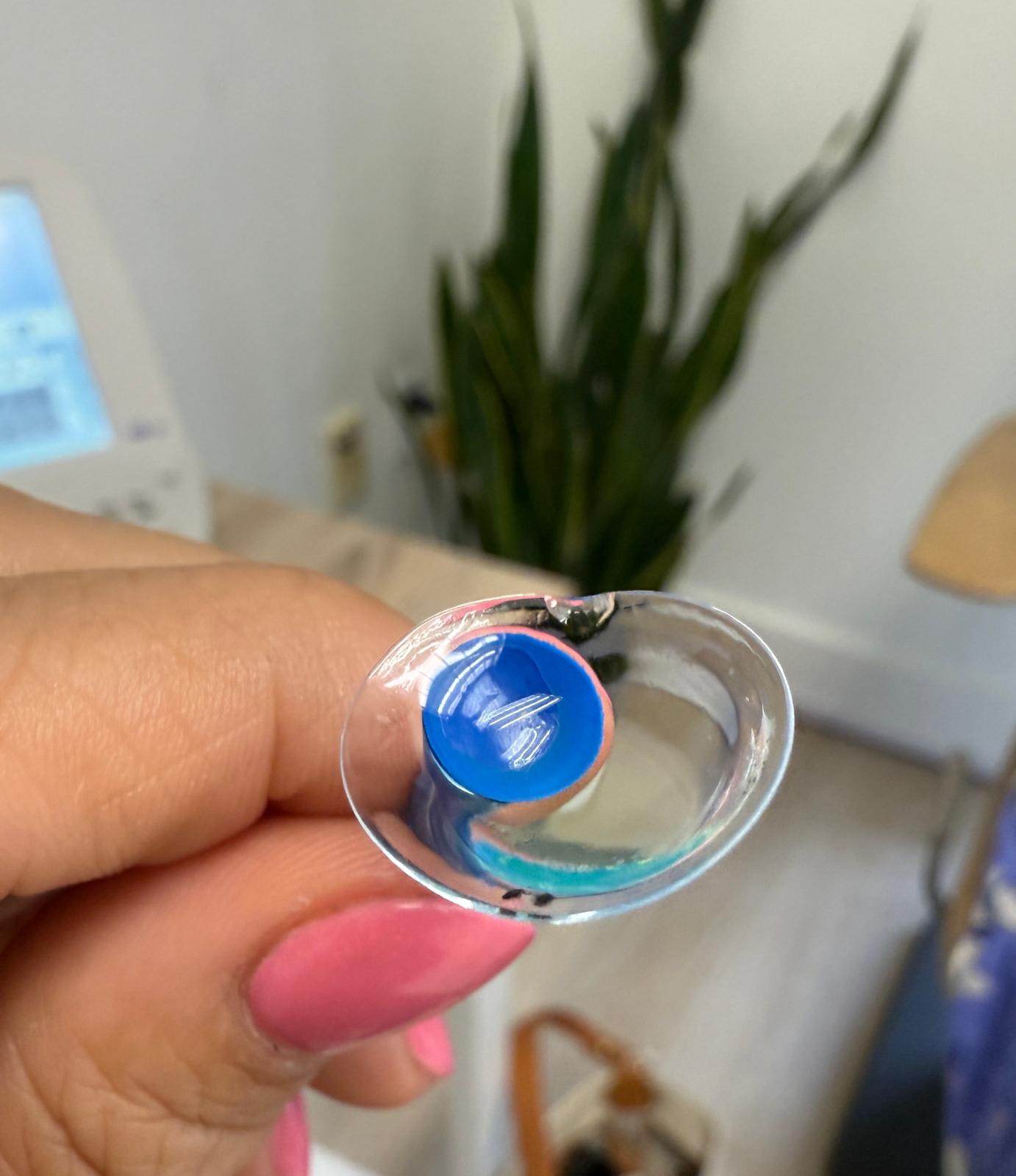
To evaluate the use of impression-based scleral lenses in a patient with complex ocular surface disease, including Sjögren’s syndrome and advanced glaucoma.
Approach:
Case Description: A 76-year-old female with a history of Sjögren’s syndrome, severe meibomian gland dysfunction, and advanced glaucoma was evaluated for therapeutic scleral lenses due to persistent ocular surface symptoms affecting her daily life.
Outcome: After four months, the patient experienced significant improvement in ocular surface health, with corneal staining improving to grade 1 SPK in both eyes, reduced need for artificial tears, and improved visual acuity to 20/20 OD and 20/25 OS.
Key Findings:
Initial scleral lens fitting improved acuity but caused discomfort.
Impression-based design provided better ocular surface coverage and comfort.
Redesigning the lens to an ovate shape improved usability for the patient.
Final visual acuity was 20/20 OD and 20/25 OS at distance.
Interpretation:
Scleral lens success is determined not only by optical parameters but also by patient usability and comfort, as highlighted in the case.
Limitations:
The case is based on a single patient experience with complex ocular surface disease, which may not be generalizable to all patients.
Conclusion:
In complex therapeutic cases, scleral lenses can restore independence when designed to meet the patient's functional needs and usability.
“As optometrists, our responsibility is not only to recognize dry eye disease early but also to match the right treatment to the right patient,” said Dr. Kalfayan.