Surgery confers survival benefit in De Novo metastatic soft tissue sarcoma patients with low Ki67 or low total lesion glycolysis: a combined PET/CT and clinicopathological analysis - Summary - MDSpire
Advertisement
Surgery confers survival benefit in De Novo metastatic soft tissue sarcoma patients with low Ki67 or low total lesion glycolysis: a combined PET/CT and clinicopathological analysis
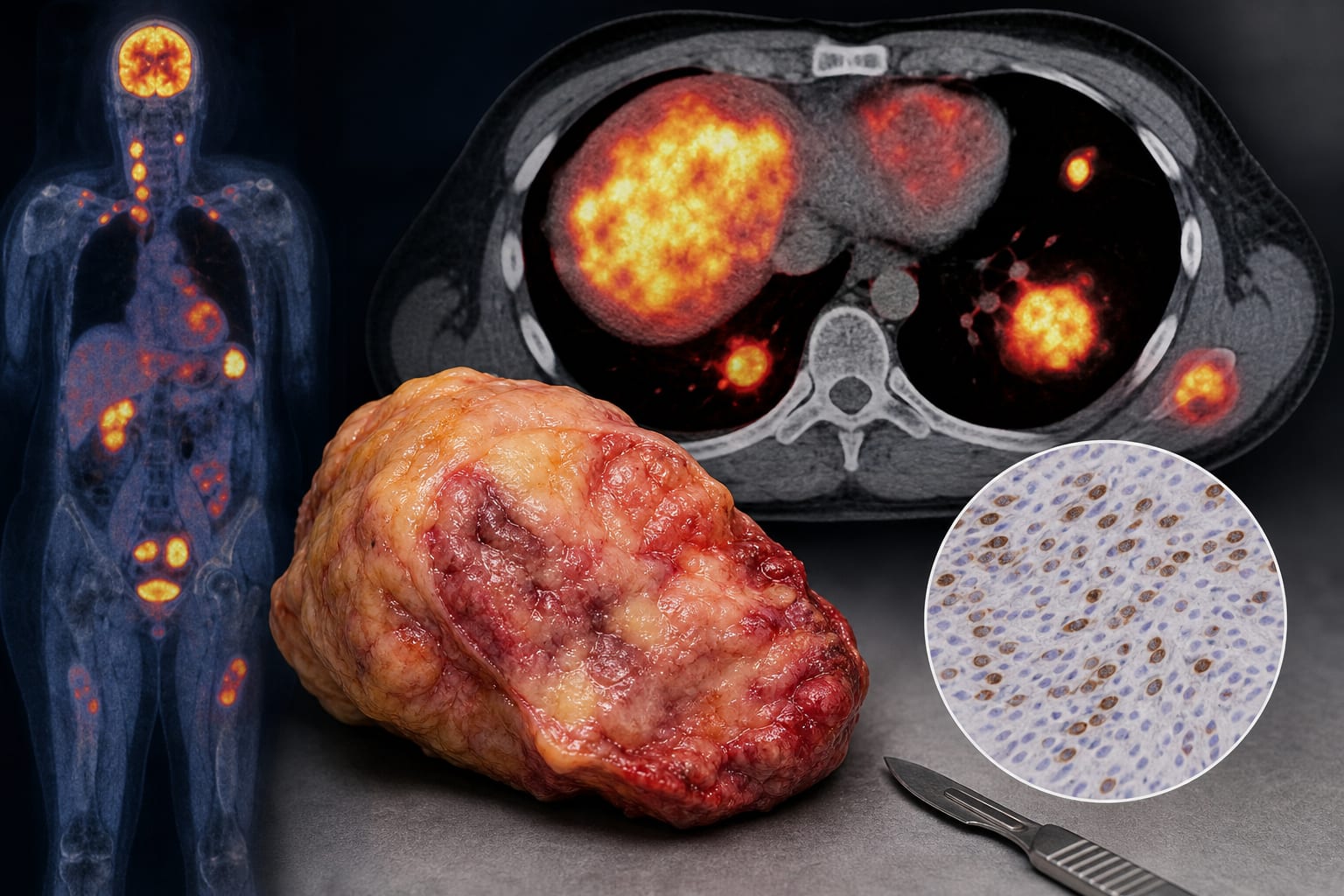
To evaluate the prognostic value of integrated ¹⁸F-FDG PET/CT metabolic parameters alongside clinicopathological factors in patients with de novo metastatic soft tissue sarcoma (STS) and to explore the interaction between these parameters and the potential survival benefit of primary tumor surgery.
Approach:
Study Design: Retrospective analysis of patients diagnosed with de novo metastatic STS who underwent ¹⁸F-FDG PET/CT imaging before treatment.
Patient Selection: Inclusion criteria: histologically confirmed de novo metastatic STS and completion of ¹⁸F-FDG PET/CT imaging before therapy. Exclusion criteria included concurrent malignancies and incomplete data.
Imaging Protocol: Patients underwent ¹⁸F-FDG PET/CT scans with specific fasting and imaging protocols to assess metabolic activity.
Statistical Analysis: Utilized R software for statistical analyses, including univariate and multivariate Cox proportional hazards regression models.
Key Findings:
A total of 40 patients with de novo metastatic STS were enrolled.
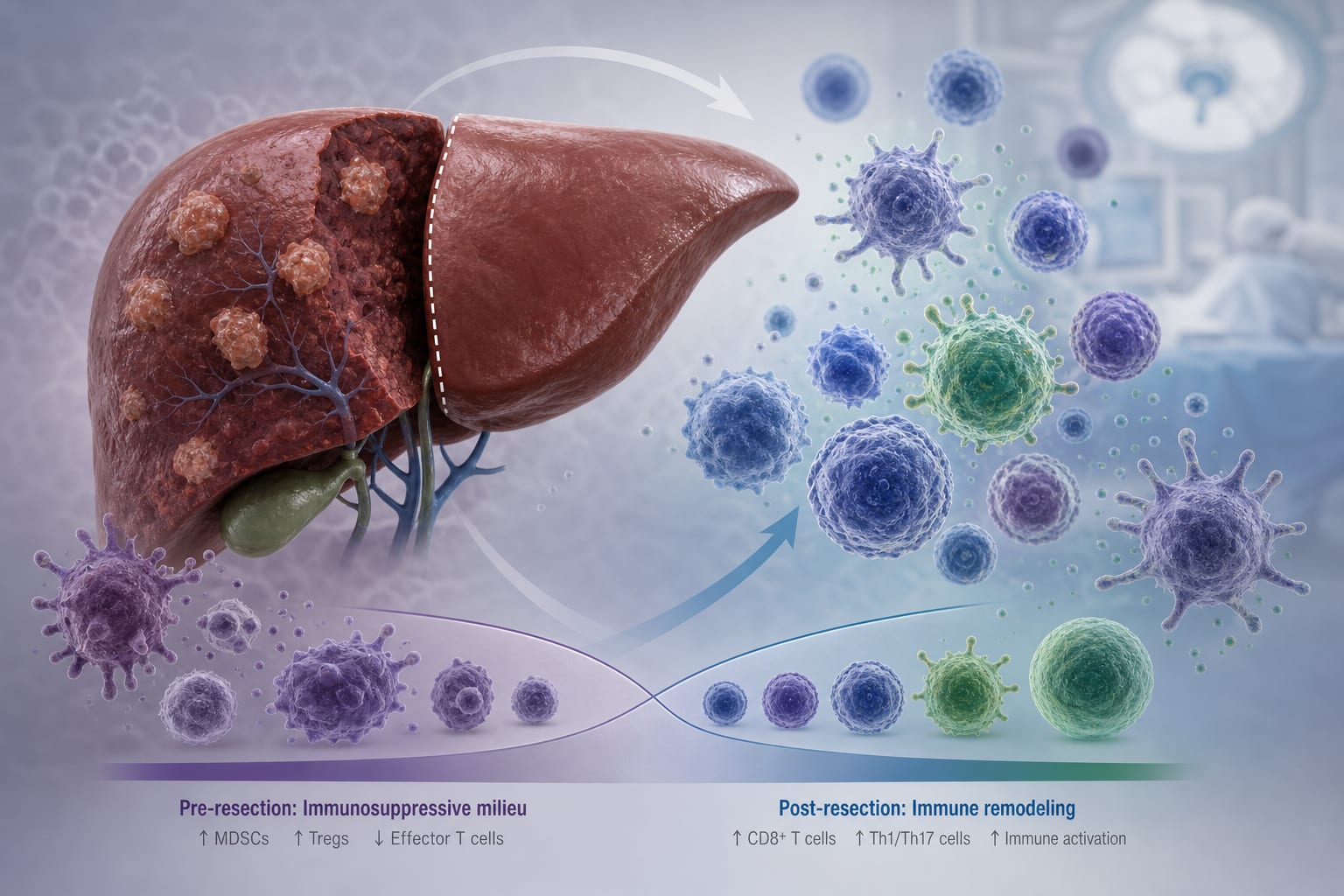
The study found a potential survival benefit from primary tumor resection in patients with low Ki67 or reduced total lesion glycolysis.
Interpretation:
Specific metabolic parameters may help identify patients who could benefit from surgical intervention in the context of de novo metastatic STS.
Limitations:
The study is retrospective and may be subject to selection bias.
The sample size is relatively small, limiting the generalizability of the findings.
Conclusion:
The study provides evidence that integrated PET/CT metrics may guide surgical decision-making in de novo metastatic STS.