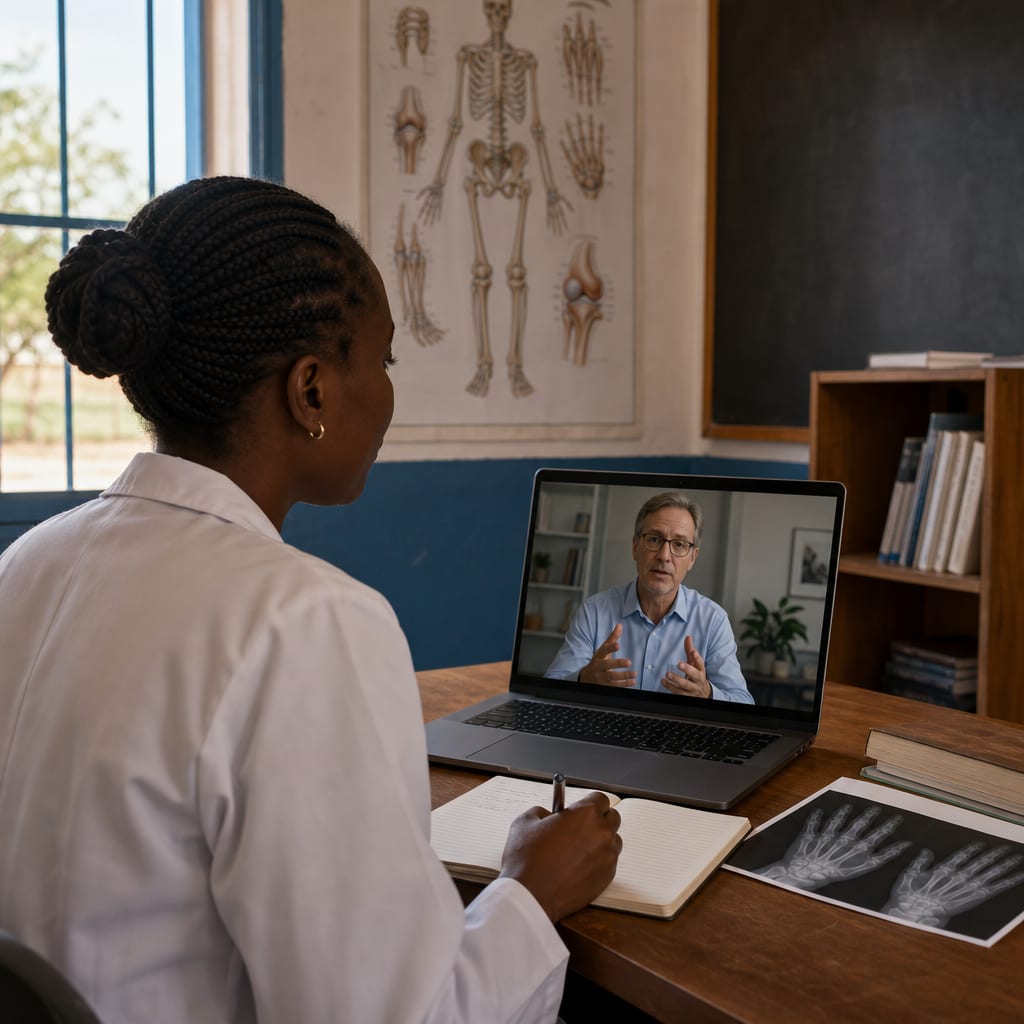
To explore the impact of remote mentorship on advancing rheumatology training and capacity in sub-Saharan Africa, particularly Kenya, and to address local healthcare challenges through this model.
Key Findings:
Rheumatological conditions in sub-Saharan Africa are more prevalent than previously thought, with studies indicating a significant increase in cases.
Remote mentoring has strengthened local research and academic capacity in rheumatology, leading to improved training outcomes.
Kenyan rheumatologists are now meeting high standards comparable to their Western peers, as evidenced by their participation in international conferences.
Interpretation:
The mentorship model has successfully fostered a self-sustaining system for training future rheumatologists in Kenya, addressing local healthcare challenges and enhancing clinical education through targeted support.
Limitations:
Challenges in coordinating visits and maximizing limited contact time hinder the effectiveness of mentorship.
Differences in healthcare systems and disease presentation between regions complicate mentorship, requiring tailored approaches.
Conclusion:
The establishment of a Nairobi-based rheumatology training program marks a significant milestone in local capacity building, with ongoing collaboration with Western colleagues essential for continued progress and adaptation to local needs.
A long-term cohort study found that obesity was not associated with worse patient-reported outcomes or higher reoperation rates following total ankle replacement in optimized surgical candidates.