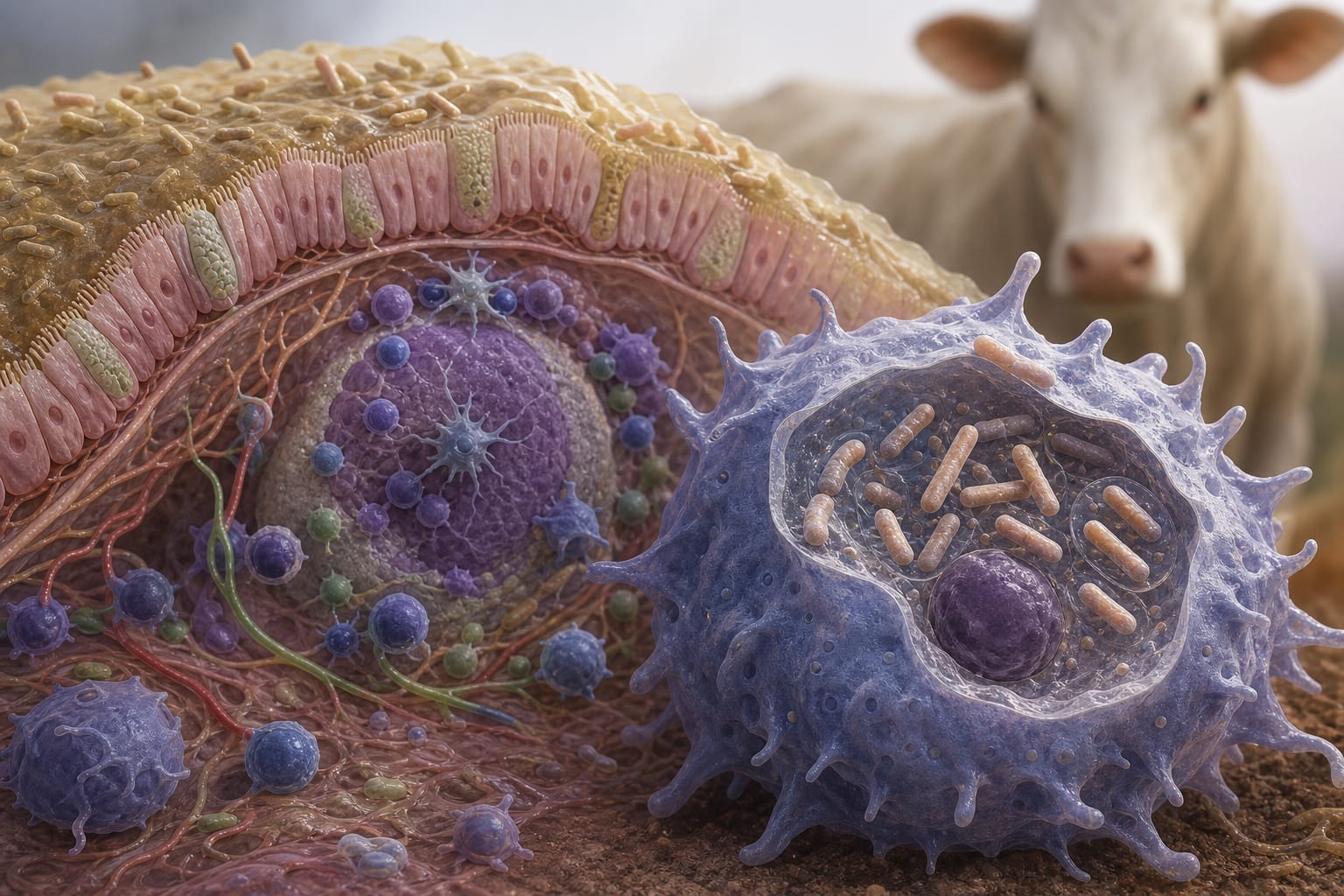
To synthesize current knowledge of host immune responses to Mycobacterium avium subsp. paratuberculosis (MAP) and highlight research gaps in mucosal immunology.
Approach:
Etiology and Epidemiology: Discusses the chronic enteric infection caused by MAP, its transmission, and the economic impact of Johne’s disease.
Mucosal Immunity: Explores innate and adaptive immune responses to MAP, emphasizing the role of mucosal immunity and the interactions between MAP and host immune cells.
Key Findings:
MAP establishes persistent infections in ruminants, leading to Johne’s disease characterized by chronic gastroenteritis.
Infection typically occurs early in life, with asymptomatic carriers shedding MAP intermittently.
Current vaccines provide partial protection but show variability in immune responses across intestinal regions.
Innate immune responses to MAP involve modulation of macrophage functions and skewing towards anti-inflammatory pathways.
Adaptive immune responses are complex, with early protective Th1 responses transitioning to non-protective Th2 responses as the disease progresses.
Interpretation:
Knowledge gaps remain in understanding mucosal immunity to MAP.
Limitations:
Limited studies on mucosal-associated immune responses to MAP.
Variable diagnostic sensitivity complicates the assessment of disease prevalence.
Conclusion:
Identifying research gaps in mucosal immunology is important for advancing vaccine strategies against Johne’s disease.