Effects of Tai Chi on pain, functional dysfunction, and sleep in patients with chronic nonspecific low back pain: a systematic review and meta-analysis - Summary - MDSpire
Advertisement
Effects of Tai Chi on pain, functional dysfunction, and sleep in patients with chronic nonspecific low back pain: a systematic review and meta-analysis
To systematically evaluate the effects of Tai Chi on pain, functional disability, and sleep quality in patients with chronic non-specific low back pain (CNLBP).
Approach:
Study Design: Systematic review and meta-analysis of randomized controlled trials (RCTs) of Tai Chi for CNLBP.
Data Sources: Search conducted in multiple databases including CNKI, WanFang, VIP, PubMed, Web of Science, Embase, and Cochrane Library.
Quality Assessment: Study quality assessed using the Cochrane RoB 2 tool and the PEDro scale.
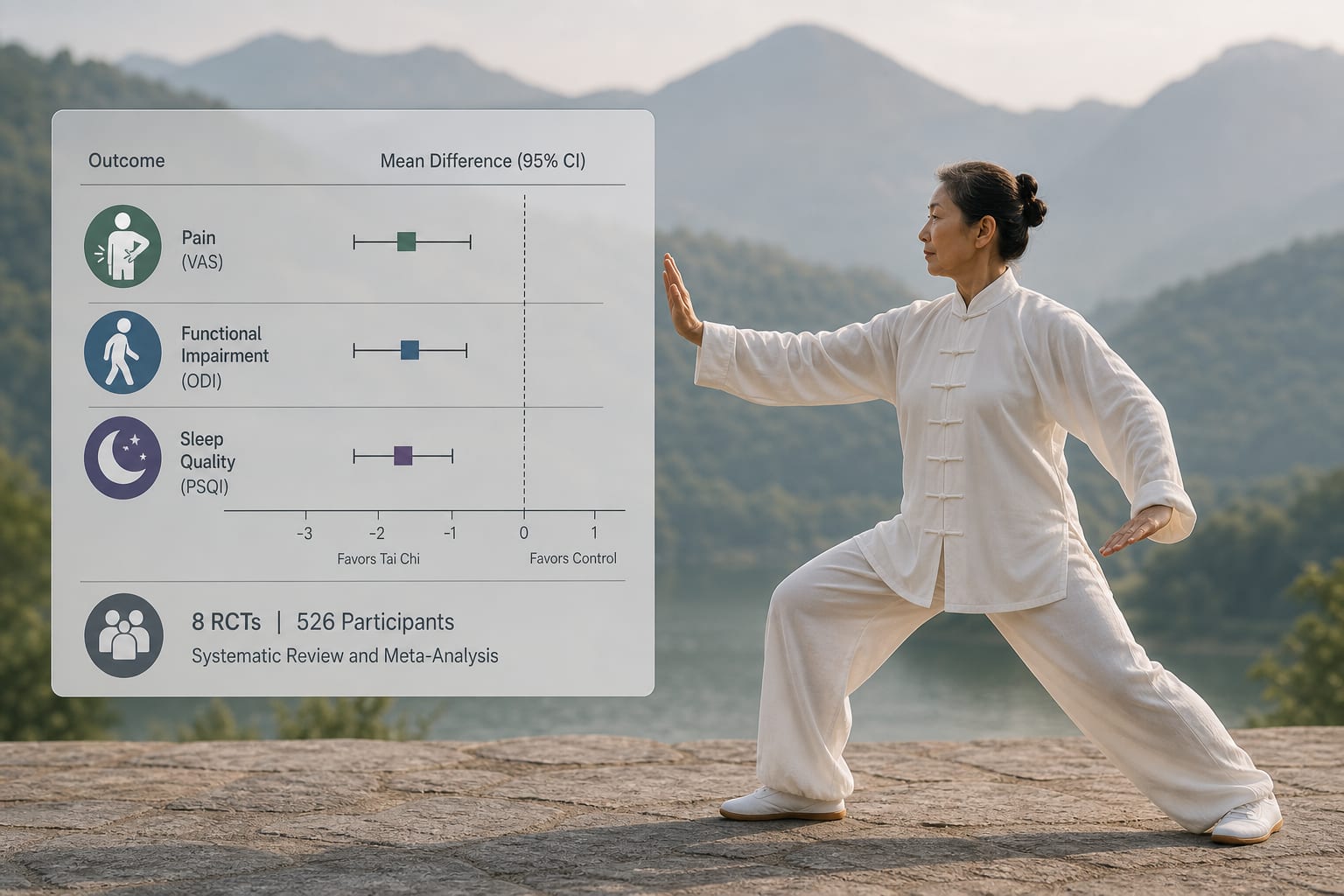
Meta-Analysis: Data pooled from eight RCTs involving 526 patients.
Key Findings:
Tai Chi significantly reduced pain, improving VAS scores (MD = −1.40, 95% CI: −2.41 to −0.40) and NRS scores.
Tai Chi improved RMDQ scores (MD = −1.67, 95% CI: −2.75 to −0.59) and overall functional disability (SMD = −0.51, 95% CI: −0.90 to −0.12).
No significant effect on ODI scores (MD = −0.62, 95% CI: −2.53 to 1.29) or PSQI scores (MD = −0.18, 95% CI: −1.82 to 1.45).
Interpretation:
Tai Chi is effective in relieving pain and improving functional disability in patients with CNLBP, but evidence regarding its effect on sleep quality is insufficient.
Limitations:
Current evidence is insufficient to confirm the effect of Tai Chi on sleep quality due to a lack of significant findings.
There is high heterogeneity in intervention parameters and control designs across studies, which may affect the reliability of the results.
Conclusion:
Tai Chi is a safe and feasible non-pharmacological rehabilitation approach for CNLBP.