Influence of Existing Primary Cancers on Survival Outcomes in Melanoma Patients
By
Alessandra Buja
Stefano Guzzinati
Chiara Trevisiol
Claudio Palmeri
Marcello Di Pumpo
Paolo Del Fiore
Carlo Riccardo Rossi
Carmen Stocco
Pierfranco Conte
Manuel Zorzi
Simone Mocellin
September 14, 2026
Objective: To assess the clinical consequences and economic effects associated with prevalent cancers identified concurrently with cutaneous melanoma diagnosis.
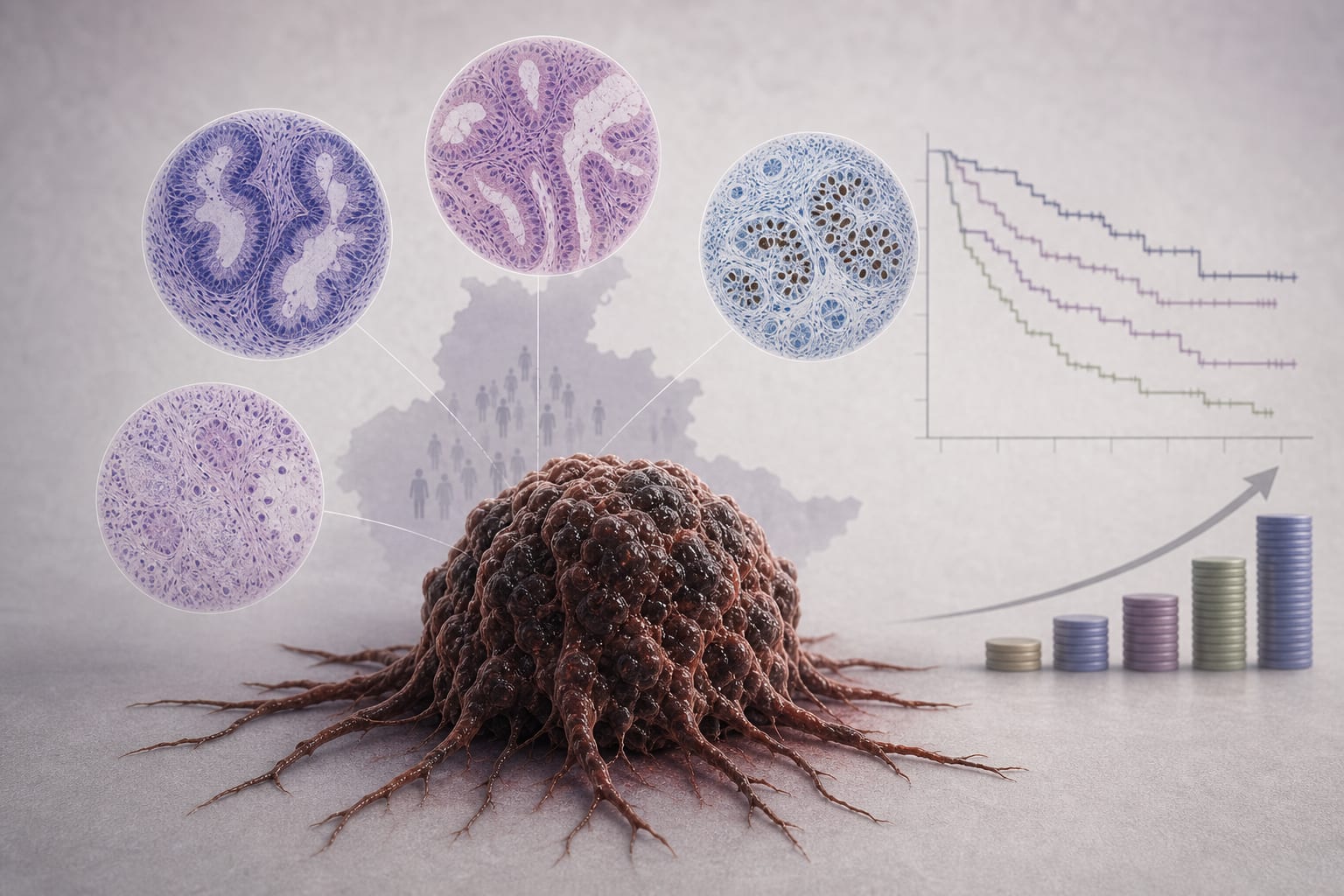
Approach: Study Design: A retrospective, population-based cohort study using data from the Italian Veneto Region Cancer Registry.Patient Population: 2,978 melanoma patients were analyzed, with 134 (4.5%) having prevalent tumors diagnosed in the five years prior to melanoma.Statistical Analysis: Kaplan–Meier analyses and Cox proportional hazards models evaluated associations of prevalent primary cancers with overall survival and melanoma-specific survival.Cost Analysis: Administrative data were used to assess healthcare costs over a three-year period from the health system perspective.Key Findings: Prevalent tumors were associated with older age, male sex, and a higher comorbidity burden. Prevalent tumors increased all-cause mortality risk (HR 2.23, 95% CI 1.59–3.15; p<0.001). After adjustment, prevalent tumors remained associated with increased all-cause mortality risk (aHR 1.72, 95% CI 1.19–2.47; p=0.004). No significant association was found for melanoma-specific mortality. Three-year average healthcare costs were higher for patients with prevalent tumors (€30,698.34 vs €17,471.23). Limitations: The study is retrospective and may be subject to selection bias. Data is limited to the Veneto Region and may not be generalizable to other populations.