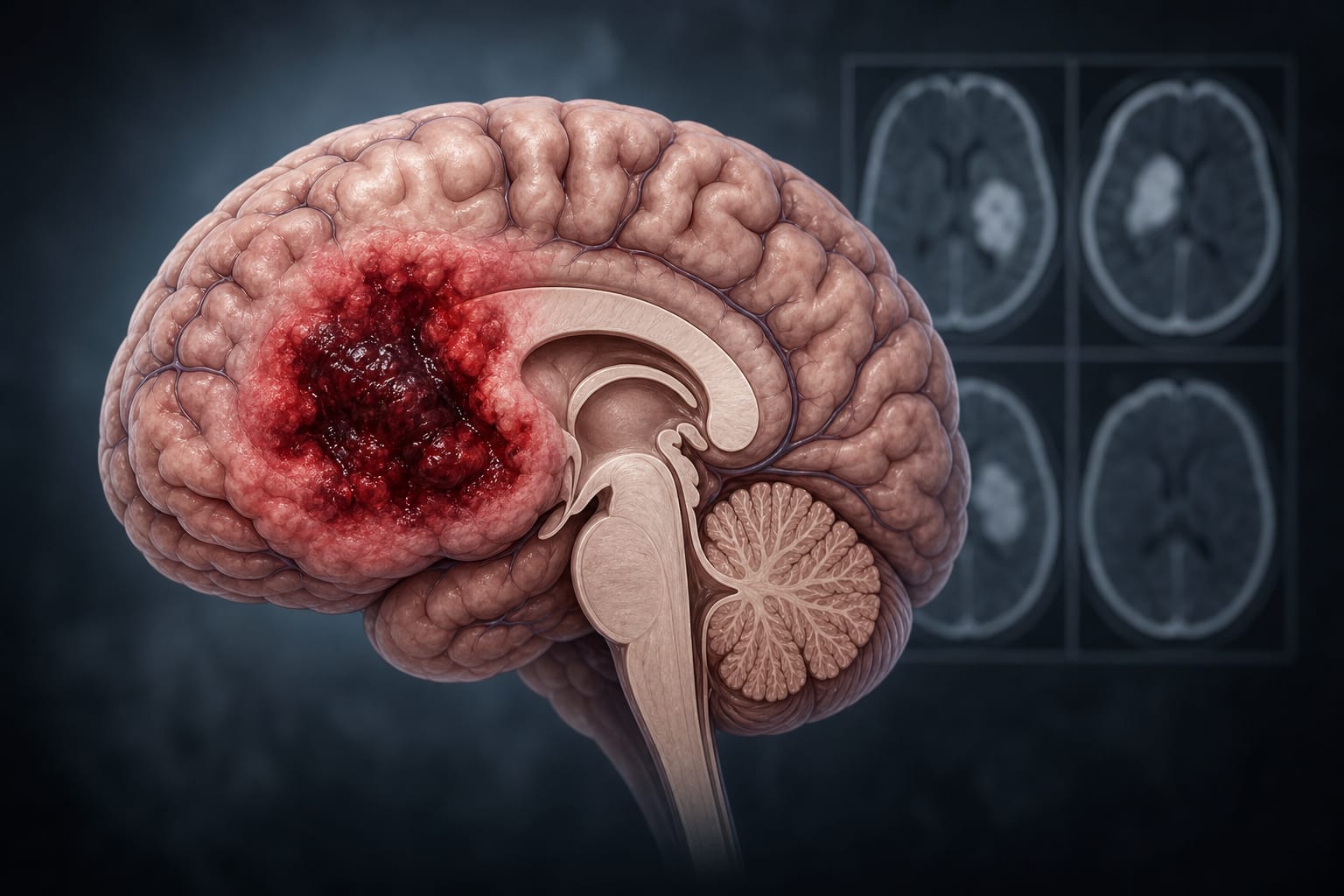
To compare stroke severity, in-hospital mortality, and functional outcomes in patients with intracerebral hemorrhage (ICH) receiving different antiplatelet therapies, particularly focusing on P2Y12 inhibitors.
Approach:
Study Design: Utilized data from the AHA/ASA Get With The Guidelines–Stroke registry to analyze clinical characteristics and outcomes of patients with nonanticoagulant-associated spontaneous ICH.
Patient Selection: Included patients with ICH from January 2013 to December 2021, excluding those with anticoagulant indications or missing NIHSS scores.
Outcome Measures: Primary outcomes were stroke severity (measured by NIHSS) and in-hospital mortality; secondary outcomes included functional independence at discharge.
Statistical Analysis: Used multivariable logistic regression models to assess associations between prior antiplatelet therapy and outcomes.
Key Findings:
P2Y12 inhibitors were associated with greater stroke severity and worse in-hospital outcomes compared to aspirin monotherapy or no antiplatelet therapy.
Severe stroke was defined as an NIHSS score of 21 or higher.
Functional independence was measured using the modified Rankin Scale (mRS) at discharge.
Interpretation:
Limitations:
The study did not report ICH scores due to a high proportion of missing data.
Data were collected from a registry, which may limit generalizability.
by Chen Jin, Ying Song, Brian Mac Grory, Jie-Lena Sun, Brooke Alhanti, Gregg C. Fonarow, Lee H. Schwamm, Kevin N. Sheth, Eric E. Smith, Steven R. Messé, Jeffrey L. Saver, Deepak L. Bhatt, Ying Xian
New findings from CREST-2 are providing important evidence on the role of carotid artery stenting (CAS) in patients with severe asymptomatic carotid stenosis — while underscoring the importance of operator experience, patient selection and procedural technique in achieving favorable outcomes.