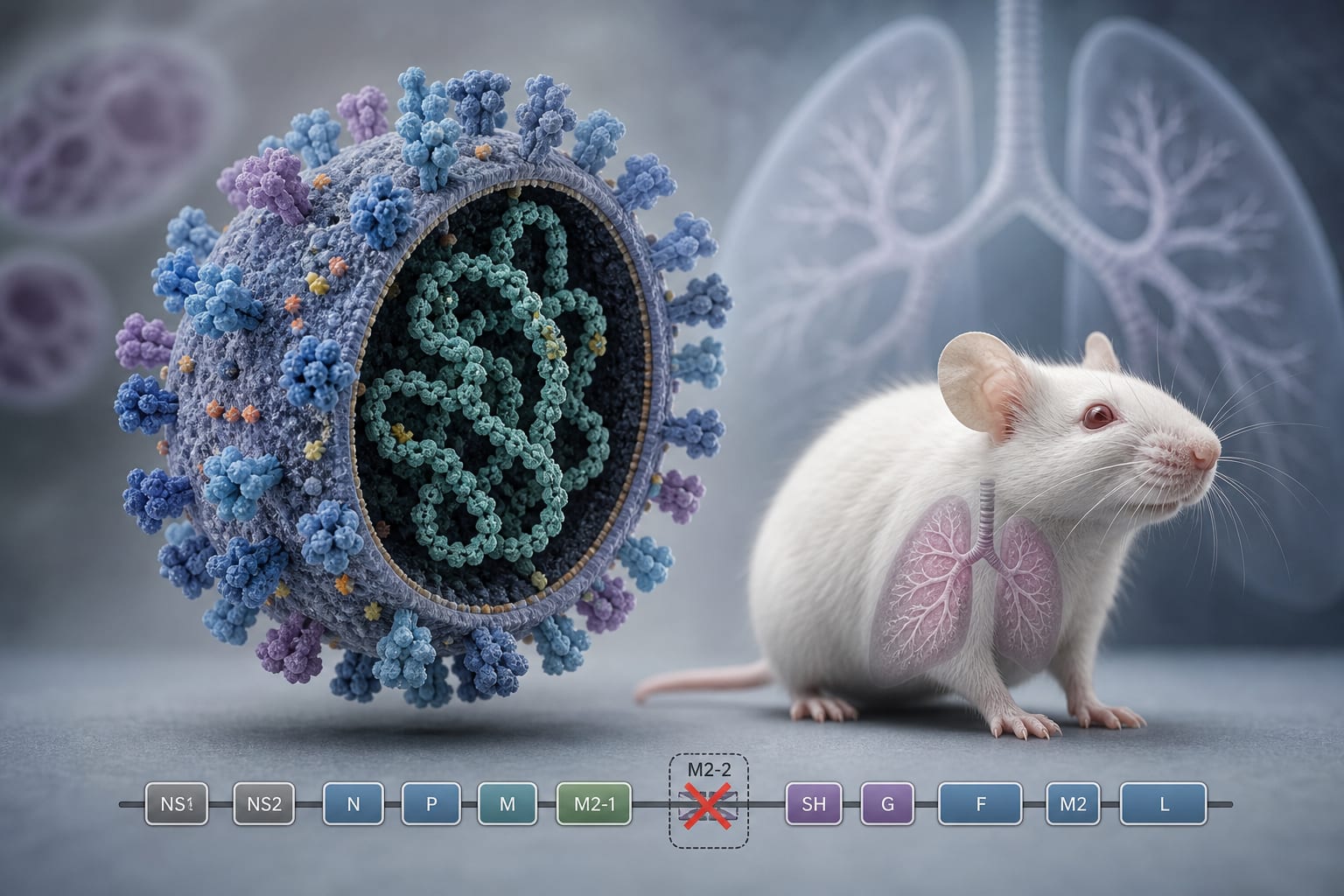
To evaluate the characteristics and immune responses of recombinant RSV strains with M2-2 gene deletion as potential live-attenuated vaccines, addressing the urgent need for effective immunization strategies against RSV.
Key Findings:
Recombinant strains RLΔM2-2 and RLΔM2-2112 showed reduced replication compared to parental wtRSV, with statistical significance (p < 0.05).
RLΔM2-2-infected mice had lower lung viral loads and less body weight loss than those infected with RLΔM2-2112, indicating better safety profiles.
Intranasal immunization with RLΔM2-2 induced robust immune responses, including preF-specific antibodies and RSV-specific CD8+ T-cell responses, demonstrating a Th1-biased immune profile.
The vaccine provided protection against subsequent RSV challenge without signs of enhanced respiratory disease, supporting its potential as a safe pediatric vaccine.
Interpretation:
The M2-2 deletion strategy in RSV strain Long shows promise for developing effective live-attenuated vaccines, potentially addressing the limitations of current vaccine strategies.
Limitations:
Further studies are needed to assess long-term immunity and the potential for enhanced respiratory disease in diverse populations.
Conclusion:
The study supports the potential of M2-2 deletion in RSV vaccine development, warranting further evaluation.