Digital self-management programme for pain, fatigue and faecal incontinence in inflammatory bowel disease: cost-effectiveness analysis of the IBD-BOOST randomised controlled trial - Summary - MDSpire
Conexiant’s news site is now MDSpire News. Learn more
Advertisement
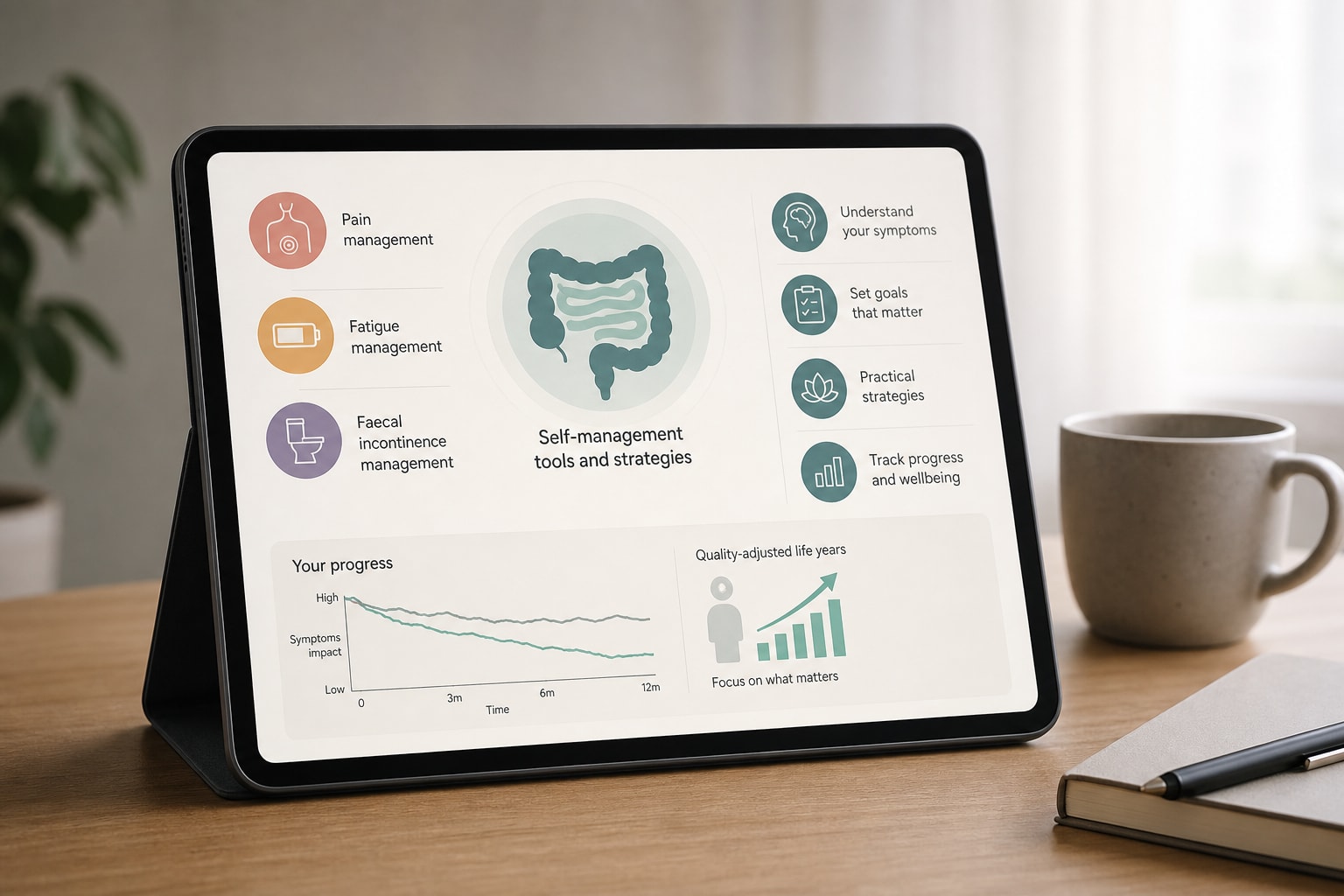
Cost-Effectiveness Evaluation of the IBD-BOOST Digital Self-Management Intervention for Pain, Fatigue, and Faecal Incontinence in Patients with Inflammatory Bowel Disease: Results from a Randomised Controlled Trial
To assess the cost-effectiveness of the IBD-BOOST digital self-management intervention targeting abdominal pain, fatigue, and faecal incontinence in patients with inflammatory bowel disease (IBD).
Approach:
Study Design: A cost-effectiveness analysis was conducted alongside a randomised controlled trial comparing the IBD-BOOST intervention with care as usual over 12 months.
Participants: Participants included 391 individuals receiving the IBD-BOOST intervention and 389 receiving care as usual, all experiencing symptoms of fatigue, pain, and/or faecal incontinence.
Outcome Measures: Health service use, out-of-pocket expenses, time off work, and health-related quality of life were assessed at baseline, 6-month, and 12-month follow-ups.
Key Findings:
The IBD-BOOST intervention resulted in an additional 0.016 QALYs per participant over 12 months (95% CI 0.002 to 0.030).
Cost savings of -£304.66 (95% CI -803.51 to 194.18) for healthcare and -£39.48 (95% CI -388.09 to 309.12) for out-of-pocket costs and time off work were observed.
Cost-effectiveness was estimated at -£28,633 (95% CI -51,555 to 18,764) per QALY gained from a health services perspective and -£33,568 (95% CI -64,421 to 26,198) from a societal perspective.
Interpretation:
The IBD-BOOST intervention is highly likely to be cost-effective for managing pain, fatigue, and faecal incontinence in people with IBD.
Limitations:
The primary trial outcomes did not show statistically significant improvements.
The analysis focused on secondary health economic outcomes.
Conclusion:
The IBD-BOOST intervention is likely to improve quality of life while being cost-effective for patients with IBD experiencing specific symptoms.
by Chris Roukas, Laura Miller, Fionn Cléirigh Büttner, Thomas Hamborg, Vladimir Sergeevich Gordeev, Vari Wileman, Richard C G Pollok, Sonia Saxena, Rona Moss-Morris, Ailsa Hart, James O Lindsay, Christine Norton, Borislava Mihaylova