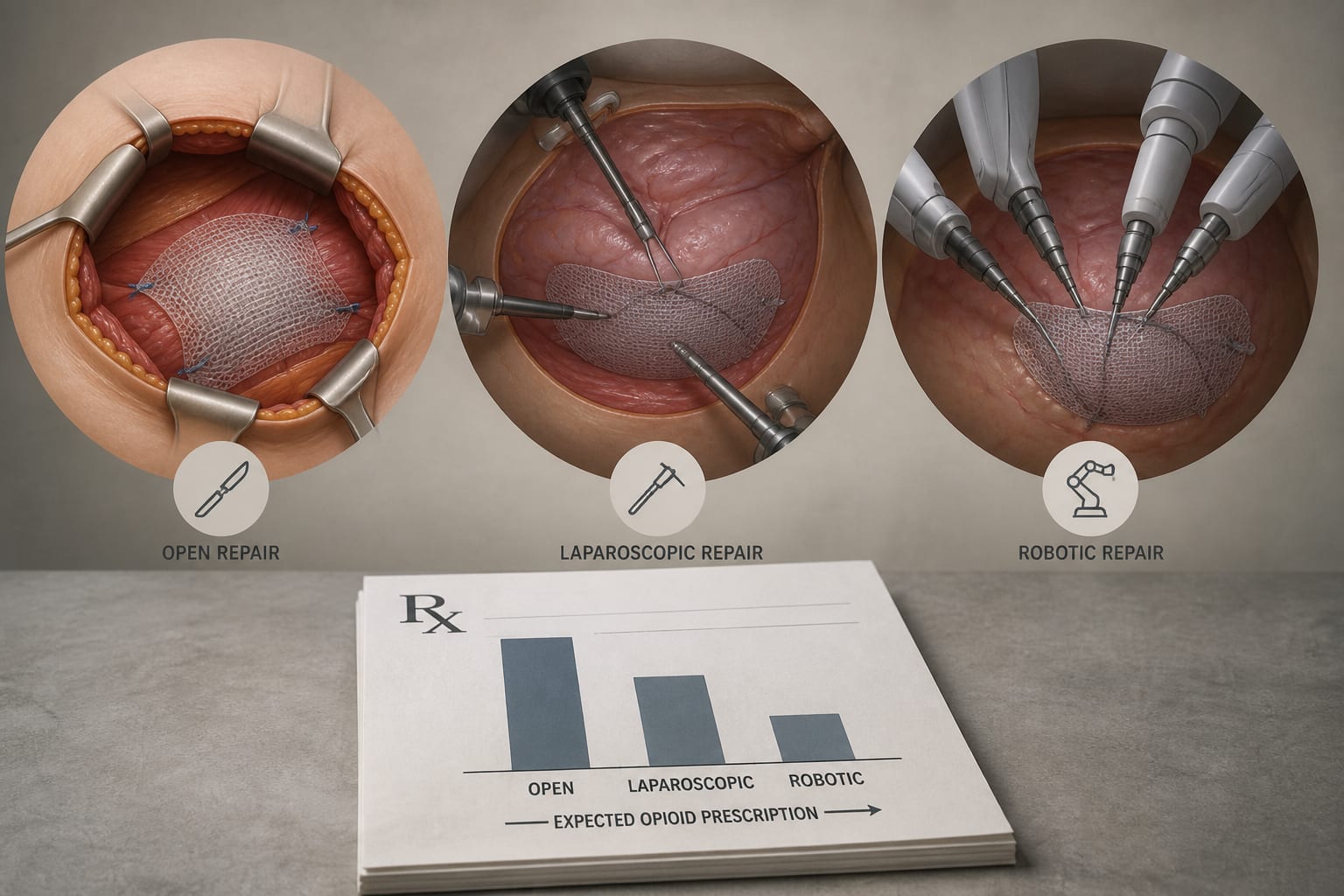
To evaluate prescription fills at multiple postoperative intervals for robotic-assisted, laparoscopic, and open ventral hernia repair, stratified by hernia type.
Approach:
Study Design: A retrospective cohort study using the Merative™ MarketScan® Research Databases to analyze opioid prescription fill outcomes following ventral hernia repair.
Study Population: Included opioid-naïve adults undergoing outpatient anterior abdominal hernia repair from January 2018 to December 2022, with exclusions for incomplete data and pre-existing chronic pain or opioid dependence.
Exposure Variable: Surgical approach categorized as robotic-assisted, laparoscopic, or open ventral hernia repair.
Outcome Variables: Primary outcomes included immediate opioid filling during postoperative days 0-14, refilling during days 15-30, and long-term filling during days 90-180.
Study Covariates: Demographic, clinical, and procedure-related characteristics were collected, including age, sex, income, insurance type, and comorbidities.
Key Findings:
Prolonged opioid use after surgery is linked to serious adverse effects.
Opioid prescribing practices often exceed actual consumption.
No large-scale studies have compared opioid prescription rates among different outpatient ventral hernia repair techniques.
Interpretation:
The study evaluates the relationship between surgical technique and opioid prescription patterns in outpatient ventral hernia repair.
Limitations:
Retrospective design may introduce bias.
Data limited to claims records, which may not capture all relevant clinical information.
Conclusion:
The study provides an analysis of opioid prescribing patterns following different surgical approaches for ventral hernia repair.
Baptist Health South Florida will host the Baptist Health Heart & Vascular Care 43rd Annual Echocardiography and Structural Heart Symposium on Oct. 2-3 at the Loews Coral Gables Hotel.