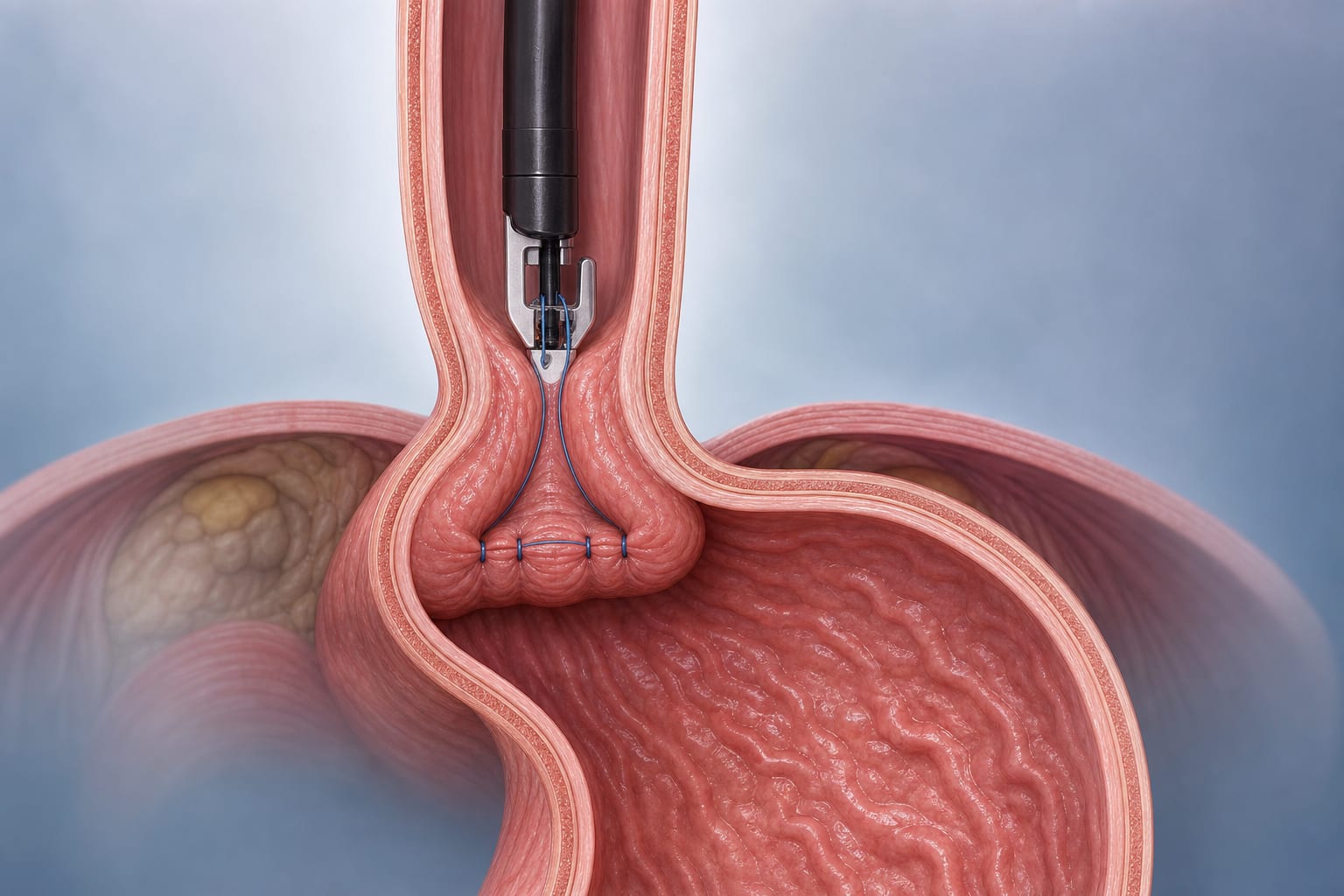
To evaluate the feasibility and safety of a novel Veress-needle technique for port-site closure and to conduct a literature review on port-site closure techniques and their economic implications.
Approach:
Endpoints: The primary endpoint focused on evaluating clinical effectiveness and safety of the Veress needle technique, including intraoperative and postoperative complications. The secondary endpoint involved a critical appraisal of existing literature on port-site closure techniques.
Key Findings:
Port-site incisional hernias (PIH) occur in 1% to 20% of cases, influenced by factors such as obesity and trocar diameter.
Current recommendations suggest closure for 10- and 12-mm trocar sites in adults and ≥ 5-mm in children, with ongoing debate about 5-mm sites.
The Veress needle technique aims to achieve complete fascial closure without alternative devices.
Interpretation:
Limitations:
Exclusion of patients converted to open surgery or with specific peritoneal conditions may limit generalizability.
Follow-up duration varies between 6 to 18 months, which may affect long-term outcome assessment.
Conclusion:
The study aims to provide a comprehensive evaluation of a novel port-site closure technique while reviewing existing methods.
by Pasquale Avella, Pajtim Emini, Salvatore Spiezia, Lorenzo Epis, Paolo Bianco, Luigi Ricciardelli, Giovanni Andrea Garella, Gian Pietro Schincaglia, Aldo Rocca, Graziano Ceccarelli