Modified One Anastomosis Gastric Bypass Following Sleeve Gastrectomy for Severe Reflux and Delayed Gastric Emptying: A Prospective Trial with Clinical and Physiological Outcome Measures - Summary - MDSpire
Advertisement
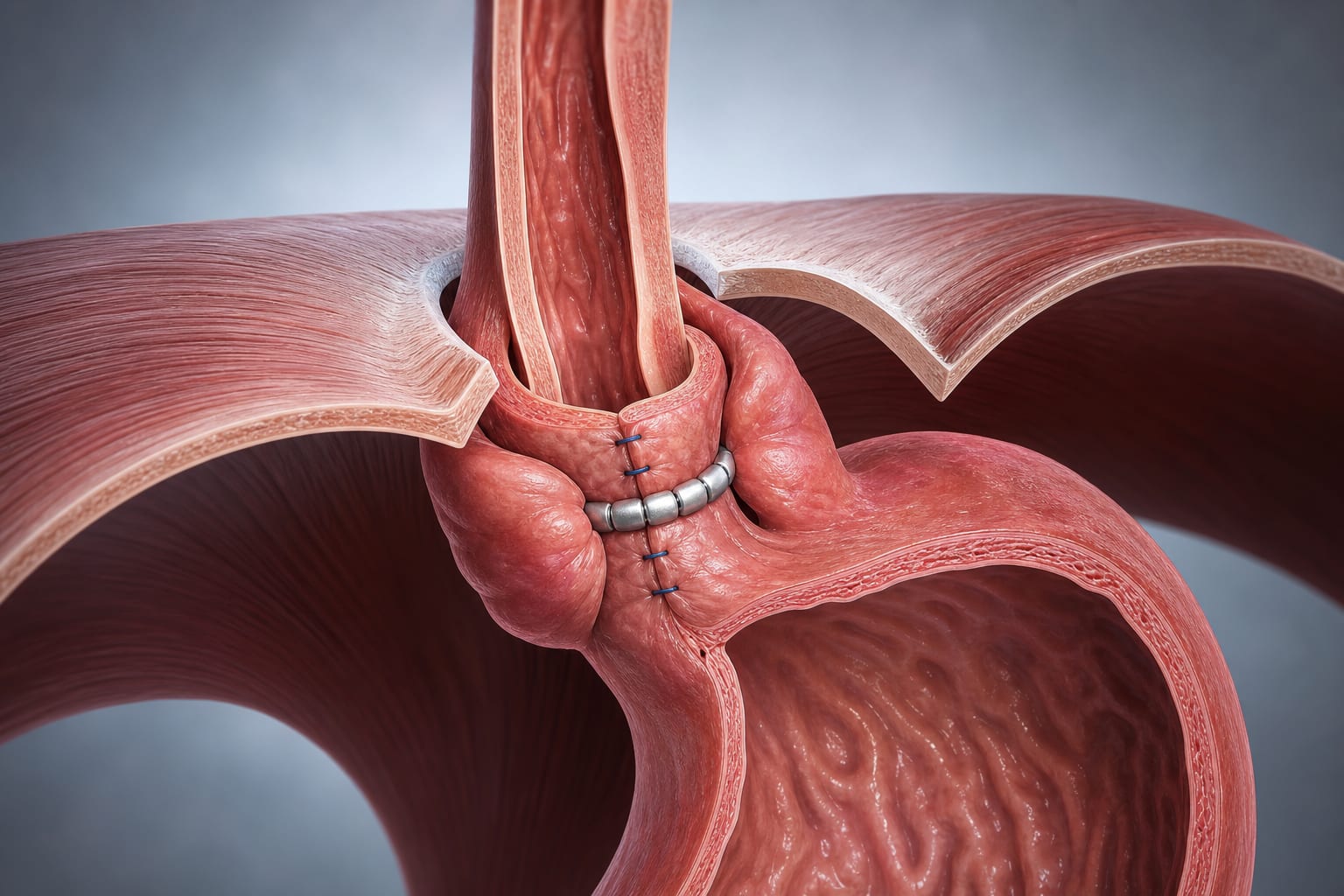
Modified One Anastomosis Gastric Bypass Following Sleeve Gastrectomy for Severe Reflux and Delayed Gastric Emptying: A Prospective Trial with Clinical and Physiological Outcome Measures
To evaluate the effectiveness of modified One Anastomosis Gastric Bypass (OAGB) in alleviating severe gastro-esophageal reflux (GERD) and delayed gastric emptying following sleeve gastrectomy (SG), focusing on primary outcome measures such as gastric emptying time and reflux frequency.
Reduced overall esophageal acid exposure and frequency of reflux events (p < 0.05).
Improved reflux symptoms in patients post-surgery.
Interpretation:
The modified OAGB appears to be an effective revisional procedure for managing severe reflux after SG, potentially addressing underlying physiological issues related to gastric stasis, with implications for improving patient quality of life.
Limitations:
Single-center study may limit generalizability and introduce selection bias.
Short follow-up duration may not capture long-term outcomes, and confounding factors were not fully controlled.
Conclusion:
Modified OAGB shows promise as a viable option for patients suffering from severe reflux after sleeve gastrectomy, warranting further investigation in larger, multi-center trials to validate these findings.
by Anagi C. Wickremasinghe, Yit J. Leang, Yazmin Johari, Cheryl Laurie, David Nadebaum, Helen Yue, Kenneth S. Yap, Geoffrey S. Hebbard, Wendy A. Brown, Paul R. Burton