Integrated systems toxicology identifies TCDD-responsive targets linked to immune dysregulation and treatment response in psoriasis - Summary - MDSpire
Advertisement
Integrated systems toxicology identifies TCDD-responsive targets linked to immune dysregulation and treatment response in psoriasis
To investigate the potential toxicity and molecular mechanisms of TCDD in psoriasis using an integrative approach, focusing on specific pathways and gene interactions.
Key Findings:
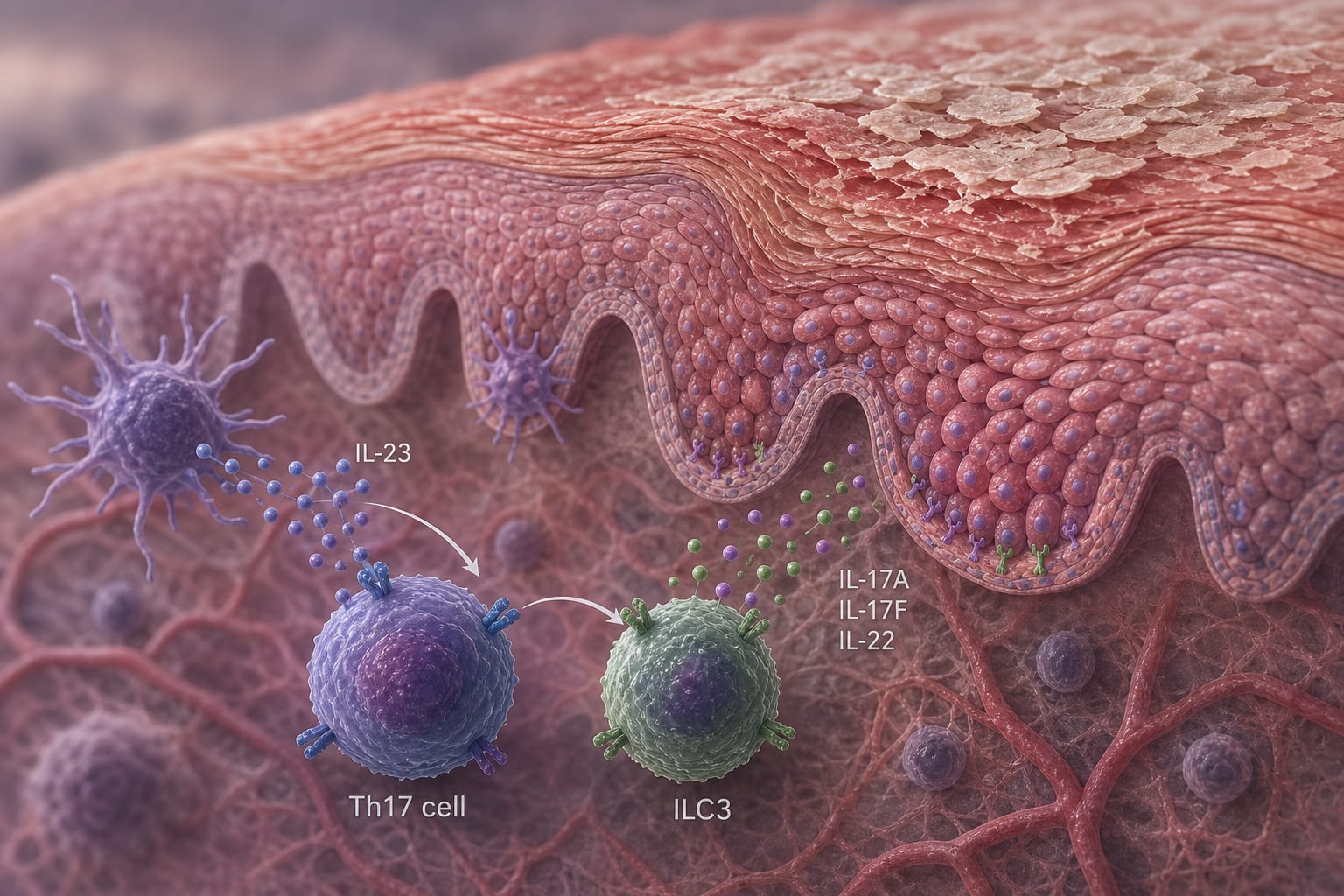
Eighty-seven overlapping genes were identified between TCDD-related targets and psoriasis-associated genes, enriched in IL-17-, chemokine-, MAPK/ERK-, and GPCR-related signaling pathways.
Core target genes LCK, MMP9, CXCR2, PTAFR, and CCNB1 were significantly upregulated in psoriatic lesions and associated with local immune infiltration patterns.
Higher baseline MMP9 was associated with poorer clinical improvement in biologic-therapy cohorts.
Interpretation:
The study identifies TCDD-associated genes and pathways involved in psoriasis immune dysregulation, with structural modeling suggesting interactions between TCDD and CXCR2.
Limitations:
The study relied mainly on in silico analyses without individual-level exposure data.
Further validation in well-designed cohort studies is needed to confirm these findings.
Conclusion:
The findings provide insights into TCDD's role in psoriasis, highlighting the associations identified without making unsupported claims about future research needs.