Venous Thromboembolism and Secondary Outcomes of Bleeding and Mortality in Patients with Gliomas: A Multicenter Cohort Study - Summary - MDSpire

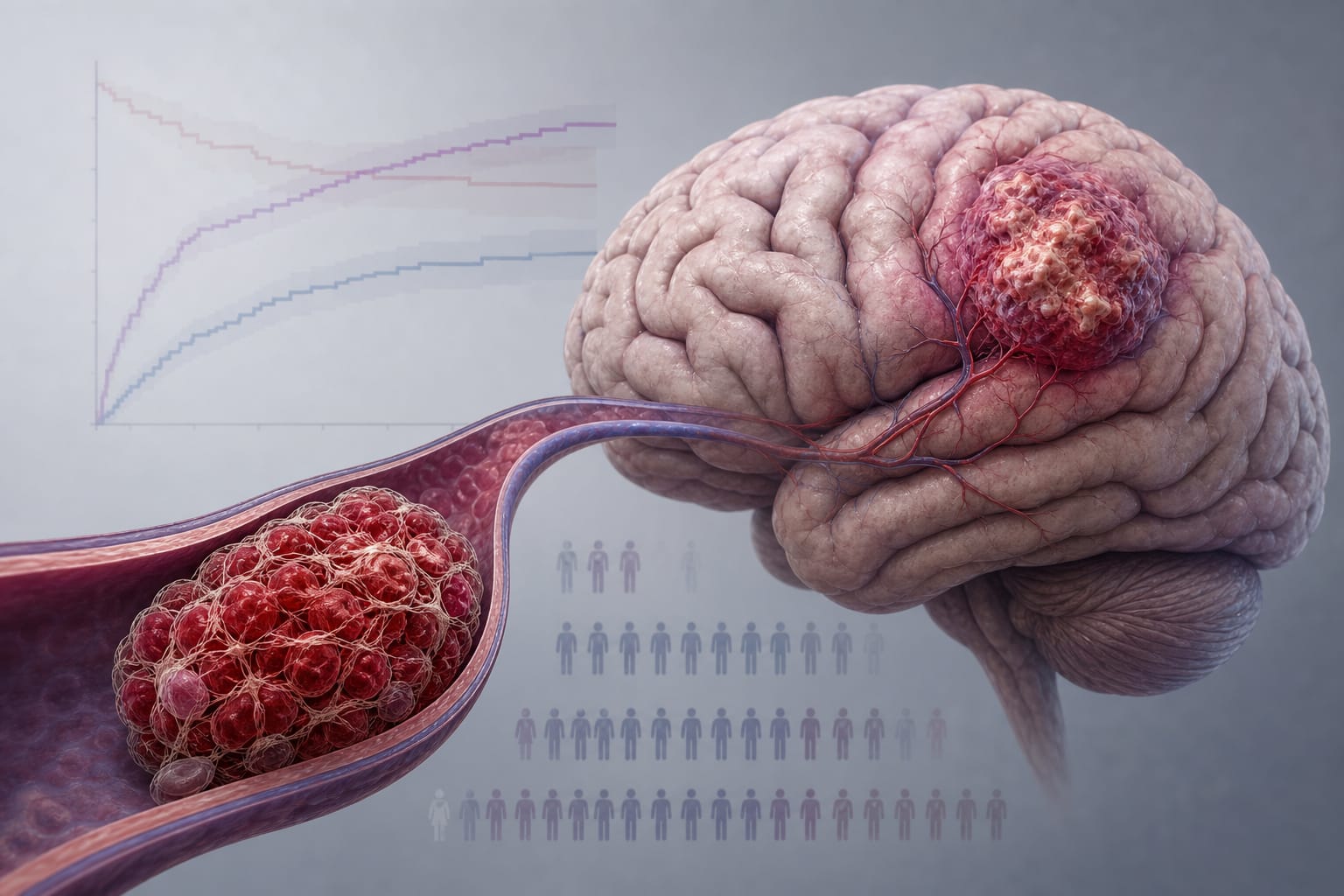
Venous Thromboembolism and Secondary Outcomes of Bleeding and Mortality in Patients with Gliomas: A Multicenter Cohort Study

  • By

  • Veiga, Viviane Cordeiro

  • Yamada, Camilla A. F.

  • Clara, Carlos Afonso

  • Santos, Jéssica Carolina Andrade

  • Milano, Breno Gray

  • Matias, Danielli Almeida

  • Melo, Pedro Hortêncio Saboia da Escossia

  • Batistella, Gabriel Novaes de Rezende

  • Cavalcanti, Alexandre Biasi

  • Viola, Fabiana Spillari

  • Levy, Ana Carolina

  • Santos, Silvana Soares

  • Fittipaldi, Carolina

  • Pinto, Mauro Bráulio da Rosa

  • Oliveira, Daniela Galvão Barros

  • Vieira, Thiago Santos

  • Moraes, Flavia Regina

  • Ostolin, Thatiane Lopes Valentim Di Paschoaele

  • Belucci, Talita Rantin

  • Chaddad-Neto, Feres

  • Baeta, Alex Machado

  • Neville, Iuri Santana

  • Peres, Stela Verzinhasse

  • April 30, 2026

  • 0 min

Share

Objective:

To estimate the cumulative incidence of VTE, bleeding, and all-cause mortality in patients with primary gliomas and evaluate their determinants, including predictors of VTE and bleeding.

Key Findings:
  • Prior VTE and corticosteroid use significantly increased VTE risk (SHRadj = 4.28; 95% CI 2.60 – 7.07 and SHRadj = 3.25; 95% CI 2.20 – 4.81, respectively).
  • Chronic kidney failure and diabetes mellitus were independent predictors of bleeding (SHRadj = 6.45; 95% CI 5.39 – 7.73 and SHRadj = 2.11; 95% CI: 1.51 – 2.95, respectively).
  • Gliomas NOS and GBM were strongly associated with increased mortality risk (HRadj = 9.20; 95% CI: 5.38–15.73 and HRadj = 10.34; 95% CI 4.28 – 24.96, respectively).
Interpretation:

VTE is frequent in glioma patients, while bleeding is less common but significant. Mortality risk is influenced by patient characteristics, tumor aggressiveness, hospitalization factors, and demographic characteristics, indicating the need for personalized risk assessment.

Limitations:
  • Retrospective design may introduce bias and affect data reliability.
  • Data collection dependent on medical records, which may have missing information.
  • Findings may not be generalizable beyond the Brazilian healthcare context.
Conclusion:

VTE is a common complication in glioma patients, with significant implications for mortality, necessitating individualized risk stratification.

Original Source(s)

Related Content