Diagnostic performance of magnifying endoscopy with third-generation narrow-band imaging for early gastric cancer: post hoc analysis of a randomized trial (3G detection trial) - Summary - MDSpire
Advertisement
Diagnostic performance of magnifying endoscopy with third-generation narrow-band imaging for early gastric cancer: post hoc analysis of a randomized trial (3G detection trial)
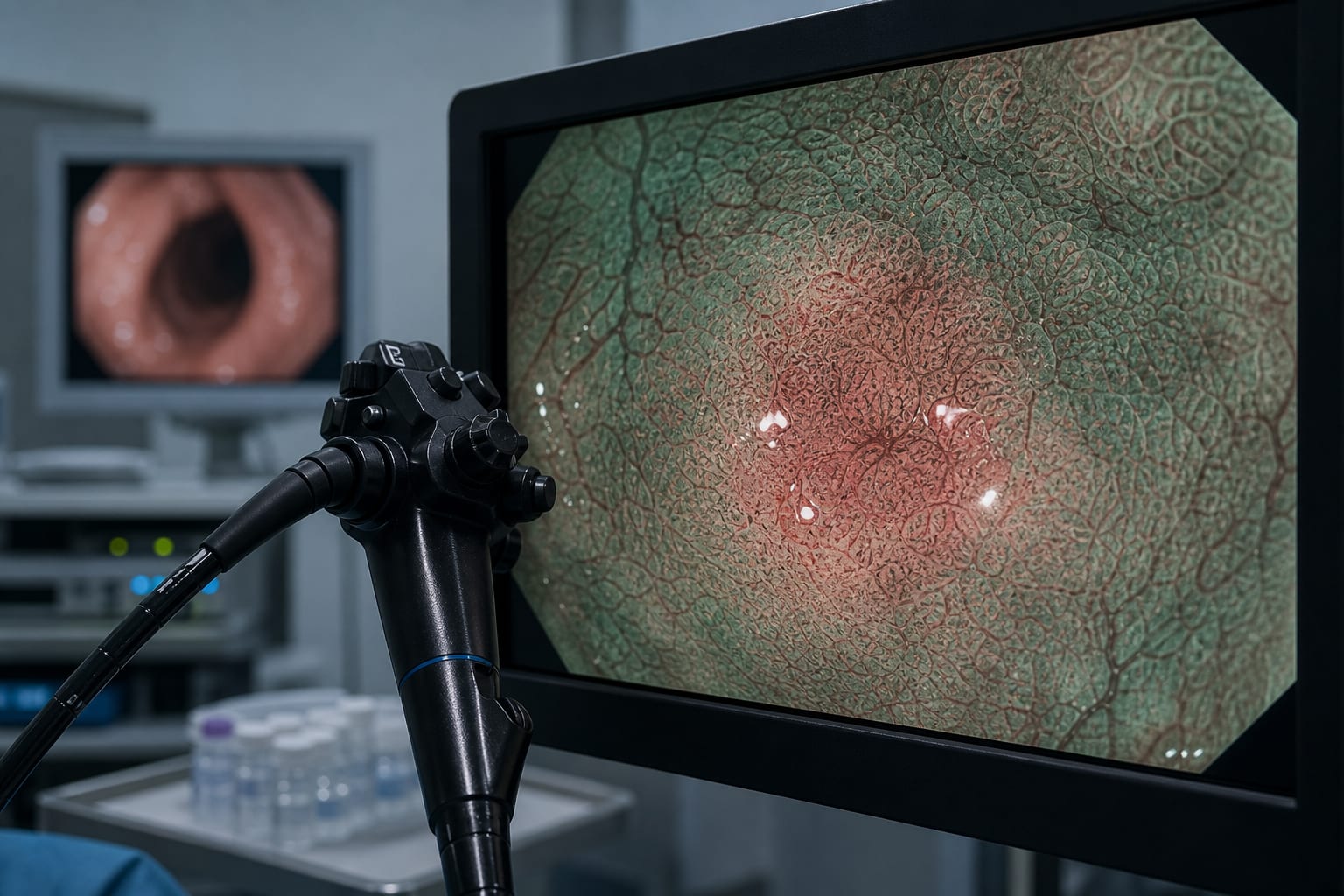
To investigate the diagnostic performance of magnifying endoscopy with third-generation narrow-band imaging (3G-NBI) for differentiating early gastric cancer (EGC) from non-EGC, particularly in patients with a history of Helicobacter pylori eradication.
Key Findings:
3G-NBI demonstrated significantly improved diagnostic performance in differentiating EGC from non-EGC compared to previous generations of NBI.
The presence of a demarcation line (DL) and irregular microvascular (MV) and microsurface (MS) patterns were critical for diagnosing EGC.
The study population primarily consisted of patients post-H. pylori eradication, which may influence the observed diagnostic features.
Interpretation:
The findings suggest that 3G-NBI is a promising tool for the early detection of gastric cancer, particularly in populations with a history of H. pylori eradication, where traditional diagnostic methods may be less effective, potentially improving patient outcomes.
Limitations:
The study's post hoc nature may introduce biases in the analysis, affecting the reliability of the results.
Results may not be generalizable to populations with active H. pylori infection.
Conclusion:
3G-NBI enhances the diagnostic accuracy for early gastric cancer detection, particularly in patients with prior H. pylori eradication, warranting further studies to confirm these findings and explore its application in diverse populations.