Metachronous cholangiocarcinoma following pancreaticoduodenectomy and the potential role of a migrated pancreaticojejunal stent: a case report and review of the literature - Summary - MDSpire
Advertisement
Metachronous cholangiocarcinoma following pancreaticoduodenectomy and the potential role of a migrated pancreaticojejunal stent: a case report and review of the literature
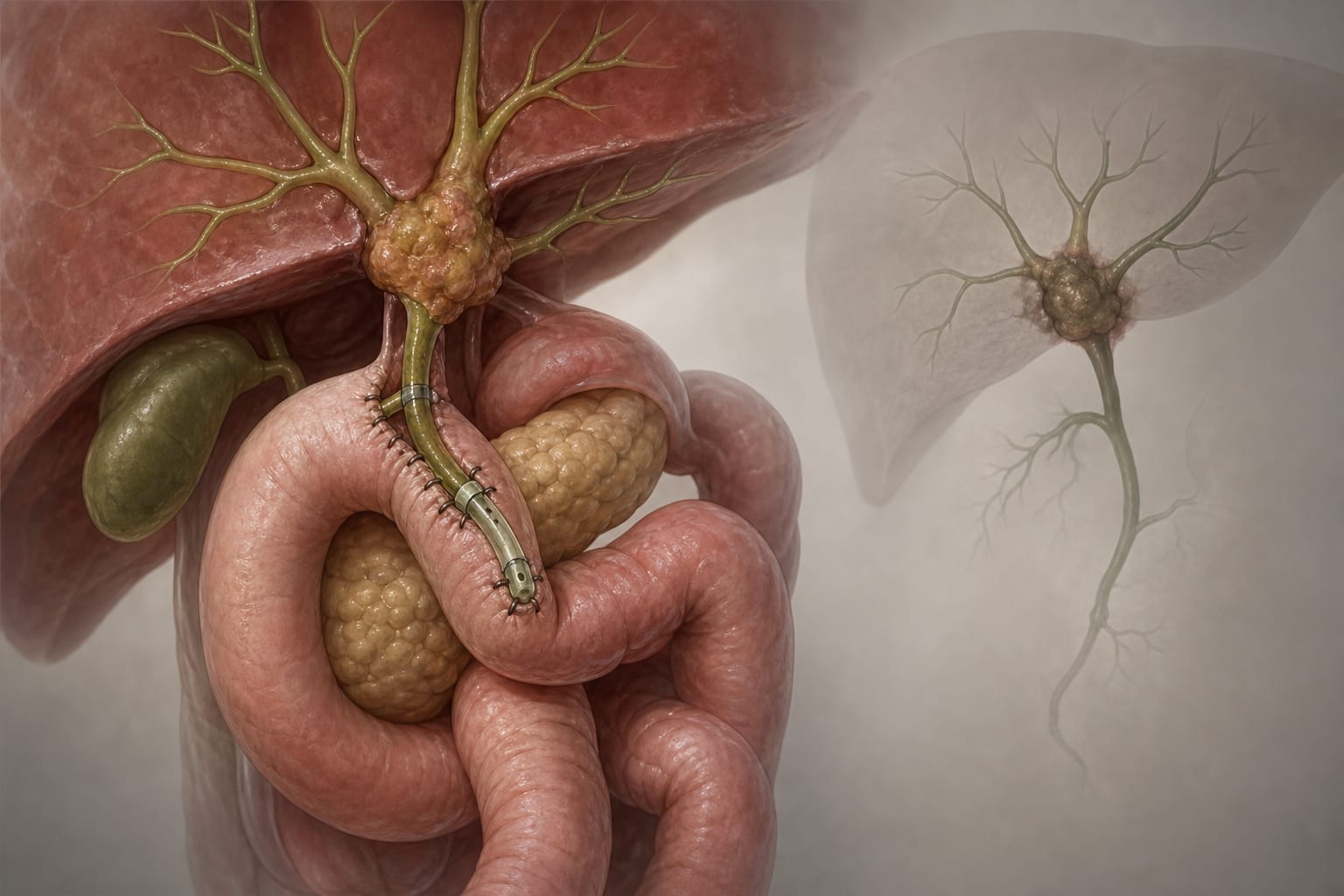
To report a case of hilar cholangiocarcinoma occurring 9 years after pancreaticoduodenectomy and to discuss the potential role of a migrated pancreaticojejunal stent in its development.
Approach:
Key Findings:
The patient developed hilar cholangiocarcinoma 9 years after a Whipple procedure.
Intraoperative exploration revealed migration of the internal pancreaticojejunostomy stent adjacent to the biliary-enteric anastomosis.
Immunohistochemical analysis indicated a sporadic origin of the cholangiocarcinoma.
Interpretation:
The case highlights the need to consider second primary malignancies in patients with late-onset biliary obstruction after pancreaticoduodenectomy, particularly in the context of stent migration.
Limitations:
The case is a single report and may not be generalizable.
Long-term effects of indwelling stents on carcinogenesis require further investigation.
Conclusion:
The migrated pancreatic stent may have acted as a chronic irritant, potentially contributing to carcinogenesis in the biliary tract.