The glucose-6-phosphatase system in cancer: from endoplasmic reticulum glucose-6-phosphate flux to stemness, immune escape, and therapeutic vulnerability - Summary - MDSpire
Advertisement
The glucose-6-phosphatase system in cancer: from endoplasmic reticulum glucose-6-phosphate flux to stemness, immune escape, and therapeutic vulnerability
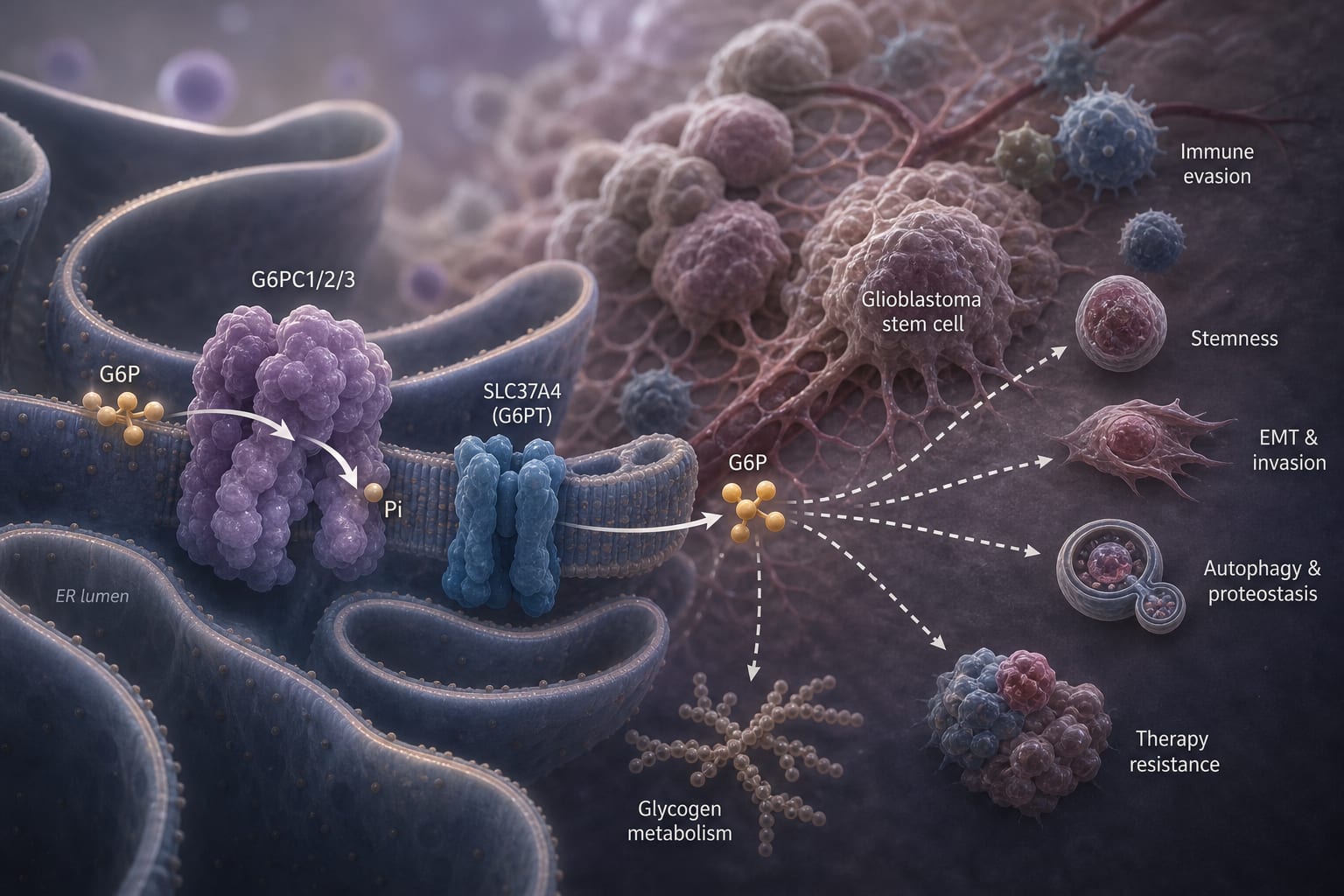
To explore the role of the glucose-6-phosphatase (G6Pase) system in cancer biology, particularly its impact on glucose-6-phosphate (G6P) dynamics, tumor behavior, and treatment sensitivity.
Approach:
Introduction to G6Pase in Oncology: The article discusses the shift in focus from glucose consumption to the partitioning of G6P in cancer cells, highlighting its significance in tumor metabolism and its implications for tumor behavior.
Key Findings:
Elevated G6Pase activity in non-gluconeogenic cancers correlates with aggressive tumor phenotypes.
Loss of G6PC in liver and kidney leads to metabolic disruption and dedifferentiation.
G6P handling in the endoplasmic reticulum may serve as a metabolic rheostat for cancer cell survival and aggressiveness.
Interpretation:
The G6Pase system is being investigated for its role in cancer biology, influencing various aspects of tumor behavior and potential therapeutic vulnerabilities.
Limitations:
Clinical targeting of the G6Pase system is still largely in preclinical stages.
The therapeutic opportunities discussed are hypotheses that require further testing.
Conclusion:
The G6Pase system's role in cancer biology requires further investigation to understand its implications as a therapeutic target.