To develop a multitask deep learning framework for simultaneous treatment response classification and progression-free survival (PFS) prediction using planning CT, dose, and sequential CBCT.
Approach:
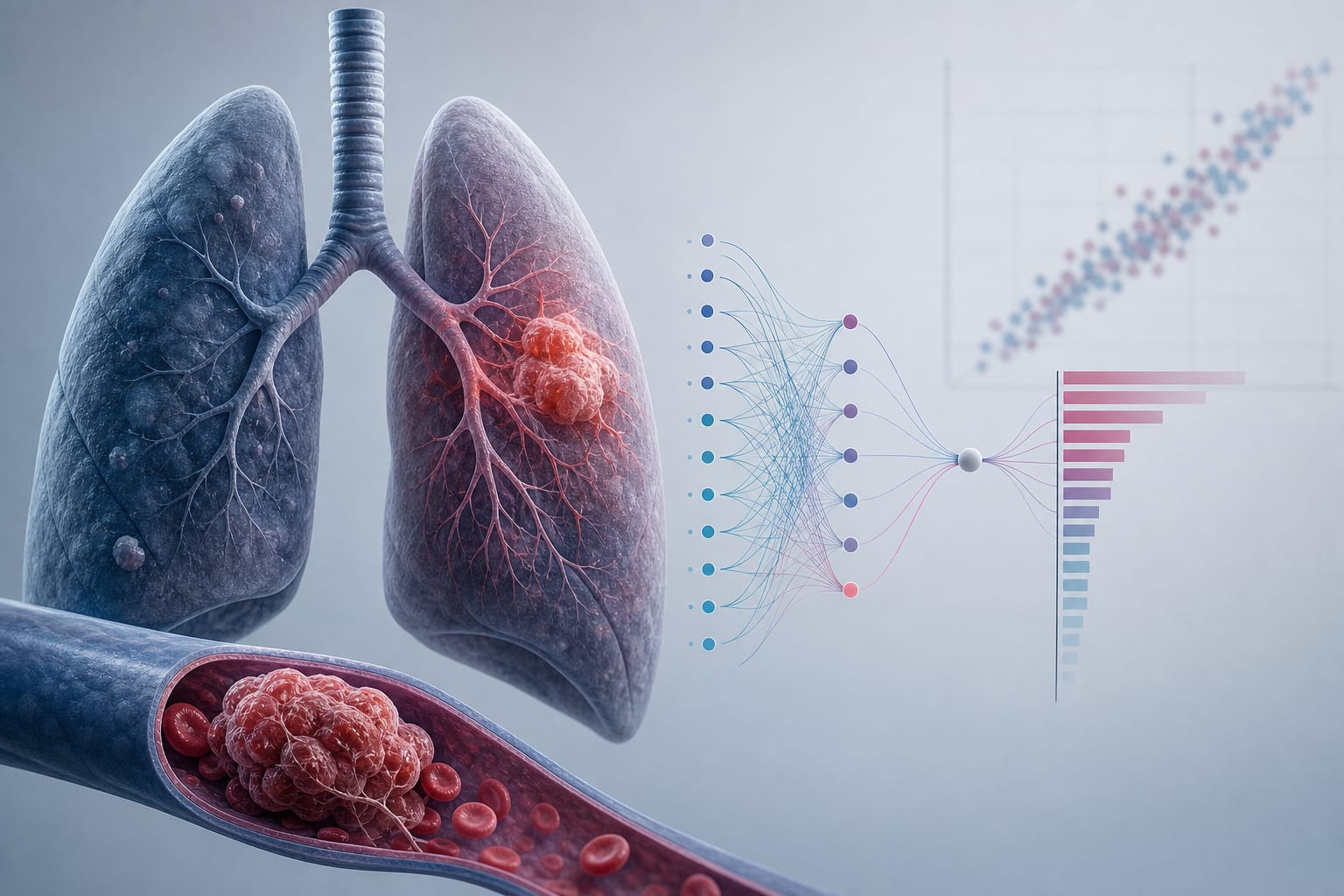
Study Design: Retrospective analysis of 142 lung cancer patients using a lightweight network with cross-modal attention fusion and dual task heads.
Model Training: The model was trained end-to-end and benchmarked against 12 baseline methods via 5-fold cross-validation.
Key Findings:
Using only the first on-treatment CBCT, the model achieved an area under the receiver operating characteristic curve (AUC) of 0.858 ± 0.078 and a concordance index (C-index) of 0.672 ± 0.058, outperforming all baseline methods.
Ablation analysis confirmed the contributions of attention fusion and multitask training.
Additional CBCT scans degraded classification performance, likely due to increased dimensionality relative to the cohort size.
Interpretation:
The first on-treatment CBCT provided the strongest early predictive signal for treatment response classification; adding subsequent scans degraded performance and produced only a marginal change in survival concordance under the current study setting.
Limitations:
The study is retrospective and may not generalize to larger cohorts, which could limit the applicability of the findings.
Increased dimensionality from additional CBCT scans negatively impacted classification performance.
Conclusion:
The first on-treatment CBCT is crucial for early prediction of treatment response in lung cancer radiotherapy.