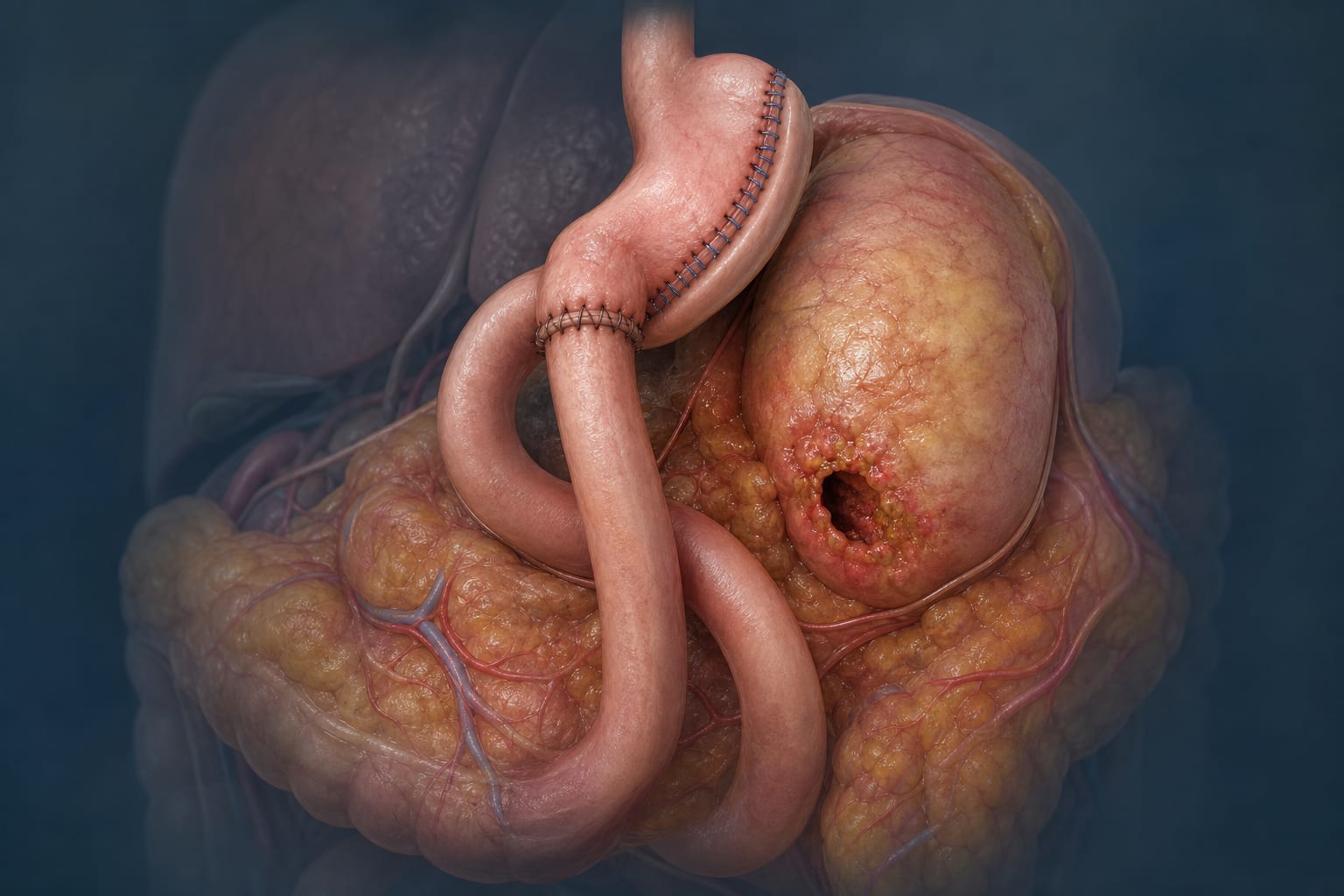
To compare preoperative findings with outcomes at postoperative year 8 in patients who underwent sleeve gastrectomy (SG), focusing on anthropometric measurements, biochemical parameters, and nutritional status, and to highlight the significance of these outcomes in the context of existing literature.
Key Findings:
Recurrent weight gain (RWG) was observed in a significant proportion of patients, with varying rates of RWG reported, including specific statistics.
Long-term outcomes showed considerable variability among patients, with some experiencing sustained weight loss and others RWG.
Biochemical and nutritional assessments indicated changes over the 8-year period, necessitating further evaluation.
Interpretation:
The study highlights the need for comprehensive long-term evaluations of SG outcomes, as individual responses to surgery can vary significantly.
Limitations:
Small sample size limits generalizability.
Observational design may introduce biases.
Lack of formal sample size calculation for subgroup analyses.
Potential biases in self-reported data during follow-up.
Conclusion:
Long-term outcomes after SG are heterogeneous, emphasizing the importance of individualized follow-up and potential interventions to address RWG, such as tailored dietary programs or psychological support.