Clinical Evaluation of a Real-Time Wearable System for Monitoring In-Hospital Ambulatory Patients With COVID-19: Retrospective Data Study - Summary - MDSpire
Advertisement
Clinical Evaluation of a Real-Time Wearable System for Monitoring In-Hospital Ambulatory Patients With COVID-19: Retrospective Data Study
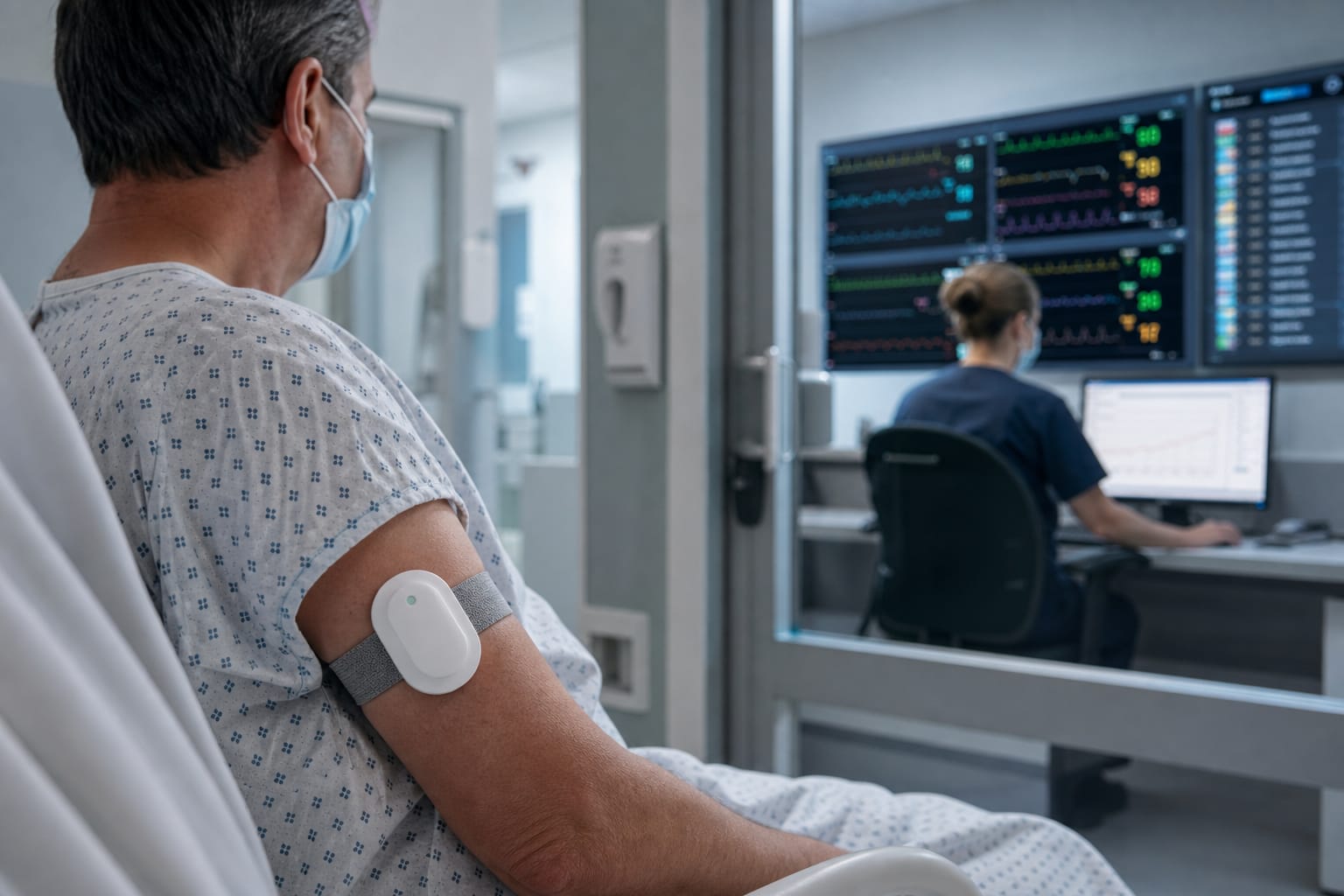
To describe the physiological pattern of vital signs over the course of SARS-CoV-2 infection for hospitalized patients outside of critical care and to explore the impact of displaying data from the wearable monitoring system (WMS) on the timing of nurses recording intermittent manual vital sign measurements.
Approach:
Key Findings:
42% of hospitalized COVID-19 patients required ventilatory support or died.
Wearable monitoring systems have potential to detect deterioration earlier than intermittent measurements.
The selected pulse oximeter device was found to underestimate oxygen saturation by up to 2%, but was deemed the most reliable.
Interpretation:
Limitations:
The study is retrospective and relies on data from a specific hospital setting.
Potential variability in vital sign measurements due to patient movement and equipment adjustments.